Job site clutter is more than a visual nuisance. While piles of materials, scattered tools, and misplaced equipment may seem like common features of an active site, their impact can ripple through operations in ways that are often overlooked. A disorganized workspace increases the risk of accidents, slows down project progress, and quietly drains resources without anyone noticing until the effects become impossible to ignore.
Delays and Disruptions Add Up Quickly
When crews have to search for equipment, reroute around obstacles, or work in confined, messy conditions, productivity suffers. Every wasted minute locating tools or waiting for a path to clear represents lost momentum. Over time, these delays accumulate into serious scheduling issues that impact both budgets and deadlines. Clutter also limits the ability of supervisors to accurately assess progress or detect problems early. In fast-moving work environments, even small inefficiencies compound quickly.
Increased Risk of Injury
Cluttered work zones create hazards that lead to avoidable accidents. Tripping over debris, slipping on misplaced materials, or bumping into equipment are all preventable outcomes of poor site organization. Injury claims can delay a project or increase insurance premiums. Even minor injuries disrupt workflow, especially when team members have to shift responsibilities or slow their pace to accommodate new safety concerns. A clean, clear work environment supports alertness and allows for safer movement and communication across teams.
Strain on Equipment and Workers
Tools left out in the elements or improperly stored are more likely to break down or degrade faster than expected. Workers forced to navigate cluttered sites experience more physical strain, especially if they need to move around obstacles or repeat tasks due to disorganization. Fatigue and frustration often follow, both of which reduce morale and increase the likelihood of costly mistakes. Investing in better layout planning and regular cleanup processes can yield better long-term equipment performance and employee satisfaction.
Storage as a Long-Term Solution
Proactive site management includes planning for storage needs from the beginning. Designated zones for equipment, scrap material, and supplies create boundaries that prevent clutter from spreading. Partnering with an outdoor storage company can offer scalable solutions that accommodate changing project sizes and help enforce better material handling practices. Keeping work areas clean becomes easier when items have proper places to be returned after use.
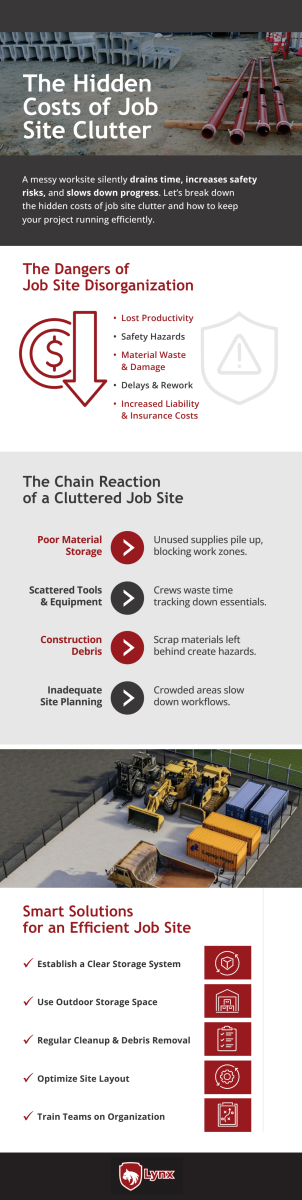
A cleaner job site is a safer, more efficient place to work. Reducing clutter improves visibility, accelerates progress, and minimizes risk. The extra effort to maintain organization pays off through fewer delays, fewer injuries, and a more professional, productive atmosphere for every crew member involved. For more information, look over the accompanying infographic below.
Matt Ives is Director of Revenue and Marketing at Otter Storage Management and leads revenue optimization, marketing, budget deployment, and sales process improvements for Lynx Contractor Storage, as well as the Honey Bee RV Storage and Otter Self Storage brands. Lynx Contractor Storage provides contractors and small businesses with secure, convenient, and cost-effective storage for their valuable materials, equipment, and tools. Ives has more than eight years of experience in commercial real estate, and previously directed revenue management and marketing for Red Dot Storage, managing a portfolio of 190+ self-storage assets across 19 states.