Estimated Reading Time: 9 minutes
TL;DR: A personal board of directors is a small, hand-picked group of advisors who guide your safety career… a mentor, a sponsor, a peer, a connector, a challenger, and a skill-complement. You don’t hire them or hold formal meetings. You build genuine relationships, ask for specific guidance, and check in a few times a year. It’s how safety professionals get unstuck, get promoted, and stop guessing alone.
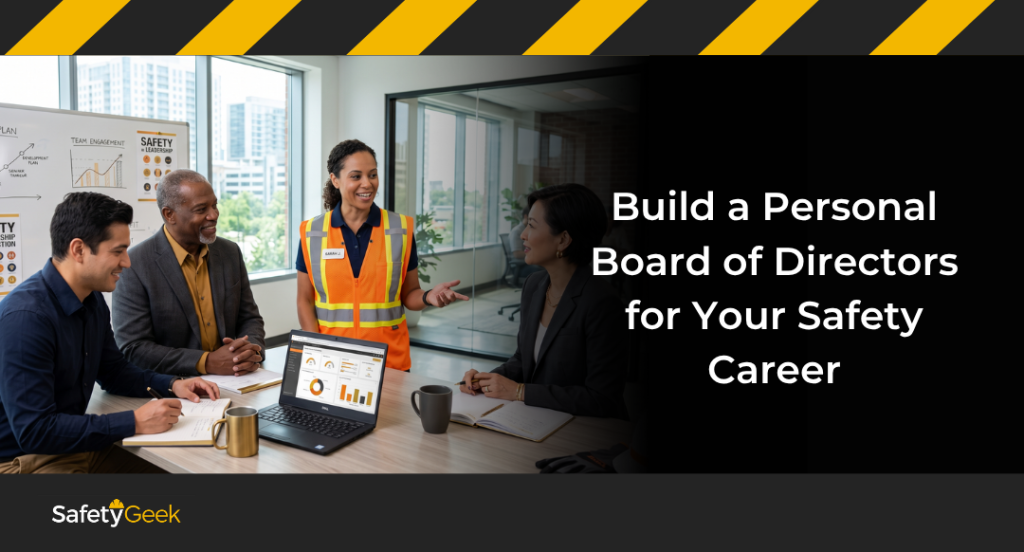
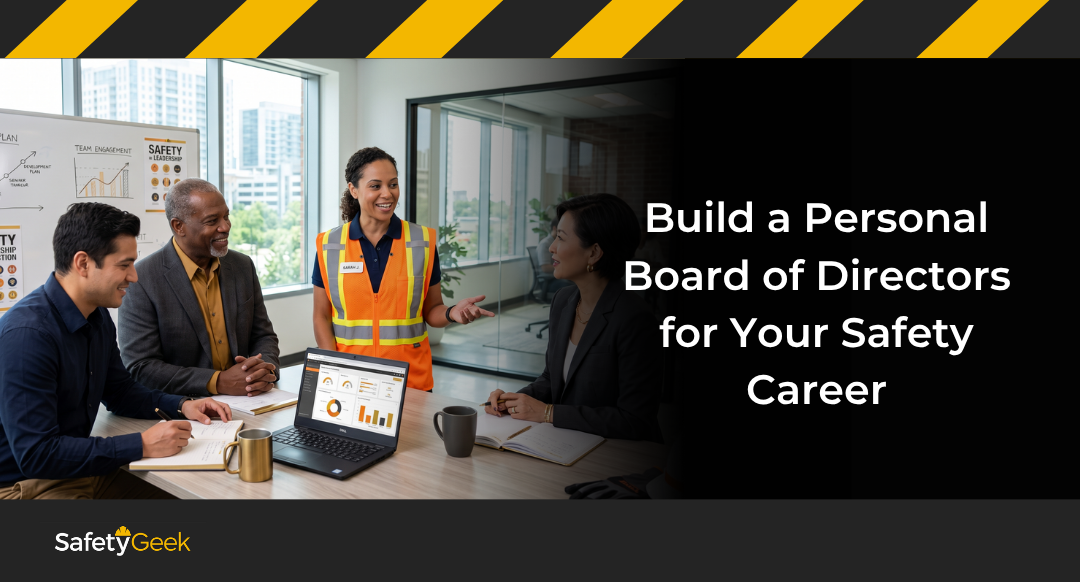
Here’s how to create a personal board of directors for your safety career development: pick five or six people who each fill a specific role, build a real relationship with each one, and meet with them a few times a year for honest guidance. No contracts, no boardroom, no awkward titles.
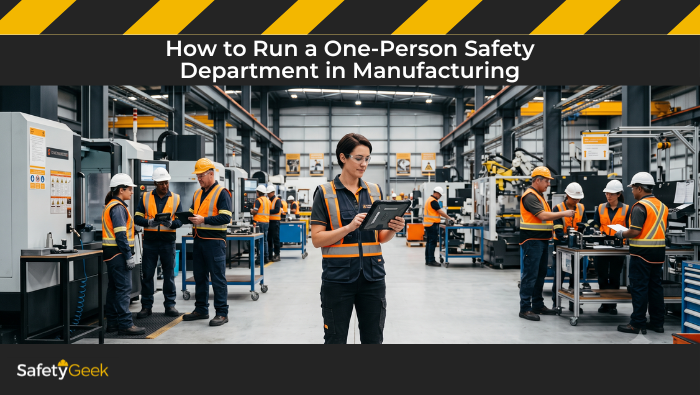
Most safety professionals are doing this job alone. You’re the department of one, the person who got the safety hat dumped in their lap, the one with nobody to bounce ideas off. And when you’re that isolated, every decision feels heavier than it should… because you’re carrying it all by yourself.
Key Takeaways
- A personal board of directors is a curated group of advisors, not a formal committee. You build it one relationship at a time.
- Six roles cover most of what your safety career needs: mentor, sponsor, peer, connector, challenger, and skill-complement.
- A sponsor is not the same as a mentor. A mentor talks WITH you… a sponsor talks ABOUT you when you’re not in the room.
- You don’t need authority or a big title to build one. You need a clear ask and a little courage.
- The strongest boards mix people inside safety with people outside it – operations, HR, finance, and data.
- Mentorship isn’t a nice-to-have. Research ties it directly to promotions, pay, and confidence.
What a Personal Board of Directors Actually Is
A personal board of directors is a small group of people you intentionally choose to advise your career, the same way a company board advises a business. The idea comes from corporate strategy, where leaders surround themselves with advisors who see the blind spots they can’t.
The University of Georgia’s mentor program describes it as five to ten individuals who help you make sound decisions, challenge your assumptions, and expand your thinking. You’re not paying them. You’re building relationships with people who want to see you win.
Here’s why this matters so much in safety. We are one of the only professions where you’re often the only person in the building who does what you do.
There’s no senior safety lead down the hall to ask. There’s no team to pressure-test your plan before you walk it into the leadership meeting.
So you wing it. You guess. You lie awake wondering if you’re doing the right things.
A board fixes that. It gives you a handful of trusted voices you can call when you’re stuck, when you’re scared, or when you’re about to make a big move.
And it pulls you out of the “team of one” trap, because your success was never meant to rest on your shoulders alone. Systems beat heroics, every single time.
The 6 Roles Your Safety Career Board Needs
You’re not collecting random contacts. You’re filling specific seats. Each person on your board does a different job, and the magic happens when you have all six working for you at once.
The most important distinction to understand is mentor versus sponsor. A mentor gives you advice in private. A sponsor uses their influence to open doors for you when you’re not in the room.
You need both. And most safety professionals only ever think to find the first one.
Here’s the full lineup, mapped to where you’ll actually find each person in our world.
| Role | What they do for you | Where to find them in safety |
|---|---|---|
| Mentor | Gives wisdom and honest advice from experience | A seasoned safety director, a CSP you admire, a past boss |
| Sponsor | Champions you behind closed doors and creates opportunities | A plant manager, VP of ops, or HR leader who trusts you |
| Peer | Trades real-world problems and keeps you sane | Another safety manager in your city, an online community |
| Connector | Introduces you to people and opportunities | An active ASSP chapter member, a recruiter, a vendor rep |
| Challenger | Pushes back and tells you the truth you don’t want to hear | A blunt operations partner, an engineer, a mentor who won’t coddle |
| Skill-complement | Fills a gap you don’t have | A finance, data, or marketing person who gets what you’re missing |
Notice that half of your board doesn’t even work in safety. That’s on purpose. The skill-complement seat is where so many of us fall short, because the things that get safety professionals promoted are rarely safety skills… they’re business acumen, data, and the ability to sell an idea.
When you bring those voices onto your board, you start showing up to leadership meetings sounding like a strategist, not a safety cop.
THE ALL-ACCESS PASS RESOURCE PAGE
Get all the FREE templates, safety management resources, PDFs, spreadsheets, and more...
How to Create a Personal Board of Directors (Step by Step)
Building your board comes down to four moves: map your gaps, name names, make the ask, and keep it small. Let’s walk through each one.
1. Map your gaps. Write down the five biggest challenges in front of you right now. Maybe it’s getting executives to fund your program, building your data skills, or figuring out your next career move. Your gaps tell you which seats to fill first.
2. Name names. For each gap, list one or two people who could help. Don’t overthink seniority here. Some of the best board members are peers one step ahead of you, not industry legends you’ve never met.
3. Make the ask. This is where most people freeze, so keep it small and specific. You’re not asking someone to “be your mentor” forever… you’re asking for 30 minutes. Try this: “I really respect how you handled the budget conversation with the leadership team. Could I buy you a coffee and ask how you approached it?”
4. Keep it small. Three to six people is plenty. Peer-reviewed research on building mentor relationships backs this up: identify your needs first, find more than one person for each area, talk to each one individually, and treat the relationship as mutually beneficial. A board of six real relationships beats a list of 50 LinkedIn connections you never talk to.
One thing I see over and over with the safety managers I coach: they wait until they “deserve” to reach out. They don’t. The people you admire were exactly where you are once, and most of them are genuinely flattered to help.
If you want a deeper look at the patterns that hold safety careers back, I broke down the biggest career mistakes safety professionals make in another post.
How to Run Your Board Without Making It Weird
You don’t need a calendar invite that says “Board Meeting.” Real boards in your career run on informal, one-on-one relationships that you tend to over time. The goal is a few honest conversations a year, not a standing committee.
Meet each person on a cadence that fits the relationship… quarterly for some, a couple of times a year for others. Come prepared with a specific question or decision, never a vague “pick your brain.”
And always close the loop: tell them what you did with their advice and what happened. That single habit is what turns a one-time chat into a lasting relationship.
Here’s the part people skip. A board is a two-way street. Every time you send someone a helpful article, make an introduction, or just say thank you, you’re making a deposit in the relationship.
Know, like, and trust is the foundation of all influence, and it works the same with your board as it does with the supervisors you’re trying to win over on the floor. Nobody cares about your career more than they care about their own, so get to know them first.
If you don’t have these people in your corner yet, build your way there. Join your local ASSP chapter. Get active in an online safety community where people actually answer each other’s questions.
This is exactly why we built the community inside the Safety Leadership Academy the way we did… so you walk in and instantly have a room full of peers, challengers, and connectors who get it. One of our members from New Zealand put it best: a safety degree gave him the bag of Legos, but the community gave him the instructions.
Your board is also the antidote to the lonely middle of your career. The five stages of a safety manager’s career journey almost always include a stretch where you feel stuck and overlooked. The people on your board are the ones who pull you through it.
Frequently Asked Questions About a Personal Board of Directors
What’s the difference between a mentor and a sponsor?
A mentor advises you privately, sharing wisdom and feedback based on their experience. A sponsor advocates for you publicly, using their influence to put your name forward for promotions and opportunities. Mentors talk with you… sponsors talk about you when you’re not in the room, which is why you need both.
How many people should be on my personal board of directors?
Three to six is the sweet spot. You want enough variety to cover the key roles – mentor, sponsor, peer, connector, challenger, and skill-complement – without spreading yourself so thin that no relationship goes deep. A few real relationships will do more for your career than a giant network you never use.
How do I ask someone to be on my board without it being awkward?
Don’t ask them to “be on your board” at all. Ask for something small and specific instead, like a 30-minute coffee to discuss one challenge you’re facing, and reference something you genuinely admire about their work. Most people say yes, because the ask is flattering, low-pressure, and easy to fit into a busy schedule.
What if I don’t know anyone senior in safety?
Start with professional organizations like ASSP and BCSP, your local safety council, and active online communities. These spaces are built for exactly this. You can also look outside safety entirely for your connector and skill-complement seats… a finance manager, a data analyst, or an HR leader can be just as valuable as a veteran safety director.
How often should I meet with my board?
There’s no single rule. Quarterly works well for closer relationships, while a couple of check-ins a year is plenty for others. The cadence matters less than the follow-through… show up prepared, act on the advice, and report back on what happened.
Does building a board actually affect my pay and career?
The data points that way. Occupational health and safety specialists earn a median of $83,910, and health and safety engineers earn around $109,660. The professionals who reach those upper tiers tend to be the ones with mentors, sponsors, and strong networks, which ASSP’s safety salary survey consistently ties to certification and career intentionality.
Now It’s Your Turn
You were never supposed to do this alone. A personal board of directors gives you the mentors, sponsors, and honest voices that turn an isolated team of one into a connected professional with a real plan. That’s how safety careers actually accelerate.
Here’s what to do this week:
- Write down your five biggest career challenges. These are your open board seats.
- Name one person who could help with each. Inside or outside safety, it doesn’t matter.
- Send one message. Just one. Ask for a 30-minute coffee about a single, specific question.
- Get into a room of peers. Join an ASSP chapter or an active safety community so your board has somewhere to grow.
If you want a clearer picture of where you are and what move comes next, my career planning guide will help you map it out, and so will the braggable results you’ll want to show your sponsors. And if you’re ready to see the full system for becoming the kind of safety leader executives listen to, watch my free training… it walks you through exactly how to stop being the safety cop and earn your seat at the table.
You’ve got this. And now you don’t have to do it by yourself.
Hi, I'm Brye (rhymes with sky)! I am a self-proclaimed safety geek with two decades of general industry safety experience. Specializing in bringing safety programs to a world-class level and building a safety culture, I have trained and coached many safety managers, just like you, on how to effectively manage workplace safety in the real world. I would love to help you too.