Estimated Reading Time: 8 minutes
Learning how to transition from being the safety cop to becoming the safety influencer comes down to three shifts: trading authority for credibility, rules for results, and enforcement for coaching. The safety cop writes people up and gets compliance only when someone is watching. The safety influencer builds trust, so workers report hazards, follow controls, and own safety even when no one is on the floor.
You transition from being the safety cop to becoming the safety influencer by changing how you get results, not by changing what you know. The safety cop leans on authority they were never actually given. The safety influencer builds credibility, trust, and systems that make the safe choice the obvious one.
Here’s the part they skip over. If your employees go quiet when you walk onto the floor, hide the near miss, or only buckle the harness when you’re watching, you’ve been cast as the safety cop.
That’s not them being difficult. That’s a predictable response to enforcement, and the role can be recast.
Key Takeaways
- The safety cop gets compliance only under supervision. The safety influencer gets ownership that holds when no one is watching.
- The shift requires three changes: authority to credibility, rules to results, and enforcer to coach.
- Workers hide hazards in enforcement cultures because reporting feels risky, not because they don’t care.
- You don’t need formal authority to drive safety. You need trust and the right systems.
- Influence is built in small daily deposits: asking instead of telling, closing the loop, and coaching at the point of work.
- The Safety Influencer System turns the work you already do into credibility that compounds.
What a Safety Cop Really Is (and Why You Became One)
A safety cop is a safety professional who relies on enforcement, rules, and the threat of discipline to get compliance. They patrol, they catch, they write up. And the moment they leave the area, the behavior goes right back to normal.
Most safety professionals don’t choose this role. They get handed it.
You were given the title “safety manager” and a stack of responsibility, but no real power over the people doing the work. So you did the only thing the title seemed to allow. You started policing.
The problem is that you’re trying to enforce rules over people who don’t report to you.
This is the Artificial Authority Trap. Your title creates an expectation that you can make people comply, but you don’t have hire-fire power, so you can’t. When you push enforcement anyway, you become the bad guy, and workers learn to manage you instead of the hazard.
There’s a structural reason for this, and it’s called the Line of Power. Employees follow their direct supervisor, not the safety person.
When correction comes from someone outside their chain of command, it feels like an outsider scolding them. That’s why the same violation keeps coming back no matter how many times you write it up.
It also quietly kills your best early-warning system. When people expect punishment, they stop reporting.
OSHA’s Recommended Practices for worker participation are built on the opposite idea, that involving workers is what surfaces hazards before they become incidents. You can’t get participation from people who see you as a threat.
The Three Mindset Shifts From Enforcer to Influencer
Becoming a safety influencer isn’t about a new certification or a louder voice. It’s three mindset shifts that change how you show up every day. Here’s what each one looks like side by side.
| The Shift | Safety Cop | Safety Influencer |
|---|---|---|
| 1. Authority to Credibility | “Do it because it’s the rule.” | “Do it because you trust I’ve got your back.” |
| 2. Rules to Results | Counts write-ups and audit scores. | Measures hazards fixed and injuries prevented. |
| 3. Enforcer to Coach | Catches people doing it wrong. | Helps people do it right at the point of work. |
Shift 1: From Authority to Credibility
You will never out-authority a supervisor, and you don’t need to. Influence is built on trust, and trust is built one deposit at a time. Every time you solve a problem for someone, listen before you correct, or follow through on what you promised, you make a deposit you can draw on later.
This is the foundation of Building Know, Like, and Trust. People follow the safety person they respect long before they follow the safety person who outranks them, because nobody outranks them in their own mind.
Shift 2: From Rules to Results
A safety cop measures activity. Audits done, citations issued, policies posted. None of that proves anything actually got safer.
A safety influencer measures outcomes. Hazards eliminated, near misses reported, controls that hold. When you talk in results, management starts seeing safety as a value driver instead of a cost, and that’s when you get a real seat at the table.
Shift 3: From Enforcer to Coach
The enforcer shows up after something goes wrong to assign blame. The coach shows up at the work to remove barriers and reinforce the right behavior in the moment.
This is also where the Attribution Error trips up most safety programs. We blame the person (“they’re careless”) instead of the system (“the guard is awkward, so they skip it”).
Most accidents aren’t caused by bad people. They’re caused by good people working in bad systems.
The coach asks “what made it hard to do this safely?” The cop just asks “who messed up?”
THE ALL-ACCESS PASS RESOURCE PAGE
Get all the FREE templates, safety management resources, PDFs, spreadsheets, and more...
Daily Behaviors That Signal You’ve Made the Shift
The shift from safety cop to safety influencer doesn’t happen in a memo. It happens in dozens of small moments on the floor. Here are the behaviors that prove you’ve made the turn.
- You ask before you tell. Instead of “put your glasses on,” you ask “what’s the risk on this task?” Questions invite ownership. Commands invite resentment.
- You close the loop. When someone reports a hazard, you fix it and go back to tell them what changed. Nothing builds trust faster than proof that speaking up actually works.
- You celebrate the report, not just the fix. You thank people for surfacing a near miss, even when it exposes a problem, because you want the next one too.
- You coach in private and praise in public. Correction never becomes a public shaming, which is exactly what turns workers against the safety cop.
- You show up before you need anything. You’re on the floor during normal production, learning the job, not just appearing when something breaks.
These behaviors are the Coach & Observe phase of the Safety Management Cycle in action. You’re not policing the work. You’re developing the people who do it.
Industry voices have made the same point for years, framing the move from safety cop to safety coach as the difference between force and respectful dialogue.
How to Become a Safety Influencer Without Any Authority
The biggest myth holding safety professionals back is that you need formal authority to create change. You don’t. The most influential safety leaders I’ve worked with had no power to fire anyone, and that’s exactly why they got so good at influence.
You become a safety influencer without authority by working through the chain of command instead of around it. Here’s how that plays out in practice.
Make safety a leadership expectation. Set up an executive safety advisory committee so the push for safety comes from the top, where the real authority lives. When leaders own the expectation, supervisors follow it.
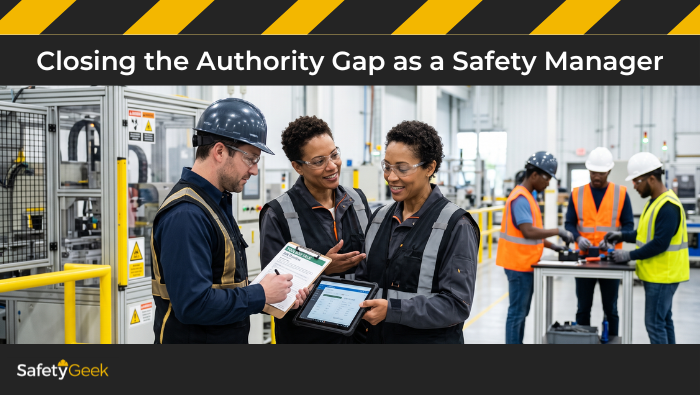
Coach the coaches. Your job isn’t to correct every worker. It’s to develop supervisors so they own safety on their lines. This is how you hold supervisors accountable when you have no direct authority, by routing accountability through the people who do have it.
Protect the people who speak up. Never let a report turn into discipline. OSHA’s anti-retaliation provisions for injury reporting exist because punishing people for reporting is both illegal and self-defeating. A program where reporting is safe is a program that sees problems early.
Use psychology, not pressure. Understanding why employees ignore safety rules changes everything about how you approach them. And when a big change is coming, you prime employees before a safety change instead of springing it on them. This is the heart of the Safety Influencer System, layering influence into the work you already do.
This works. One Academy member, Kelly, runs safety across a 130-office consulting firm. She transformed her whole approach from directing to influencing, set up office safety coordinators to extend her reach, and earned genuine engagement from senior leadership.
She didn’t get more authority. She built more influence.
None of this means enforcement disappears. It means enforcement stops being your only tool, because real change comes from how leadership drives safety culture from the top down.
Frequently Asked Questions About the Safety Cop to Influencer Shift
Isn’t enforcement sometimes necessary?
Yes. Willful and reckless behavior needs consequences, every time. The shift isn’t about abandoning accountability.
It’s about not using enforcement as your first and only tool. Coach the honest mistakes and the at-risk habits. Reserve discipline for the people who knowingly put others in danger.
How long does it take to become a safety influencer?
Trust builds in small deposits, so you’ll see early wins in weeks, not years. The first time you close the loop on a worker’s report, you start changing the relationship. Full culture change takes longer, but the daily behaviors that drive it can start tomorrow.
Won’t I lose control if I stop writing people up?
You’ll trade fragile control for durable influence. Write-ups only work when you’re watching. Trust works when you’re not.
The safety influencer actually has more impact, because workers self-correct and report problems instead of hiding them until you catch them.
What if management put me here to be the enforcer?
Then your real job is to reframe what safety success looks like for them. Show results, not citations. When you connect safety to dollars, downtime, and quality, leadership stops wanting a cop and starts wanting a strategic partner who prevents losses.
How do I rebuild trust after being the safety cop for years?
Start by listening more than correcting and by closing the loop on every concern. Acknowledge the shift out loud if you need to. People forgive the old role fast when they see the new one is real and consistent over time.
Now It’s Your Turn
The safety cop gets compliance when they’re watching. The safety influencer gets ownership that holds when they’re not.
The difference isn’t authority. It’s credibility, results, and coaching.
Here’s where to start this week:
- Pick one task and replace a command with a question. Ask “what’s the risk here?” and listen.
- Find one open hazard report and close the loop. Go tell the person what changed.
- Pick one supervisor to develop into a safety coach instead of correcting their crew yourself.
- Reframe one safety win in business terms (cost avoided, downtime prevented) for your next leadership update.
If you want the full playbook for layering influence into every part of your safety work, I put it in The Safety Management Influencer System: A Practical Guide. It walks you through the exact system that turns the work you’re already doing into credibility that compounds, no new budget or new authority required.
You don’t have to be the bad guy to keep people safe. You’ve got this, Safety Friend.
Hi, I'm Brye (rhymes with sky)! I am a self-proclaimed safety geek with two decades of general industry safety experience. Specializing in bringing safety programs to a world-class level and building a safety culture, I have trained and coached many safety managers, just like you, on how to effectively manage workplace safety in the real world. I would love to help you too.