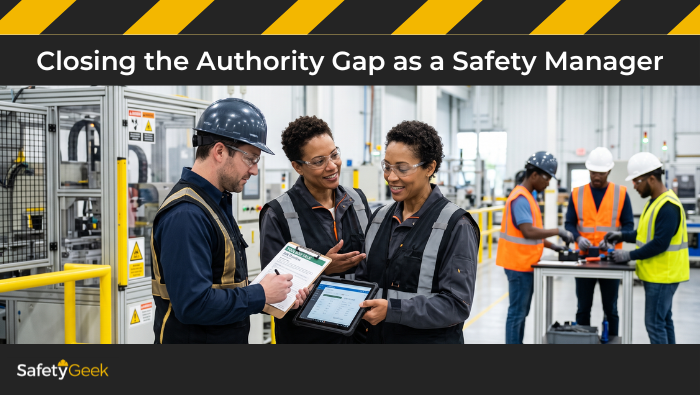
Why Safety Managers Should Focus on Systems, Not People
Many safety pros think their job is to manage people. But that belief actually limits your success. You don’t have authority over employees—what you really manage are systems.
When safety is strong, it stabilizes the entire business. When it’s weak, everything from retention to productivity suffers.
-
Operations run smoother with fewer injuries or incidents
-
HR sees higher morale and employee retention
-
Finance benefits from fewer claims and reduced insurance premiums
-
Quality control improves when workers feel confident and focused
-
Marketing gets to highlight a culture of care and responsibility
These impacts are not just nice-to-haves—they directly affect the bottom line.
By viewing your role through this wider lens, you begin to operate like a business partner, not just a compliance officer. That mindset elevates your influence and your importance in the organization.
Why Safety Managers Should Focus on Systems, Not People
Many safety pros think their job is to manage people. But that belief actually limits your success. You don’t have authority over employees—what you really manage are systems.
When your programs are built with strong frameworks, processes, and tools, people naturally follow them. You influence behavior by making safe practices the easiest option.
-
Systems create structure and consistency
-
Processes reduce the need for constant oversight
-
Checklists and reminders guide behavior automatically
-
Digital tools ensure accountability without confrontation
-
Effective systems free up your time and reduce stress
The best part? Systems don’t call in sick. They work whether you’re in the building or not. That’s how you build influence—by letting your systems do the talking.
Influencing Workplace Behavior Without Authority
Here’s the truth: most safety managers don’t have direct reports. But you don’t need authority to lead. You need influence.
Influence is built through trust, communication, and consistency. It starts by understanding what motivates your audience and tying safety to their priorities.
-
Use words they care about: efficiency, uptime, profit, morale
-
Share stories that connect emotionally and illustrate impact
-
Stay consistent in your messaging and presence
-
Highlight how safety makes their job easier, not harder
-
Get supervisors to champion your systems
Influence creates a ripple effect. When people believe in the safety culture, they spread it. That’s how you go from being an outsider to being the glue that holds teams together.
The ROI of a Strategic Safety Program
Safety is not a cost—it’s a profit lever. And the ROI of a strategic safety program can be staggering when measured correctly.
Every incident avoided saves thousands in direct and indirect costs. But it also boosts team morale, improves retention, and protects the company’s brand.
-
Lower injury rates mean fewer claims and legal issues
-
Reduced turnover leads to lower recruiting costs
-
Downtime is minimized with safer equipment and better procedures
-
Customers trust companies with strong safety reputations
-
Safety-driven processes often expose inefficiencies and save time
You don’t need to beg for a seat at the table. Just show your impact in dollars. Speak the language of business, and executives will listen.
Building a Safety Program That Doesn’t Need You to Babysit
If your program only works when you’re around to enforce it, it’s not working. A strong safety program runs with or without your presence.
This is about designing repeatable systems, automating where possible, and embedding safety into the daily workflow.
-
Use digital checklists and automated reminders
-
Build recurring safety meetings and evaluations
-
Design workflows with safety checkpoints
-
Empower supervisors with clear roles and ownership
-
Collect feedback and adjust regularly
When safety becomes just “how we do things here,” you know your program has matured. That’s when you stop being the enforcer and start being the architect.
Career Growth Opportunities in Safety Management
The career path in safety management is faster than most people think. With the right mindset and the right systems, you can double your income and expand your influence in just a few years.
Results in safety are measurable and visible. That makes promotions based on merit, not tenure, much more common.
-
Safety coordinators can become managers in 1–2 years
-
Managers can become directors or regional leads in 3–5 years
-
Salaries can double or triple with strong, documented results
-
Safety leaders often transition into executive or operations roles
-
Your leadership and systems skills are transferable across industries
If you want to grow fast, start tracking your results. Build a portfolio. And position yourself as a strategic thinker, not just a rule follower.
Step Into the Strategic Role of Safety Managers
You’re not just keeping people safe. You’re driving culture, cutting costs, improving retention, and influencing how business gets done.
The strategic role of safety managers is one of the most impactful—and most undervalued—positions in any company. But it’s time for that to change.
Shift your mindset. Stop chasing compliance and start building systems. Stop managing people and start managing performance. When you do, you’ll elevate your career, grow your income, and make a lasting difference.
And if you want help getting there faster, the Safety Management Academy is your next step. We’ll teach you how to build the systems, develop your influence, and step into the leadership role your organization desperately needs.
Podcast
===
[00:00:00] Brye: Imagine having a role in a company where you touch every department, elevate the entire organization, and don't manage a single person. That is exactly what we do in safety management. And today I wanna dive deep into the impact that you, as somebody working in safety can have at your organization.
[00:00:57] Hello? Hello, hello, my safety friends. [00:01:00] Welcome. Welcome to another episode of the Safety Geek Podcast. I hope that you had an amazing week.
[00:01:07] Brye: Before we get started, I wanna share a little bit of excitement happening around the safety geek household. So my daughter, we have a vacant lot next to us, and my daughter found two newborn kittens abandoned. Right in that lot next to our house, like they are so newborn that their umbilical cords had not even dropped off yet.
[00:01:32] So I have been bottle feeding kittens every few hours and it really, really brings me back to the days when my kids were babies because they literally, after he fed every couple hours from a bottle, I have to warm the bottle up. I'm using formula. It's just so funny. So my son is likely going to adopt these kittens, but he works all day long, as does his girlfriend.
[00:01:55] So, he can't care for them, during the day, like I can. So I'm caring for them right [00:02:00] now and I get to do that. So it's fun, but it's definitely not something that I wanna keep. I'm a dog person. I do not wanna keep kittens, but at the same time, I don't want them to die. Right.
[00:02:11] So I'm taking care of them. So that is our excitement. Anyway, let's get onto the episode. We are actually kicking off a series talking about the role of safety in the workplace, and today I wanted to dive into the impact. That we have on organizations, because when I'm teaching people about the operational expertise pillar, which is one of our three pillars in the safety influencer system, that piece gets a lot of people stuck.
[00:02:42] So I wanna get into it and help you unstick yourself and get it so that way you understand the impact that you truly have. So for most people, safety management conjuress up like images of like audits and checklists and [00:03:00] compliance paperwork and the occasional like hard hat and PPE. But if you have been in the industry, or even if you're just getting started, you know that there is.
[00:03:11] So much more when it comes to safety. Safety is actually a strategic lever, a behind the scenes force that when it's done right, it ~transforms operations~
[00:03:20] ~when it's done right.~
[00:03:20] ~When it's done right, ~transforms not only operations, but culture, communication, and profits. So let's walk through how this role touches every corner of the business and why your real job isn't about managing people and how shifting your mindset. Can accelerate your career faster than you ever imagined.
[00:03:45] So whether you are a confused safety grunt, an overlooked employee, an underappreciated manager, or already working your way up that corporate ladder, I promise you will walk away from this episode [00:04:00] with a new perspective and actionable steps. That you can take because today is about changing your beliefs, elevating your role, and realizing that you are more influential than you think.
[00:04:12] So what if I told you that there is one department in every business that improves every other department, and unfortunately it often gets overlooked. That is the Department of Safety. ~Now that you are.~
[00:04:28] ~Now, if you are new in your role, you might ~now, if you are new in your role. You might not fully believe this yet, but by the end of this episode, I think that you will. Safety is literally the backbone of business continuity. When it is strong, everything runs smoother. But when it is weak or ignored.
[00:04:48] Things tend to break down. So let's start off by looking at operations. A solid safety program ensures workflows are predictable and that downtime [00:05:00] due to incidents or injuries or maintenance is minimized. It keeps people on the job. Machines keep running and disruptions are rare. When operations are stable, productivity and output increases.
[00:05:15] That my friend, is your impact. Now let's shift over to hr. When your programs build a culture of safety, employees actually feel valued. They then start to trust the company and they stay there longer. They talk positively about the workplace, and that improves recruitment retention.
[00:05:36] and employee morale. You're not just preventing injuries, my safety friend, you are helping HR build a stronger workforce. Let's move on to finance now. CFOs, they love their numbers and safety, we deliver them. Fewer injuries means fewer claims, less legal exposure, reduce premiums, [00:06:00] and even lower recruiting costs.
[00:06:02] Going back to our HR impact plus safety often reveals inefficiencies in the workplace, like wasteful work practices or maintenance risks. So things that would normally drain the budget. Safety helps with that. So good safety saves money. Some serious money. Now, what about quality?
[00:06:25] If you have a quality department, when people feel safe, they actually pay attention more to their tasks. They have more pride in their work. They're more present and they're more precise. That's a heck of a lot of Ps. The result is higher. Production quality, fewer errors and better customer satisfaction.
[00:06:47] And that moves us on to our sales and marketing department. And you might be thinking safety has no effect on sales, but companies with effective and excellent safety records have [00:07:00] bragging rights they can market themselves as responsible people first brands. That gives them a competitive edge in attracting customers, partners, and even investors.
[00:07:13] So here's the story that really brings all of this home. One of my students worked in a mid. Sized manufacturing company where safety had always been reactive. It was like a checklist culture, and they only did safety because they were required to, and it was only brought up after something went wrong.
[00:07:34] So when she took over the program and started applying what she had learned in Safety Management Academy and putting in effective systems and processes. Everything changed. She implemented proactive systems starting with hazard assessments, trend tracking, and even employee engagement, and within six months their incident rates dropped 40%.
[00:07:59] That's a [00:08:00] double digit reduction, but the expected bonus employee turnover dropped by nearly the same amount. Production delays due to worker injuries. We're virtually eliminated, and the HR department, they got to brag about a win because the recruitment was so easy.
[00:08:18] And my student got to say, we have built a culture of. Safety and respect. That manager didn't just make her department better. She made the entire organization better, and that is the secret of safety. It is not siloed. It's not a department that works in isolation.
[00:08:38] It's a horizontal function that runs through the entire organization. But here's the kicker, most people don't see it that way. Many companies see safety as a cost center, and that is your opportunity when you understand your value, and more importantly, when you can articulate [00:09:00] that value to others, you elevate your position.
[00:09:04] You become the connector, the strategist, the essential piece to that business puzzle that they didn't even know they were missing. So if you're feeling overlooked in your current role, start shifting how you even see yourself and start tracking your safety efforts on how you're impacting other departments.
[00:09:26] Build those bridges across those departments and share. Those insights show the team how safety is not just about compliance, it's also a catalyst for their business excellence. Now, one thing that I have noticed is that a lot of safety people think that their job is to manage people, and that belief is actually holding you back.
[00:09:51] So let's dig deeper into this belief system, because many safety managers walk into this role thinking that they're supposed to act like supervisors correcting [00:10:00] behaviors and enforcing rules and keeping everybody in line. But here's the reality. Nobody reports to you. You don't have a team to manage unless you have other safety people under you.
[00:10:14] You don't sign paychecks, you don't conduct performance reviews, and the lack of direct authority is incredibly frustrating. If you think your role is to manage employees. So let's shift that belief a little bit too. Your power comes from the systems you create, the frameworks, the routines, the strategies that influence how people act, even when you're not around .
[00:10:42] Safety managers manage systems, not people. The clearer and more effective your systems are, the more consistent your results will be. So imagine this, instead of having to follow up every time [00:11:00] somebody skips a step, your system makes that step automatic. It's baked into the production workflow. There's a checklist or a reminder or review process that you've put in place, and that behavior then becomes.
[00:11:15] Part of their everyday routine. That's the difference between a safety manager being stuck in micromanagement and one that operates like a strategic leader. So let's contrast this with two examples. Let's say that we have one safety manager that sees a forklift driver skipping a safety check and rushes in to correct them.
[00:11:40] They take the initiative and then the next day it happens again and again. It's exhausting. You're constantly having to correct that employee that you have no authority over. So the other option of doing this is that instead of reacting, you implement maybe a digital [00:12:00] inspection process that logs the checks before the shift even starts, or something that reminds the drivers and then the results are tracked and then the supervisor gets alerts if it isn't done.
[00:12:14] Now the manager isn't chasing the behavior, the system is doing the work, and the supervisor is following up with the employee. This is the kind of thinking that elevates your role in the workplace. It's not about catching mistakes, it's about designing them out of the process entirely. And when you adopt this mindset, something amazing happens.
[00:12:39] You gain influence. People see you as someone who brings clarity, simplicity, and solutions that isn't just pointing the finger all the time.
[00:12:50] The goal is to get you out a firefighting role and into more of an architect role. You don't have to hustle harder, you just need [00:13:00] smarter systems. And here's the truth that most people don't hear. If you're constantly chasing people down to follow the safety rules, it means that your systems aren't working.
[00:13:12] The right system removes that chase and it creates consistency and it builds trust. As your systems mature, you'll find that safety starts to run by itself like a well-oiled machine, not because people suddenly care more, but because your structure makes safe behaviors, the path of least resistance.
[00:13:37] So let's drop those outdated beliefs that you manage people, you manage the program, you manage the process. And when you do that well, people will follow naturally. This mindset shift is one of the most powerful tools that you have in your toolbox, and once you make it, your entire approach to your job [00:14:00] changes and so will your results.
[00:14:04] Now, do you want to be the most powerful person in the room without having to be the boss that's being a safety manager? Here's the thing about influence. It's not about job titles. It's about trust. It's about clarity. It's about consistency. You don't need to have direct authority to lead.
[00:14:29] In fact, the most effective safety managers that I have worked with didn't even have anybody reporting to them. They led through their relationships, through consistent communication as well as through systems that made their program successful. So influence starts with understanding psychology. People don't change because they're told to.
[00:14:56] They change when they understand why, [00:15:00] when it connects to something that they care about. And your job. Is to connect safety to their priorities for a line worker that might be getting home to their kids. For a supervisor, it might be hitting production goals without disruption. For an executive, it's avoiding legal exposure and protecting profits.
[00:15:23] When you frame safety in the terms of their goals, not yours, you get buy-in. Here is a practical technique that you can start using today. Stop using the word safe or safety and start using the words that they care about. Efficiency, cost effectiveness, reliability, tie safety to quality, to customer satisfaction, and to business continuity.
[00:15:55] Influence also comes from consistency. When [00:16:00] people see that you show up every day with the same message, the same standards, the same focus, they trust you, and trust is the foundation of influence. One of the best ways to build influence is through storytelling. Don't just present your stats. Share stories.
[00:16:20] What story are those stats creating? Talk about a time when somebody made a quick decision and prevented. Injury or how a small process changed and save the company. Thousands. People remember stories. They connect emotionally to them, and emotional connection drives behavior.
[00:16:44] Way faster than logic ever will. So let me share a story with you. One of our Safety Management Academy students was struggling to get department heads to follow the new reporting process.
[00:16:58] ~He shared, ~he tried to share [00:17:00] memos, emails, even team meetings. Nothing was working. Then he changed his approach instead of repeating a rule, he shared a story about a near miss incident that almost resulted in a serious injury. Because it was reported in a timely manner, they were able to change the process and improve the program.
[00:17:24] And then they tied that story to a real person and a relatable moment and something that the management team could believe would happen. The tone of the room changed suddenly. It wasn't about another policy or another safety thing that needed to be done.
[00:17:44] It was about protecting people as well as helping the company and the change in the process was adopted quickly. That is influence, and that is available to you no matter what your title [00:18:00] is. Influence is about creating environments where the right behavior is an obvious choice.
[00:18:08] It's not about demanding change, it's about designing it. And when you understand how to lead with authority, you stop feeling like an outsider and start becoming a trusted advisor. You become like that go-to person and not the glue that is holding everything together. And over time, influence actually does build authority, not through your hierarchy, but through your impact and through respect.
[00:18:39] Because when people start to follow your lead because they want to, not because they have to, that is true leadership. So embrace your role as an influencer and learn the tools, practice the strategies, and watch how fast your reputation can change. Grow [00:19:00] and see those results pile up. Now,~ do you want more job security in safety because the now, do you want more job security~
[00:19:04] ~now?~ Do you want more job security in safety? Then be the reason that your company saves over six figures a year. This isn't like a dream scenario. It's happening every day. Safety managers who understand how to tie their efforts directly to the bottom line.
[00:19:22] They are showing that they are giving a return on investment that more than doubles or triples their annual salary. So let's break this down.
[00:19:33] There are two types of cost savings, direct and indirect. Direct savings come from obvious places, like fewer injuries or fewer claims or cheaper hospital bills, or fewer legal fees, right? These are the kind of numbers that jump off a spreadsheet and these are things that we in safety have been taught.
[00:19:54] To talk about all the time, but there is an indirect savings that often [00:20:00] goes unnoticed, and this is just as powerful. Things like reduced turnover, fewer production delays, increased efficiencies, less rework, improved morale, fewer missed deadlines, lower maintenance costs every time. An employee is out due to an injury.
[00:20:21] You are paying overtime to cover their shift to somebody else. You are pulling someone else off of their job to cover that employee's work, or overall the company is losing momentum. Multiply that by dozens of incidents a year, and it adds up fast.
[00:20:42] Now, let's flip it. Imagine that the safety manager steps in and build a proactive safety system and cuts incidents in half. Let's say that you have 20 fewer incidents this year. If each [00:21:00] incident costs an average of $10,000 in the combined direct cost and indirect cost, you just save that company $200,000.
[00:21:13] That's not hypothetical. My safety friend, that's math, not even girl math.
[00:21:19] And when you start sharing those results at management meetings, everything changes. You start to earn a seat at that table because you start being seen as the valuable member of the team. And when safety is done right. It's not a cost center, it's a profit center. So for this to happen, you do need to talk like a business person, not a safety person.
[00:21:46] That means that you have to start tracking your metrics, showing your impact, and building a business case for safety. Every single time you need to answer questions like. What is the ROI of this new training program, or how does [00:22:00] this new process reduce downtime?
[00:22:02] Or how many hours are we saving with this system? Or what's the value of preventing one serious incident when you connect the dots? Executives listen because now you're speaking their language. You are speaking in the terms of results, efficiency and growth. And another powerful angle is employee engagement.
[00:22:25] Companies with strong safety programs see better retention. Why? Because people wanna work where they feel safe, respected, and valued. Believe it or not, right? That stability actually translates into better performance, better customer service, and a stronger brand reputation. And here's something to consider.
[00:22:46] Many buyers and business partners now ask about safety records before they are signing contracts. So your safety program can literally open and close deals. For your [00:23:00] sales team. So when you say safety equals profit, we're not talking fluff here, we're not making this stuff up. We're talking real, measurable and sustainable business performance.
[00:23:13] And you, you are the person that made this happen.
[00:23:16] So if you ever feel like your work is going unnoticed, remember this, every smart executive is looking for new ways to increase profit. You've got one of the most powerful levers at your fingertips. Start tracking your wins, share your numbers, and position yourself not just as a safety manager, but as a business leader in disguise.
[00:23:43] Now most careers are taking about 20 years to hit that six figure mark. But in safety, you can actually do it in three to five years with the right systems and processes.
[00:23:57] And that is not an exaggeration. [00:24:00] The career path and safety is one of the most underutilized and underestimated avenues to financial stability and professional influence. Why? Because safety results are visible, they're measurable, and they're repeatable. And companies are always looking for professionals who can deliver consistent improvements without a huge team or a massive budget.
[00:24:27] So let's talk about. Career growth first. So in many fields, promotions are tied to seniority and not results. But in safety it's about outcomes because if you can reduce incidents, improve compliance, and build strong systems that impact all the other departments, and that they actually get followed, you will get noticed.
[00:24:52] Professionals move from like a coordinator role all the way up to a regional director role in under four [00:25:00] years. Not because they had an advanced degree, and not because they had some fancy certification, but because they had a braggable. Track record of results, which brings us to income. According to the recent industry surveys, the starting pay for our safety coordinator is right around like 45 or $50,000 a year.
[00:25:23] But with the right training and results, you can sometimes triple that. In just a few years, directors of safety, regional safety managers, chief safety officers can earn well into the six figure mark. We're talking $150,000 to $200,000 a year, and the reason is simple. They drive down costs, they improve operations, and they reduce risk while they're doing it.
[00:25:51] But it isn't just about money, it's about impact, isn't it? Imagine walking into the company with poor morale and a high [00:26:00] turnover, and then creating a program where you get to leave that company and they are set up for success with a culture of pride, respect, and stability. Imagine knowing that policies you put in place are sending hundreds of people home every single day, safe to their family.
[00:26:23] It's not about a job, is it? It's a legacy. This is why I say we are the superheroes of the workplace. So how do you get there? How do you do this first? You need to build a portfolio. You need to start keeping a record of your results, document your projects, and show your work. Second, invest in your skills.
[00:26:49] Safety isn't just about knowing the regulations. It's about knowing how to lead, how to influence, and how to implement these systems. When you combine [00:27:00] practical skills with strategic thinking, you can then become the go-to person, not just for safety, but for performance improvement. And here's something very powerful.
[00:27:13] Every win that you create. Multiplies. The more results you deliver, the more opportunities open up for you. It's not uncommon for a safety manager to be recruited into an operational or leadership role because the skills you learn in safety are transferrable across the board. Leadership, systems, thinking, problem solving, communication.
[00:27:40] These are not just safety skills. They're executive skills, my safety friend. So if you're feeling stuck in your career, maybe you're burnout on safety and you're unsure of what you wanna do next, I want you to know that safety can still be your launchpad, and not just into another [00:28:00] safety role,
[00:28:00] but into any role where influence, structure, and results matter. Whether your dream is to lead like a national program, work globally, or start your own consulting firm, safety gives you that foundation. The key is shifting your mindset. . Stop thinking of yourself as a compliance enforcer and start seeing yourself as a strategic leader.
[00:28:27] That's the difference between a stagnant career and one that skyrockets. ~Now, if you want to, you're,~
[00:28:33] ~you're not just clocking in for a paycheck, you're building something that matters for your company and for your future. ~You're not just clocking a paycheck, you're building something that matters for your company, for your coworkers, and even for your future. So are you ready to be more than just a safety administrator, an overworked and underappreciated safety employee?
[00:28:53] Are you ready to step into a role where your work truly matters? Now is your time. [00:29:00] We have covered a lot in this episode from how safety impacts every department to why your true role is about managing systems and influencing behaviors. And you've seen how safety isn't a cost center.
[00:29:17] It's a profit lever. It's the secret behind strong teams and better morale and a healthier bottom line for your organization. And perhaps more importantly, you've seen the career opportunity that is in front of you. The potential to grow fast, make an impact, and earn a great living all while doing work that genuinely matters.
[00:29:44] But none of this happens by accident. It starts when you shift your mindset and continues with strategy, systems and support.
[00:29:54] So if you're tired of being stuck, tired of not being heard and ready to [00:30:00] elevate your career, now is the time. Thank you so much for listening. If this resonated with you, ~be sure to share it with your safety friends.~
[00:30:07] ~Subscribe to ~be sure to share it with your safety friends. Make sure you subscribe and always leave a review. I wanna hear your feedback. So until next time, stay safe, my safety friend, and keep building your legacy 'cause. Together we are elevating the role of safety in everybody's workplace.
[00:30:29] Bye for now.
Sign up to receive email updates
Enter your name and email address below and I'll send you periodic updates about the podcast.
Highlights From This Episode:
- Why Safety Managers Influence Every Department (Even If No One Notices)
- The Hidden Link Between Safety Systems and Business Profitability
- Stop Managing People—Start Designing Safety That Runs Itself
- How to Build Company-Wide Trust Without Having Authority
- The One Mindset Shift That Will Transform Your Safety Career
- Why Your Safety Program Might Be the Most Undervalued Asset in the Business
- Real Stories of Safety Managers Who Doubled Their Impact (and Salary)
- How Safety Managers Quietly Drive Recruitment, Retention, and Morale
- Prove Your Value: Turning Safety Metrics Into Executive Buy-In
- The Fast Track to Six Figures in Safety—Without Burning Out
Links Mentioned:
NOW IT’S YOUR TURN
- Audit your current safety program. Identify where you’re still managing people instead of systems.
- Document your wins. Track incidents prevented, money saved, and improvements made—use this data to show your impact.
- Set up a repeatable system. Choose one process (like hazard reporting or pre-shift inspections) and design a workflow that runs itself.
- Start telling stories. Share how safety improves business outcomes, not just compliance.
- Invest in yourself. Join the Safety Management Academy and learn how to build programs and influence that drive results.
Subscribe on your favorite Podcast App


Hi, I'm Brye (rhymes with sky)! I am a self-proclaimed safety geek with two decades of general industry safety experience. Specializing in bringing safety programs to a world-class level and building a safety culture, I have trained and coached many safety managers, just like you, on how to effectively manage workplace safety in the real world. I would love to help you too.