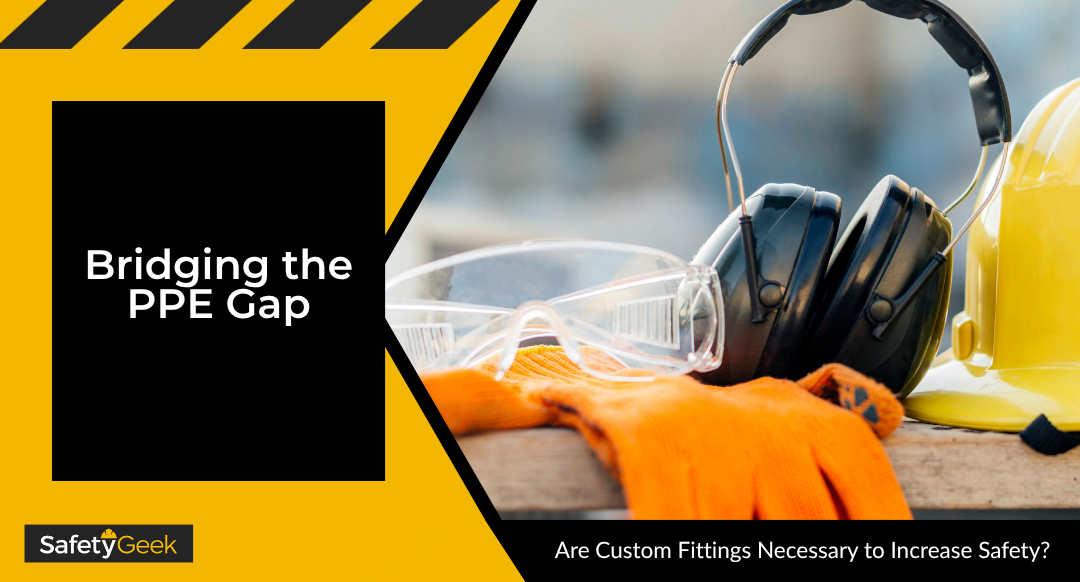
You already know that personal protective equipment only works if workers actually wear it, and it only protects them if it fits. Yet, most PPE is still designed around a “standard” body that doesn’t reflect the workforce you’re standing in front of. As you evaluate your program, the real question isn’t whether PPE fits — it’s whether standard sizing is quietly undermining the protection you think you’re providing.
Why Standard-Sized PPE Falls Short
Standard sizing assumes a narrow range of body types, and that assumption breaks down fast in a diverse workforce. Among female firefighters, 82.9% of structural firefighters reported ill-fitting gear, a notably higher rate than their wildland counterparts. Researchers linked that poor fit to a significantly greater risk of on-the-job injury. If you manage a team with a range of body sizes, you’re likely carrying similar hidden risk without realizing it.
The Real Cost of Ill-Fitting Gear
Ill-fitting PPE doesn’t just feel uncomfortable — it affects job performance. Gloves that bunch at the fingertips reduce grip and dexterity around moving parts. Vests that ride up limit mobility on uneven ground. Basic items like hard hats, ear protection, gloves and steel-toed boots are built to reduce injuries from falling items or loud equipment, but that protection only holds up if the gear actually stays in place.
Eyewear is a good example of how much fit variation already exists in the market. Options range from frames that flex to match facial contours to models built to layer over prescription glasses. This shows that fit is already a design priority for manufacturers, even without going fully custom.
What the Research Says About Fit and Function
Across a range of occupational domains, 88% of studies showed a significant effect of PPE fit on performance, including slower reaction time, reduced range of motion and decreased endurance. That’s a strong signal that fit isn’t a comfort issue you can deprioritize. It’s a performance and safety variable you can measure and manage.
How Regulations Are Catching Up
Regulators have started treating fit as a compliance issue rather than a nice-to-have. As of January 2025, PPE must properly fit each affected employee under federal construction law, bringing the standard in line with general industry and maritime requirements.
The change specifically calls out smaller workers, including many women, as a population that standard sizing has historically failed to serve. If your program hasn’t reviewed fit practices in light of this update, now is a good time to start.
Weighing Custom Fit Against Standard Sizing
Custom fitting isn’t free, and it isn’t always practical. Made-to-measure gear typically costs more per unit, takes longer to arrive and narrows your list of available manufacturers, which can strain a program that outfits large or fast-changing crews.
On the other hand, custom or near-custom options improve protection, reduce the odds that workers quietly remove uncomfortable gear and support compliance with fit requirements that regulators are now writing into law. More manufacturers are expanding size ranges and offering semi-custom adjustments in response to workforce demographics and regulatory pressure. So, full customization is becoming less of an all-or-nothing decision than it once was.
Small Fixes That Make a Big Difference
Custom fitting doesn’t have to mean a full overhaul of your PPE program. Some of the most effective fixes are procedural, not financial:
- Stock a wider range of sizes, including extra-small and extra-large, before assuming custom orders are necessary.
- Do individual fit checks when issuing new gear instead of defaulting to a single size for the whole crew.
- Train supervisors to spot common fit problems — a hard hat worn backward, for instance, changes the point of impact the design relies on, throwing off the suspension system that’s meant to absorb it.
Fit Is a Safety Decision, Not a Comfort Preference
You don’t need to custom-fit every piece of PPE in your inventory to close the gap. What you do need is a program that treats fit as a measurable safety factor, stocks enough size variation to cover your actual workforce, and reserves custom solutions for the cases standard sizing can’t solve. That shift protects your people and keeps you on top of changing regulations.