Transparency in construction is more than just open communication—it’s about ensuring every worker understands safety protocols, expectations, and daily operations. A transparent work environment helps prevent accidents, improve workflow, and build trust among employees and contractors. On a construction site, where safety is paramount, maintaining high levels of transparency can be the difference between a successful project and a costly delay or incident.
Clear Communication Channels
One of the cornerstones of transparency on a construction site is maintaining clear and open communication. Workers need to feel confident that they can raise safety concerns without fear of reprisal. Regular meetings, updated safety signage, and an open-door policy for discussing safety hazards are essential practices. These efforts not only ensure that all workers are on the same page but also highlight the company’s commitment to prioritizing worker well-being.
Supervisors should ensure that all workers are informed about daily site activities, especially those that involve heavy machinery, high-risk operations, or areas under temporary construction. With so many moving parts on a construction site, transparency in daily operations reduces the risk of miscommunication, which can often lead to accidents.
Detailed Safety Protocols and Inspections
A commitment to safety requires frequent and thorough inspections of equipment and work areas. Ensuring that all safety protocols are documented and accessible to workers enhances transparency. Posting detailed procedures for handling heavy equipment, hazardous materials, and daily tasks creates an environment where workers can easily refer to the safety measures they must follow.
Scaffold safety inspection, for example, is a critical element in any construction project involving heights. Regular and transparent inspections help ensure that scaffolding is properly assembled and maintained, reducing the risk of falls and injuries. Being transparent about inspection results and making them visible to all workers instills confidence that the site is safe and well-managed.
Transparency in Equipment Usage and Maintenance
Equipment-related injuries are a major concern on any construction site. To maintain maximum transparency, every piece of machinery and equipment should have a clear log of maintenance checks and operator records. Workers should be able to access information regarding who last used a machine, when it was last serviced, and whether it is safe to operate.
This approach ensures that equipment is not only in top working condition but also that no corners are cut when it comes to safety protocols. Transparency in equipment usage helps prevent malfunctions, accidents, and unnecessary downtime, while also promoting a culture of accountability among all site workers.
Empowering Workers to Speak Up
One of the most effective ways to promote transparency is by empowering workers to voice their concerns. Workers who feel comfortable bringing up safety issues contribute to a more secure and efficient work environment. To encourage this, management should make it clear that reporting unsafe practices or equipment is not only acceptable but expected.
Creating anonymous channels for workers to report potential hazards or safety violations can also help to maintain transparency without fear of retaliation. When workers are empowered to speak up, the overall safety and efficiency of the site improve significantly.
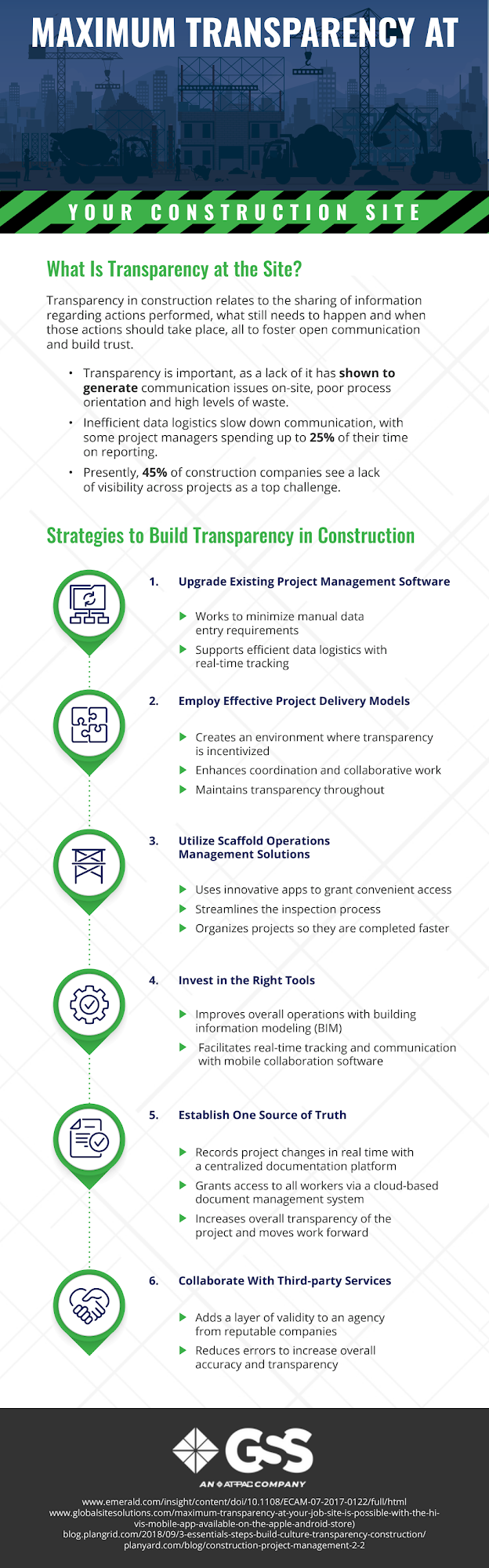
Transparency at construction sites is essential for ensuring safety, efficiency, and trust among workers. Through clear communication, detailed safety protocols, regular inspections, and empowering workers to raise concerns, transparency can reduce accidents and promote a culture of accountability. When transparency becomes a standard practice, construction sites become safer and more productive environments for everyone involved. Check out the accompanying resource for more information.
Mathew Horwood has over 20 years of industrial construction experience, including key roles with major EPCs. Since joining GSS in 2018, he has led the development of the Hi-Vis® Scaffold Management Software and driven critical operational improvements. Now responsible for North American performance and P&L, Matt continues to enhance GSS’s service excellence and industry impact.