Estimated Read Time: 10 minutes
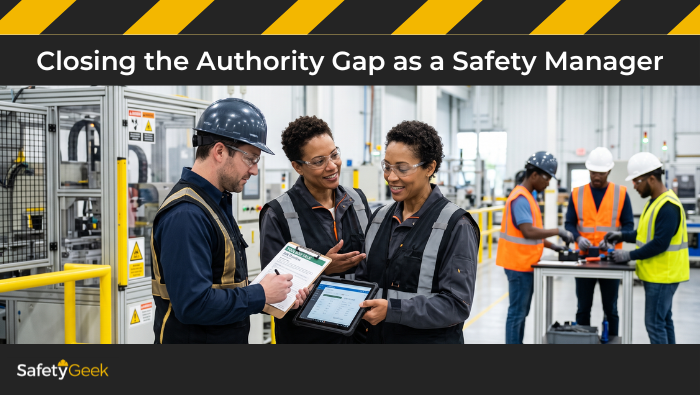
One of the biggest challenges safety professionals face is the feeling of talking to a wall. You share safety information, watch employees nod in agreement, but then they go right back to their unsafe behaviors. If this sounds familiar, your safety program structure might be working against you, not because of your skills or dedication, but because traditional safety program models fundamentally limit engagement.
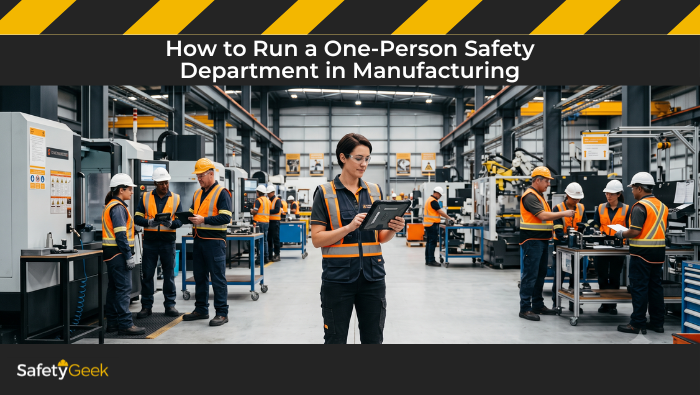
The traditional safety structure places one person – you, the safety manager – in charge of everything from training to inspections to policies. While this approach makes sense on paper, it creates a critical flaw: you likely lack true authority over the people whose behaviors determine safety outcomes.
In this post, we’ll explore a step-by-step guide to redesigning your safety program structure to boost engagement and influence across your organization. By shifting from a one-person safety approach to a shared accountability model, you can empower supervisors and employees to become active participants in creating a safer workplace.
Key Takeaways
- Traditional safety structures often create an authority gap that limits true influence.
- Meaningful participation from employees and supervisors is essential for sustainable safety engagement.
- Redistributing safety roles empowers supervisors and employees, making safety part of daily operations.
- A leadership buy-in and gradual transfer of responsibilities are critical steps.
- Tracking participation and leading indicators helps measure progress and improve continuously.
The Traditional Safety Program Structure & Its Challenges
In most organizations, safety professionals are expected to handle nearly every safety-related task:
- Developing and delivering all safety training
- Conducting regular inspections and audits
- Creating and updating policies and procedures
- Coaching employees on safe behaviors
- Investigating incidents and accidents
This structure developed naturally as companies recognized their need for safety expertise. When operations became overloaded with safety requirements, they hired specialists and dumped all safety responsibilities on them.
The problem? This “one-person show” creates several significant challenges:
- Authority Gap: Unless you can hire and fire employees, you don’t have true authority—you have artificial authority that depends on others to enforce your recommendations.
- Checkbox Mentality: When safety comes exclusively from the “safety person,” employees see it as a compliance exercise rather than a shared responsibility.
- Disconnect Between Safety and Operations: Safety becomes viewed as separate from – and sometimes at odds with – productivity and operations.
Let’s say you’ve spent weeks developing a new lockout/tagout procedure. You deliver excellent training, but when employees return to their workstations, their supervisor says, “That’s the official way, but here’s how we really do it when we’re in a hurry.” Guess whose direction they’ll follow? The person who evaluates their performance and controls their paycheck.
Explore more about how to prevent common Lockout Tagout violations to avoid undermining the impact of your procedures.
THE ALL-ACCESS PASS RESOURCE PAGE
Get all the FREE templates, safety management resources, PDFs, spreadsheets, and more...
Authority vs. Influence in Workplace Safety
Most safety professionals operate with what I call “artificial authority.” People assume you have power because you’re “the safety person,” but without hire/fire authority, you’re relying on influence rather than direct control.
True influence isn’t about being charismatic or persuasive—it’s about creating systems that naturally encourage engagement and ownership. The most effective safety professionals recognize this distinction and build their programs accordingly.
Consider this scenario: You observe an employee not using required PPE. You can:
- Directly tell them to put on their PPE (exercising artificial authority)
- Report them to their supervisor (leveraging someone else’s authority)
- Create a system where their peers and supervisors consistently reinforce PPE use (building influence)
The third option creates sustainable change because it embeds safety into operational processes rather than making it dependent on your presence.
This aligns with principles explained in why safety influencers never have to tell people what to do.
Meaningful Participation as the Heartbeat of Engagement
True safety engagement comes from meaningful participation – not just asking for input, but creating real opportunities for employees to help shape and drive safety initiatives.
What does meaningful participation look like? It’s:
- Having a voice in developing procedures they’ll need to follow
- Contributing ideas that get implemented
- Seeing their feedback create positive change
- Taking pride in safety improvements they helped create
This is very different from the typical approach where safety professionals hold a few conversations, gather some feedback, and then disappear to create policies in isolation.
When employees are meaningfully involved, several powerful things happen:
- They develop “skin in the game” and care about outcomes
- They understand the “why” behind safety requirements
- They internalize safety principles rather than just complying with rules
- They become advocates who reinforce safety with their peers
- They take pride in the safety program’s success
Imagine having a team of employees who not only follow safety procedures but actively champion them to others. That’s the difference meaningful participation makes.
For practical tactics on engaging employees beyond committees, check out why employee engagement must be more than a safety committee.
Redefining Roles—Who Does What (and Why)
To transform your safety program structure, you need to redistribute responsibilities based on authority and influence. Here’s how key safety functions should be reallocated:
Training
Traditional Approach: Safety professionals conduct all safety-related training.
Influence-Based Approach: Supervisors or trained employees deliver training, with safety professionals creating materials and serving as coaches.
Why It Works: Employees listen to their direct supervisors. When a supervisor emphasizes safety during training, it signals that safety is valued by the person who evaluates their performance.
This approach is expanded in the post about how to identify the best training techniques for safety meeting success.
Observations & Coaching
Traditional Approach: Safety professionals observe employees and provide coaching.
Influence-Based Approach: Supervisors conduct observations and provide immediate feedback, with safety professionals coaching the supervisors.
Why It Works: Supervisors have the authority to reinforce behaviors immediately. Additionally, when supervisors conduct observations, they internalize safety standards more deeply.
Learn more about structuring these efforts in Secrets to an effective safety observation.
Inspections
Traditional Approach: Safety professionals conduct all inspections and audits.
Influence-Based Approach: Front-line teams conduct regular inspections, with safety professionals performing quarterly comprehensive audits.
Why It Works: When employees inspect their own workspaces, they develop ownership of safety conditions and gain deeper hazard recognition skills.
This is closely related to the value of including employees in your safety inspections process.
Accident Investigation Process
Traditional Approach: Safety professionals lead all investigations.
Influence-Based Approach: Supervisors conduct preliminary investigations for lower-severity incidents, with safety professionals focusing on serious events and systemic issues.
Why It Works: Supervisors are usually first on the scene and understand operational contexts. This approach also reinforces their accountability for safety outcomes.
For building robust investigation teams, see how to create an employee accident investigation team.
In this restructured approach, your role as a safety professional becomes more strategic. Instead of doing everything yourself, you become the coach, the data analyst, the systems designer, and the subject matter expert who enables others to drive safety excellence.
Step-By-Step Roadmap to a New Safety Program Structure
Transforming your safety program structure doesn’t happen overnight. Here’s a practical roadmap:
Step 1: Secure Leadership Buy-In
Start by helping your management team understand the accountability gap in the traditional safety structure. Have candid conversations about:
- The limitations of artificial authority
- How the current structure may be undermining engagement
- The business benefits of integrating safety into operations
What management commitment really looks like is a crucial piece that strengthens your case.
Research shows that management commitment is the single most important factor in safety program success.
Step 2: Start Small
Begin with minor shifts that demonstrate the value of the new approach:
- Add 5-minute safety discussions to existing operational meetings
- Invite supervisors to share safety lessons or success stories
- Ask employees for input on specific safety challenges
- Conduct joint inspections with supervisors to model the process
These small steps build confidence and demonstrate the benefits without overwhelming anyone.
This is in line with ways to increase safety awareness in everyday operations.
Step 3: Develop Supervisor Safety Capabilities
Launch a monthly supervisors’ safety huddle focused on:
- Reviewing department safety data
- Sharing coaching techniques
- Celebrating successes
- Building hazard recognition skills
- Discussing upcoming safety initiatives
This creates a community of practice among supervisors and signals the importance of their safety leadership role.
Implementing supervisor accountability can be boosted by using tips from boost supervisor accountability in safety management.
Step 4: Gradually Transfer Responsibilities
As supervisors become more comfortable with their safety role, begin formally transferring responsibilities:
- Have supervisors lead specific safety training sessions
- Create simplified inspection checklists for supervisors to use
- Develop a preliminary investigation process for supervisors to follow
- Establish clear criteria for when to escalate to the safety professional
Document these responsibilities in job descriptions and performance expectations to formalize the change.
For guidance, see defining safety responsibilities thoroughly.
Step 5: Strengthen Support Systems
Build systems that enable supervisors and employees to succeed:
- Develop a robust first-aid program with multiple trained responders
- Create easy-to-use forms and checklists
- Implement simple tracking systems for observations and inspections
- Establish regular communication channels for safety information
These systems make it easier for everyone to participate in safety without creating excessive administrative burden.
Measuring Progress & Continuous Improvement
As you transition to this new structure, track metrics that demonstrate its impact:
- Participation metrics: Number of employee-led inspections, supervisor observations, etc.
- Leading indicators: Close-out times for hazards, training completion rates, near-miss reporting
- Engagement measures: Employee suggestions, voluntary participation in safety initiatives
- Traditional lagging indicators: Injury rates, severity, costs
Studies confirm that organizations with higher employee participation in safety have significantly lower injury rates.
Data-driven decision making is key—see how to implement a data-driven safety program for continuous improvement.
Use this data to identify gaps and opportunities for further improvement. Share successes widely to reinforce the value of the new approach and recognize those who are leading the way.
Podcast - Getting Sups to Complete Safety Tasks
[00:00:00] We all know that supervisors need to take on a more active role when it comes to safety, but they have a ton of other responsibilities too. This sometimes leaves safety tasks being put off for last and likely never getting done. So today I wanna share some tips on how to get your frontline leaders to take more accountability when it comes to safety.
Let's get to it.
Hello, hello, hello, my safety [00:01:00] friends. I hope you are staying warm during the start of the winter season. Honestly, It makes me enjoy living in Florida even more. Even though every winter I say I need to move further south because we do still get some 32 degree mornings like we had a couple of weeks ago that I'm like, no. Mm-hmm. Too cold for me. Alrighty, so let's get to it. So the one thing that I advocate for is that safety enforcement and implementation comes.
From within that employee's line of power. Some people like to call that a chain of command. I call it a line of power. It's somebody who has authority over them. Likely this would be their frontline supervisors. And as you are creating your safety management systems you may have gotten to the point where your executive team agrees with you.
And safety tasks are being given to the [00:02:00] supervisors, but now are you struggling to get them to actually do them? So today I wanna share with you some of the ways that you can shift this and start to truly partner with your frontline supervisors to get them to do these tasks. In one way, shape, or form.
So let's get to it. All righty. So let's say that you are expecting your frontline supervisors to lead safety trainings or conduct safety observations or complete department or equipment inspections. Coach employees do your accident investigations, all of these things that we teach you to shift to supervisors inside of Safety Management Academy, that these are the things that supervisors should be doing because they are in the line of [00:03:00] power and they are the ones that are more likely to have all the information needed to do these tasks.
But what we have to realize is that supervisors have other responsibilities too. They have to answer to production quotas, to quality, to finance, to hr, to maintenance. They are pulled in a lot of directions, so if you want them to complete your safety tasks, then you need to make this an easy button for them.
We want them to feel that. The safety responsibilities that they have are the easiest part to get done, and they will always prioritize them. So I have five tips for you that we are going to break down in today's episode. Tip number one. Is make safety part of how they do their job. It's not an [00:04:00] added task that you're giving them.
It's just something that they have to do in order to do their job. So you have to show them how to do these things. When they are doing something else it's like you're bundling it with the other work that they're doing. So for example, if they're already doing a pre-shift meeting every day, adding five minutes to talk about safety is not a big ask, especially if you are feeding them the topics to talk about.
Now, if they already have to talk to their employees every day. Adding in one or two sentences or questions to do a little bit of safety. Coaching is not a big ask, right? If they're already walking around and looking at production levels and how their employees are working. Doing a quick inspection too.[00:05:00]
Is not a lot to ask, especially if you can make the paperwork really easy that goes along with it. A lot of times the problem with these things is that we add a lot of documentation to prove that the supervisor did it well. Honestly, just like how we prove understanding of training by observing the employees after the training, you could observe your supervisors.
In that way to prove that they are doing what they should be doing. So keep your documentation to a minimum because that does make their job a little bit harder. , For example, they don't need to document every coaching session with the employees, but you do want them to document formal observations.
They don't need to have a detailed inspection form, but maybe you can give them a quick. Link that they can just take a [00:06:00] picture and write what they found and send it off for a work order to be created or as a reminder for them to finish when they get back to their desk. So make it an easy button for them.
All right. Number two is to mix safety tasks with quality and operations tasks. So you don't have a separate safety checklist. You add safety items to the checklist that they're already using, you don't have safe work procedures, you have SOPs. That include safety, operations, and quality. So how you do the job just includes safety, and
This is extremely important in. Making safety part of how business is done. A lot of times we put the word safety in front of everything or make safety a separate entity, and that then separates it in their mind as well as something that they can [00:07:00] disregard.
But if the SOP says that they have to follow this step, then that's just how the job is done. It's not a safe work practice, it's just the work practice. And there's been a lot of discussion lately that I have seen. In LinkedIn and other things about safety software and safety tools that we can use to collect this data and these inspections and all of that.
And I almost feel like it's the same thing that you're better off using the software or the tools that the supervisors and departments already use. How can you integrate safety into them? As opposed to making safety a separate tool that they have to use. And then as you are adding these things to their checklists or their procedures or their tools, you always want to be sure to explain how this [00:08:00] safety task improves quality and operations too.
Always use those leaders to help ensure that it's completed. So when you say to somebody like, I need you to add these items to your checklist, yes, they are safety items, but honestly this is gonna improve the impact on quality as well. Or, yes, they're safety items, but this is gonna improve operations as well, Really sell it to them as to why it needs to be part of their current process. Now, number three, as a safety lead, you need to shadow supervisors on a regular basis and point out areas that they can easily adjust to improve safe practices within their department. You wanna show them how complying with safety policies and procedures and doing these tasks and filling out these checklists, whatever it is you have them doing, you wanna show them how it is an easy button.
And I [00:09:00] do recommend that you do this regularly. I think every new person should do it immediately, but then on a regular basis, if you shadow somebody you know once every two weeks or once a month and you switch which supervisor it is. It actually gives you a sense of the pressure that they're under, and it gives you a better perspective when you're trying to add more tasks to that supervisor.
And it gives you the opportunity to find those areas that you can mix safety in or make safety as part of their job, right? And it helps you develop your programs better. But what it also does is show the supervisors your true expectations, and then how focusing on safety makes their job easier. And number four is you wanna utilize employees.
So you might wanna have employees coach each other. [00:10:00] You might wanna have employees lead trainings. You might wanna have employees inspect their areas, or employees do initial accident investigations with the supervisor as the guide overseeing all this, right? So examples of this might be the employees lead the toolbox talks, or employees lead the warmup for work sessions.
Or employees are your equipment trainers. Like I never did forklift training. I sent an employee to be the train the trainer because supervisors didn't have time to do it either. So we had employee champions who were our trainers, right? Employees could be the mentors and the trainers for new hires, employees can do the inspections of their work areas.
So you just need to develop. Systems for your supervisors to then verify their work. So now you're not adding the work to the supervisor. You're [00:11:00] building leaders of tomorrow in your employees and spreading the work out between many employees. This is one of the things that you might get some pushback on because then they'll say well, I can't spare my employee to do that inspection.
But if you're only asking for 10 minutes a week, that is not a big ask, and it's a lot easier for them to say yes to that. And it's well, the employee's already in the area, and that stops the supervisor from having to do it. You can even play on the hourly rate would you rather pay somebody $45 an hour to do this?
Or the employee who's making $25 an hour, or whatever it happens to be, right? So I think you can compromise with your management team to involve the employees more. And this is actually the better way of doing it because this improves employee engagement. And then it is creating your leaders of tomorrow, not just with your employees, but also with your supervisors, because [00:12:00] your supervisors now need to gain the skill of overseeing other leaders, right?
You're not a leader until you develop a leader who's developed a leader, right? You're giving them that opportunity to develop their leadership skills as well, and you don't lose that much in the process. You always wanna have backups on this, right? You're doing your quarterly inspections, so you're not just relying on these employee inspections, you're verifying the training of new hires because you're doing department assessments, right?
You're actually sending employees to train the trainer courses, or you're training the employees to train, and you're. Delivering the materials for the toolbox talks, or you're training them to do the warmup for work sessions. So there are some controls in there, but you really need to let go of the fact that you have to be the one doing everything, but then also let go of the fact of like, yes, it should be coming from the supervisor, but it's also [00:13:00] okay if he delegates it to employees or he or she delegates it to employees.
It's perfectly fine for that to happen, but as long as the supervisor is the facilitator, like they are the expert at it, and they're verifying that the work is getting done to meet the expectation. I think this is the absolute best way to go. All right. Now number five is to conduct regular supervisor meetings where you share in these meetings.
And I would recommend you do them at least once a month. You share the safety statistics and their impact on the overall production goals. for each supervisor. So you can break it down by department. You can break it down by shift, comparing apples to apples and not apples to oranges.
It is basically the same type of overview that you would do in an executive advisory committee. [00:14:00] Side note, if you're not in Safety Management Academy, that is something that we teach you to set up that your executive advisory committee is your decision making team. And they are, basically the ones setting the commitment to safety.
And in that meeting, we regularly share stats and trending data and analytics because we're moving the needle with the business when it comes to supervisors. They're not gonna care as much about return on investment, but what they will care about is their production goals and what they will achieve. So a lot of supervisors are given efficiency and production goals and quality goals, and if they hit them, they get bonuses and it could make their department shine.
So find out what your supervisor's goals are and then attach. Your safety statistics to them [00:15:00] that when they improved their coaching, you saw a bump in their productivity when they were completing their inspections. We saw a bump in efficiency. , In these meetings, you wanna highlight all the trends and you.
Sorted by supervisor. It'll create a little bit of competition between your supervisors as well and a little bit of teamwork. 'cause you can have them share stories. How did you get your production numbers up this month? Or what happened that the efficiency numbers went down or the quality numbers went down.
So you can have them share stories. You can highlight what each supervisor is doing, right? You can give them a focus area for the next month, and you can even add in some training. This is where I would take the opportunity to train my supervisors on effective coaching, on accident investigations, on how to properly correct people, all different things,
if you want your supervisors to be [00:16:00] completing your safety tasks, they need to understand the impact of those safety tasks. Now, previously you might have only been sharing them with the management team, but having this regular supervisor meeting helps them actually see that doing this work makes an impact.
A lot of times people don't do. Tasks you give them because they don't find them valuable. They need to understand what is going to happen with that data and with that paperwork that you're having them fill out. So those are my five tips. Make safety part of how they're doing their job and not an added thing to do.
Mix your safety tasks with quality and operational tasks. Shadow your supervisors regularly and point out areas where they can easily adjust. Utilize employees. To lead training inspections and all those tasks and conduct regular supervisor meetings. So the most [00:17:00] important thing is to know the goals that your supervisors wanna reach, and then connecting those dots on how safety helps them reach those goals.
Because we all know that when you focus on safety. Their job will actually get easier, but they need to experience that for themselves, and it sometimes takes you to be connecting those dots and you have to just show them that it's an easy button. All righty, my safety friend. That is what I have for you this week.
If you like this, please make sure you're subscribed so that way you don't miss an episode. And if you can also do me a quick favor, can you go on to whatever app you're using to listen to this podcast and leave a review? It really helps other people find the show and helps us get our message out there because
we are on a mission to elevate the role of safety in the workplace, and when we do this together, [00:18:00] we are both going to shine. So thank you so much. I'll chat with you next week. Bye for now.
Sign up to receive email updates
Enter your name and email address below and I'll send you periodic updates about the podcast.
Now It’s Your Turn
Building a safety program structure that drives engagement and influence isn’t complicated, but it does require letting go of traditional expectations about the safety professional’s role.
Start by assessing your current program:
- Where are you doing tasks that could be performed by supervisors or employees?
- Which parts could be shifted without adding risk or compliance gaps?
- How can you build systems to coach, support, and empower others?
- What small changes can set the path toward shared accountability?
For more insight on evolving your role, consider how to become a safety leader instead of a safety doer.
—
By thoughtfully integrating these strategies and leveraging practical resources from across the Safety Geek blog, you can transform your safety program from a solo effort into a thriving, collaborative culture that really sticks.
FAQ
What is the main problem with traditional safety program structures?
Traditional safety programs often place all responsibility on a single safety professional without sufficient authority over employees. This creates an authority gap where recommendations depend on others for enforcement, leading to low engagement and a checkbox approach to safety.
How can meaningful participation improve safety engagement?
Meaningful participation involves giving employees real influence in safety decision-making, such as contributing feedback, helping develop procedures, and seeing their suggestions implemented. This fosters ownership, better understanding of safety’s importance, and advocacy among peers.
Why is redistributing safety roles important?
Redistributing roles allows supervisors and front-line employees to take accountability where they have direct authority. This leads to more immediate reinforcement of safe behaviors and better integration of safety into daily operations.
How do I start changing my safety program structure?
Begin with securing leadership buy-in by presenting the risks of the current model and benefits of change. Then start small by adding safety discussions in meetings and building supervisor capabilities before gradually transferring responsibilities.
What metrics should I use to measure improvement?
Track participation metrics like employee-led inspections, leading indicators such as hazard close-out times, engagement measures like safety suggestions, and traditional injury rates to understand overall program effectiveness and guide continuous improvement.
Hi, I'm Brye (rhymes with sky)! I am a self-proclaimed safety geek with two decades of general industry safety experience. Specializing in bringing safety programs to a world-class level and building a safety culture, I have trained and coached many safety managers, just like you, on how to effectively manage workplace safety in the real world. I would love to help you too.