Estimated Reading Time: 10 minutes
TL;DR: A safety observation is a planned check where a trained observer watches an employee do a task, scores whether each safe work step was followed, and talks through the results with them right away. It shows how well people follow your SOPs and understand their training BEFORE an injury tells you… and every positive one reinforces the right way to work.
A safety observation is a planned, documented check of how an employee performs a task compared to your safe work procedures, followed by a feedback conversation with that employee. It gives you insight into how well your people follow the safe work procedures AND how well they understand your safety training.
Maybe you already have observation cards. And maybe they get pencil whipped on Friday afternoon, come back 100% safe every time, and sit in a file… just another piece of paperwork that never changes a thing.
A real observation works differently. If you’re only relying on your injury numbers, you can be blindsided by the big one… a severe injury or fatality. Observations done right show you the shortcuts and the drift while there’s still time to fix them.
Key Takeaways
- A safety observation has 2 people: the observer who watches and scores the task, and the employee who does the task and gets the feedback.
- Most observations will be positive. You do them anyway to catch the drift early and to reinforce the right way to work.
- Detailed SOPs come first. If your SOPs are vague, your observations will be too.
- Front-line supervisors should do most observations, because they’re in the employee’s line of power.
- Keep each observation to about 20 SOP steps, or roughly 20 minutes.
- Review the results with the employee immediately, and lead with curiosity, not a reprimand.
- Never use observations as a witch hunt. They’re there to change behavior.
What Is a Safety Observation?
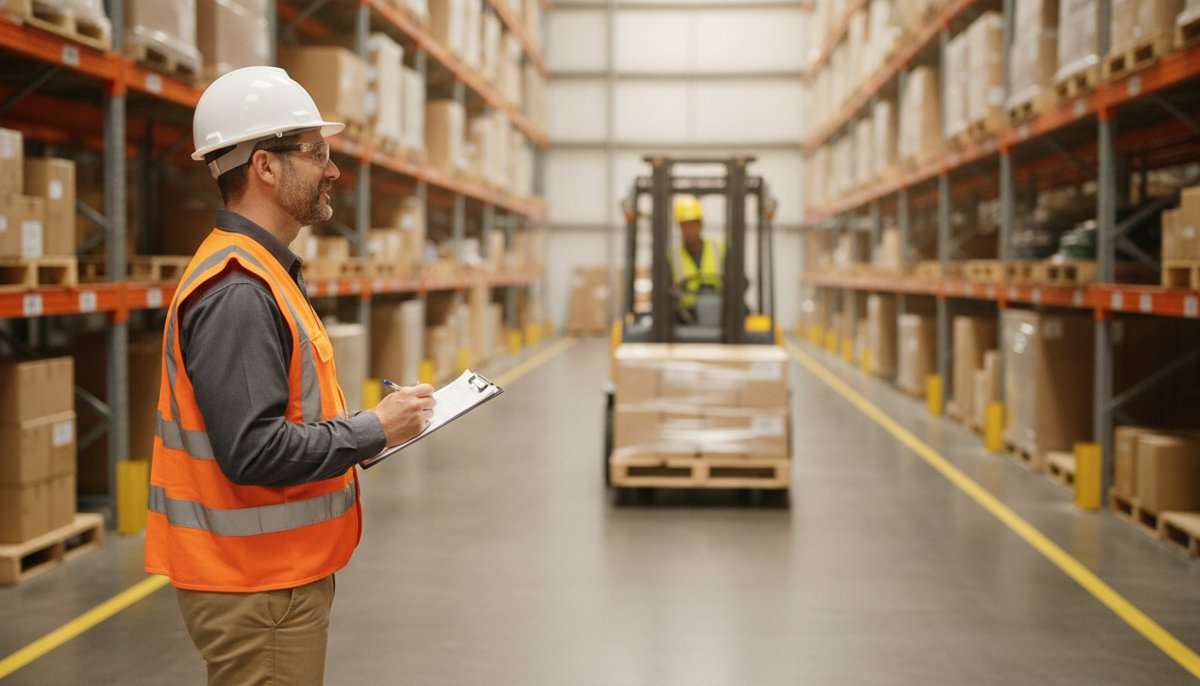
A safety observation involves 2 people: the employee (the observed) and the person completing the observation (the observer). The observer watches the employee work and decides whether they followed each safe work practice. You can score it with a simple yes/no, a 1-5 scale, or a tally of how many times they were in compliance compared to not.
Following the observation, the observer discusses the results with the employee and coaches them on how to improve. That conversation is where the behavior actually changes.
Why Most Observations Come Back Positive
Remember all the Covid-19 testing? We kept testing even though most results came back negative… because we knew the virus was out there.
Observations work the same way. You’re looking for the at-risk behaviors, but most observations will be positive.
So why do we do them? To find the at-risk behaviors and help change them.
Plus, safety observations are a great form of positive reinforcement.
Observations vs. Coaching vs. Assessments
These 3 terms get used interchangeably, and they aren’t the same thing. Get the definitions straight, and you’ll know who’s supposed to do what… and what counts in your numbers.
| Coaching | Safety Observation | Assessment | |
|---|---|---|---|
| What it is | A question-based conversation that recognizes safe work or corrects a behavior | A formal check of 1 employee against a group of safe work steps | A check of a whole department, area, or team on 1 job task |
| Who does it | Supervisors (safety coaches the supervisors) | Supervisors, managers, or trained coworkers | The safety manager |
| Documented? | No, it’s built into everyday conversations | Yes, on a standardized form | Yes, as department-level data |
| What you get | Reinforced habits in the moment | Individual feedback plus trend data | Compliance data to compare departments and share with leadership |
Safety Observation Examples
A good safety observation always ties back to specific steps in a JHA or SOP. Pick the steps that actually hurt people when they get skipped… that’s where your form earns its keep.
Safe work practices you might score on an observation form:
- Forklift operation: looks in the direction of travel, sounds the horn at blind intersections, keeps the load low when traveling, and slows down for pedestrians.
- Manual lifting: tests the load first, keeps the load close to the body, and pivots with the feet instead of twisting at the waist.
- Knife and cutting work: wears a cut-resistant glove on the non-knife hand, cuts away from the body, and stores the knife in a scabbard between cuts.
- Lockout/tagout: notifies affected employees, applies a personal lock to every energy source, and tries to start the machine to verify zero energy.
- Ladder use: inspects the ladder before use, keeps 3 points of contact, and faces the ladder while climbing.
How to Write Good Safety Observation Feedback
A good observation note describes the behavior, not the person. “Kept the load 4 inches off the floor through aisle 7” is useful. “Good driver” isn’t.
When something wasn’t followed, write what you saw and what the safe step is. “Traveled with forks raised about 2 feet, the SOP calls for the load low to the ground” gives the employee something they can actually change.
How Safety Observations Change Behavior
Adults learn best when they see how to do something and then do it themselves. When you observe your employee doing a task and give feedback, it strengthens that learning even further.
Repetition is the other piece. When someone repeats a task day after day, complacency creeps in and shortcuts show up. A standardized observation reorients the employee to the proper safe work methods and reinforces why they do the job that way.
What the Research Shows
And you don’t have to take my word for it. A classic study in the Journal of Applied Psychology by Komaki, Barwick, and Scott looked at a food manufacturing plant. When workers got specific safe-behavior targets plus regular observation feedback, safe performance went up in both departments studied… and it slid back when the feedback stopped.
So a program that runs hard for a month after an injury and then fades puts you right back where you started.
Positive feedback, even when you’re correcting a behavior, has an impact on future performance. Consistent observations drive compliance with the safety rules and start building safety habits.
And if people know they’ll be observed on a task, they’re more likely to learn to do it correctly.
Observations as a Leading Indicator
OSHA describes leading indicators as “proactive, preventive, and predictive measures” in its guide to using leading indicators to improve safety and health outcomes. Observation data is exactly that.
Your injury rate tells you what already happened. Your observation scores tell you where behavior is slipping right now, so you can see the problem coming.
It’s also data you can bring to leadership BEFORE the injury numbers force the meeting. Observation scores are one of the easiest safety leading indicators to start tracking.
It All Starts With Detailed SOPs
You need to know exactly what to observe and what your safe work practices require at your facility. This is where JHAs and Standard Operating Procedures come into play. If your SOPs are vague, your observations will be too.
The more detailed you can be, the better results you’ll get. The goal of observations is to reinforce safe working practices and to identify problem areas through trending.
When SOPs are broken down into detailed steps, you can trend the details and find the steps causing the most injuries or non-compliance. Then you know exactly where your training or coaching needs work.
If your JHAs and SOPs live in separate binders, integrating the JHA with your SOP gives you 1 document to build the observation form from.
THE ALL-ACCESS PASS RESOURCE PAGE
Get all the FREE templates, safety management resources, PDFs, spreadsheets, and more...
Who Should Do Safety Observations?
Any trained person can conduct a safety observation. They need training on the SOPs they’re observing, how to conduct an observation, and how to give constructive feedback.
Front-Line Supervisors
Most observations should be done by front-line supervisors. They’re in the employee’s line of power, so they get the best results in behavior change. Department managers are also a good choice.
Coworkers and Peers
You can broaden it out to include yourself and coworkers. Employee-to-employee observations tend to get very positive results.
When a coworker is giving the feedback, there’s no chance of disciplinary action, so the employee is more likely to work the way they normally do. Supervisors give you the most leverage to change behavior, and peers give you the truest picture of normal work. That’s peer-to-peer safety accountability on the floor.
OSHA’s Recommended Practices for Safety and Health Programs backs this up. It says workers should be involved “in all aspects of the program,” including setting goals, identifying and reporting hazards, investigating incidents, and tracking progress.
What About Discipline?
Discipline attached to observations can be tricky. If an employee has a history of non-compliance and is already in the progressive discipline process, action may be appropriate. But you NEVER want to do observations with the goal of disciplinary action.
How to Conduct a Safety Observation
Using a standardized form is the easiest way to complete a safety observation. Pre-fill the form with the standard safe work steps you want to observe.

Tell Them You’re Observing
You can tell the employee you’re observing them. There’s no need to be sneaky about it.
Some people say that if you tell the employee, you won’t “catch” them doing anything wrong. But one of the goals is making sure the employee understands how to do the job right, so telling them won’t hurt that. Transparency is always the best option when building a safety culture.
Watch Long Enough to See Normal Work
Observe the employee for the entire task. For repetitive tasks, you can use a time limit, but it has to be long enough to get accurate data.
Employees tend to be on their best behavior for the first 10 minutes or so, then they relax into their normal routine… that’s what you want to measure. So on a repetitive task, keep watching past that first 10 minutes before you score it.
Limit Each Observation to About 20 Steps
When you build your pre-filled observation forms, limit them to about 20 SOP steps. Trying to do too many at once takes too long (and honestly, nobody finishes a 45-minute form), so the observer gets distracted, quits halfway, or gets complacent over time.
If it will take more than 20 minutes to observe the task, break it into multiple observation forms.
A shorter form also helps with management support. You’re only asking for 20 minutes per observation, and most supervisors can spare that.
It lets your team complete more observations, too. Across your site, observing 5-10 employees a week beats 1 or 2.
Another way to limit scope is to observe by Job Hazard Analysis. Pick 1 JHA at a time and you can count the observation as a periodic review of that JHA, then update it as needed.
Review the Safety Observation With the Employee
Right after the observation, the observer and the employee look at the results together and talk about them. You can do this privately, or right there at the worksite to limit the interruption to production.
The observer reviews what they saw with curiosity. If the employee didn’t follow the SOP as expected, the first thought shouldn’t be a reprimand… it should be a question.
Why? Is the SOP wrong? Is there a better way of doing the job?
Those questions lead to a real discussion about why the SOP is in place and how the employee can change their behavior to prevent injury or improve quality and productivity. It’s a much more positive conversation. And sometimes you learn the SOP is what needs to change.
Benchmarking and Scoring Your Safety Observations
Scoring lets you justify your observation program and trend your compliance results. It can help your HR department, too.
- Create a scoring method. Personally, I like a point system, and a 1-5 scale can be your points. Add up the possible points and give the observation a score as points or a percentage (like in school).
- Use the first observation as the benchmark. Compare every future observation on that task to it, so the employee can see their own progress.
- Roll up like observations for a department or the whole organization to get a group score.
- Share the results period over period with management and employees. This makes a great proactive trending report.
- Bring the trend to annual reviews so employees get recognized for how they’ve improved.
Frequently Asked Questions About Safety Observations
What is the purpose of a safety observation?
The purpose of a safety observation is to reinforce safe work practices and catch at-risk behaviors before they cause an injury. It shows how well employees follow your SOPs and understand their training. The feedback conversation afterward is what actually changes behavior, and the scores give you leading indicator data to trend.
What should be included in a safety observation form?
A safety observation form should list the specific safe work steps from the JHA or SOP for 1 task, a scoring method for each step, the date, the task, the observer, and space for comments. Keep it to about 20 steps. Anything longer takes too much time and observers stop finishing them.
How often should safety observations be done?
There’s no OSHA-required frequency, so set a goal your supervisors can actually hit. Observing 5-10 employees a week across the site works for most operations. A steady rhythm builds habits… a burst of observations after an injury just feels like a crackdown.
Should employees know they are being observed?
Yes. Transparency builds trust, and one goal of an observation is making sure the employee knows how to do the job right. People are on their best behavior for about the first 10 minutes, so observe long enough to see how the work normally gets done.
Can safety observations be used for discipline?
Observations should never be done with the goal of discipline. If an employee is already in the progressive discipline process for repeated non-compliance, the results may be part of that record. But once observations feel like a witch hunt, people stop working normally around the observer and your data becomes useless.
Now It’s Your Turn
A safety observation shows you the drift before an injury does… that’s what makes it so powerful. Most will come back positive, and every single one is a chance to reinforce the right way to work.
Here’s how to get started this week:
- Pick 1 high-risk task and pull its JHA or SOP.
- Build a pre-filled form with no more than 20 safe work steps. Grab the free Observation Form spreadsheet in the All-Access Resources so you’re not starting from a blank page.
- Do 3 observations yourself so you know how the form works in real life before you hand it off.
- Train your front-line supervisors on the form and on leading the feedback conversation with curiosity.
- Start trending the scores alongside your injury data.
Worried your supervisors won’t do them? Start with the 20-minute form and 1 task. It’s a lot easier to say yes to 20 minutes at a time than to a whole new program.
You got this, Safety Friend. Share this post with your BSF who’s ready to build better observations.
Hi, I'm Brye (rhymes with sky)! I am a self-proclaimed safety geek with two decades of general industry safety experience. Specializing in bringing safety programs to a world-class level and building a safety culture, I have trained and coached many safety managers, just like you, on how to effectively manage workplace safety in the real world. I would love to help you too.