Estimated Reading Time: 12 minutes
Machine safety culture is essential for creating a workplace where safe machinery practices are embedded into daily routines rather than just being an afterthought or compliance checkbox. This blog post explores what machine safety culture means, why proactive safety programs matter, and how to engage employees and lead effectively without resorting to authoritarian tactics. If you want to move beyond reactive fixes and build a true culture of safety, this post provides practical insights and frameworks to guide your journey.
Whether you’re an operator, safety professional, or supervisor, understanding and fostering machine safety culture empowers you to stop incidents before they happen and significantly improve morale and productivity. The article covers leadership approaches, employee engagement strategies, and a comprehensive Safety Management Cycle to help you implement sustainable safety improvements.
Starting from assessing your current culture to coaching frontline teams and analyzing data, every phase of this process is essential for success. And the best part? You don’t need formal authority to make a difference. With the right tools and mindset, you can be the catalyst for change in your workplace.
Key Takeaways
- Machine safety culture means safety as a daily mindset, not just adherence to rules
- Proactive machine safety programs spot hazards before harm occurs, rather than reacting afterward
- Employee engagement in machine guarding is the most underutilized driver of lasting safety
- Safety leadership is about modeling the right behavior, not enforcing from a distance
- The Safety Management Cycle (Identify, Develop, Implement and Train, Coach and Observe, Analyze) provides a practical roadmap
- You can build a strong safety culture solo using tested tools and resources
What Is Machine Safety Culture (And Why Does It Matter)?
Machine safety culture happens when EVERYONE values safe practices around machinery. It’s how operators mention guarding at shift change. It’s why a tech stops on a rushed job because lockout isn’t negotiable. It’s the invisible system that runs even when you’re not there.
Research from Pacific Blue Engineering says machine safety culture grows from mindset, daily behaviors, and leadership action that bring safety off the paper and into real work. NIOSH agrees. Their framework says culture is what makes workers report hazards, follow procedures, and watch out for each other. You can’t force this with a rulebook.
Compliance keeps you out of trouble. But machine safety culture? That keeps you out of incidents… and THAT is the real magic.
Strong safety cultures see up to 50% fewer incidents compared to compliance-only shops, says the Construction Advancement Grant Center. That’s not small. That’s the line between always reacting and finally getting ahead.
Picture this: on a real shop floor, one operator bypasses a guard to speed things up. In a compliance program, maybe it gets caught―after a near miss. But in a true safety culture? A coworker sees it, steps in, and fixes it peer-to-peer. No blame. No drama. Just the culture working.
This is the Identify phase of the Safety Management Cycle. You have to honestly assess your current machine safety culture, spot the gaps, and see the real behavior drivers BEFORE you start fixing. The Safety Geek’s training and assessment tools are built to help you do that.
Why Fostering a Proactive Machine Safety Program Is Non-Negotiable
Proactive means you see the hazard before anyone gets hurt. Reactive means you’re just taking notes after the fact. If you want brag-worthy results, you need a proactive program. There’s no shortcut.
ISHN’s data on technology and safety culture shows proactive programs deliver measurable, predictable results because they build in systems for finding and reducing risk before it explodes. The jump from reactive to proactive is HUGE – fewer incidents, stronger morale, and easier budget talks with leadership.
You can’t pencil whip your way to zero incidents. Only a proactive machine safety program creates the conditions for braggable results.
What does a proactive machine safety program look like?
- Hazard identification is ongoing, not just during formal audits
- Risk assessments get updated every time equipment, processes, or people change
- Procedures, PPE, and training are reviewed and updated regularly
- You predict changes before they hit – like new machinery, tech, or team members
- Feedback loops let frontline workers flag problems before they explode
This is where the Develop and Implement phases in the Safety Management Cycle come in. In Develop, you write effective SOPs, programs, and training materials, making proactive habits the norm. Then Implement and Train means you actually equip your team with these – hands-on, role-by-role.
Safety isn’t “done” – it’s a cycle. Always moving, always improving. Pacific Blue Engineering’s research is clear: organizations that keep safety strong treat management as a living, breathing process. The Safety Geek’s training modules, templates, and SOP resources plug in wherever you need, especially if you’re a team of one.
And if you’re solo? You don’t need authority. You need a proven system. Take just ONE proactive step this week.
THE ALL-ACCESS PASS RESOURCE PAGE
Get all the FREE templates, safety management resources, PDFs, spreadsheets, and more...
Employee Engagement in Machine Guarding: The Real Game-Changer
Programs stall out for one big reason: they forget about the people. Without employee engagement in machine guarding, you’re just writing up rules nobody follows.
Engaged workers report hazards, ask questions, and coach their peers when shortcuts show up. Pacific Blue Engineering and Indeed’s safety resources both agree: when employees actually own safety, everything changes. It’s what separates small wins from real, lasting transformation.
Motivation beats mandates EVERY time.
Why do people act? The Safety Influencer System says it’s about those hidden motivators. People do safety when it matters to them – going home healthy, being respected, or being seen as leaders. YOU need to find what matters to them and build your engagement plan around it.
Here are five ways to drive employee engagement in machine guarding:
- Run hazard hunts – incentivized walkthroughs where workers spot guarding or lockout problems
- Train employees to observe each other and give positive feedback (peer-to-peer, not supervisor-driven)
- Publicly recognize people who speak up, prevent near-misses, or coach their peers
- Bring frontline operators into JHA reviews – they help write and refine the job hazard analysis
- Assign Shift Safety Captains to check machine safety each shift and be the “go-to” resource
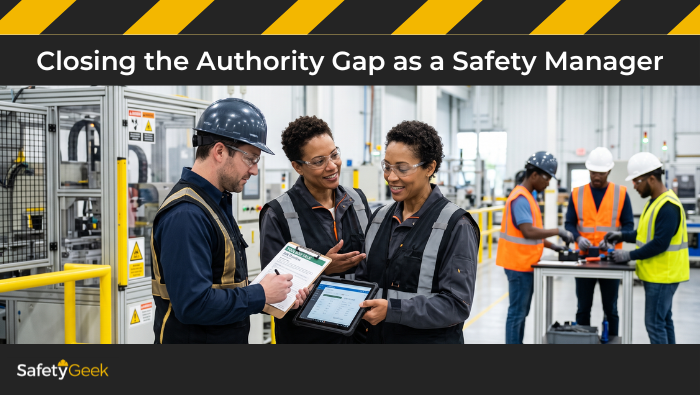
Here’s where Coach and Observe (Phase 4) in the Safety Management Cycle matters most. Coaching is NOT policing. Put on the safety police hat, and you become a threat – not a guide on the side. The Safety Geek’s observation forms and coaching guides make this difference practical so you can show up as a mentor, not an enforcer.
You CAN influence machine safety culture without formal authority. Start with employee engagement in machine guarding. Momentum builds on itself… and even a team of one can get it rolling.
Safety Leadership for Machinery: Leading Without the Safety Police Hat
Safety leadership for machinery doesn’t mean knowing every rule or shouting the loudest. It’s modeling the right choices every day, at every level. Culture ALWAYS starts at the top, not in the safety department. If your supervisors aren’t leading it, your culture hits a hard ceiling.
NIOSH and the CDC flat-out say leadership commitment is the NUMBER ONE factor in whether a safety culture sticks. Not policies, not punishments. Leaders set the tone. When they walk the talk, participate in safety activities, and have honest conversations, employees follow their lead.
Culture ALWAYS flows from the top down. Your supervisors have the seat at the table.
Here’s how strong safety leadership for machinery looks in real life:
- Commitment: Leaders talk about machine safety daily, not just after incidents
- Training: Supervisors get coached on leading honest safety conversations, NOT just enforcing
- Consequences: Safety leadership counts toward performance and gets recognized
- Authority: Supervisors stop unsafe work immediately – no need to escalate or wait
- Consistency: Same safety standard, every time, no matter the pressure
Don’t fall into the trap of heavy-handed discipline, blame, or lack of follow-through. Those kill cultures fast.
ClickSafety’s research proves it: strong safety leadership lowers injuries, lifts morale, and boosts business. The ROI is real. Coach your supervisors to LEAD, not just enforce, and suddenly, you’re not the “bad cop.” You’re coach of the coaches. The Safety Geek’s supervisor coaching and leadership tools can help – whether you manage one leader or many.
How These Pieces Fit Together: Your Machine Safety Culture Roadmap
But here’s the thing… nothing here works in isolation. Culture, programs, engagement, and leadership are an ecosystem. Pull out one, it all feels harder. But when you connect them, you get unstoppable machine safety culture – even when you’re not on the floor.
SafetyPros and BBSI both confirm: companies with truly integrated safety cultures, leadership, engagement, and systems have way fewer injuries, better productivity, and employees that actually stick around. That’s structural, not accidental.
Programs that run themselves? THAT is where you get your braggable results.
Here’s how the Safety Management Cycle brings it all together:
- Identify: Honestly assess your machine safety culture. Find gaps in knowledge, behavior, and leadership. This is your baseline.
- Develop: Build proactive programs. Use clear SOPs, tailored training plans, and guarding standards that match the job.
- Implement and Train: Train every level. Operators, supervisors, managers all learn their role in machine safety.
- Coach and Observe: Use coaching and structured observation to reinforce habits. Build engagement and accountability WITHOUT blame.
- Analyze: Look at your data – near-misses, trends, incident rates, training completion. Find what’s not working. Fix it. Repeat.
This cycle NEVER stops. Pacific Blue Engineering and CAGC agree: the best organizations treat this as the real operating system behind every safety win.
And yes, you REALLY can build all this solo. The Safety Geek’s tools, templates, coaching resources, and training modules are tested by pros just like you. Plug them in wherever you need, no matter your team size or authority level.
Frequently Asked Questions About Machine Safety Culture
What is machine safety culture and how is it different from compliance?
Machine safety culture is the shared mindset, values, and actions that make safety automatic around machines. Compliance just means following rules because you have to. Culture is when people do the right thing because THEY care – and hold each other accountable as a team. Compliance keeps you out of violations. Culture prevents real incidents.
How do you build employee engagement in machine guarding?
You create engagement by including workers in the safety process. That means involving frontline operators in hazard finding, JHA reviews, and peer safety checks. Publicly recognize those who speak up or coach others. Use the Coach and Observe phase to build accountability without blame. People care when they’re motivated, not just managed.
What does safety leadership for machinery actually look like?
It’s when supervisors and managers show safe behavior, coach instead of just enforcing, and treat machine safety as part of the job – not an extra task. This follows a simple order: Commitment, Training, Consequences, Authority, Consistency. Leading this way means safety is owned by EVERYONE.
How long does it take to build a strong machine safety culture?
There’s no single deadline. Culture shows up in new actions, and you’ll see improvements in engagement and near-miss reports within weeks of starting the right programs. For bigger shifts – the kind that last – expect 12 to 24 months of consistent work across all five phases.
Can one person build a machine safety culture without formal authority?
Yes. Safety Friend, YOU don’t need official authority to begin. Start with a framework, real engagement tactics, and honest coaching talks. The Safety Influencer System is built on this exact reality. Pick one proactive step, one engagement move, and one honest leadership chat. Momentum grows from there. You got this.
TAKE ACTION
BSF, pause for three minutes. Look at your machine safety culture honestly. Where is it working best? Where does it stall out? Is employee engagement missing? Are supervisors still wearing the safety police hat?
Pick ONE action to do this week:
- Run a hazard hunt with your frontline and recognize everyone who brings up a concern.
- Have a coaching conversation with a supervisor about modeling… not just enforcing.
- Map your current program against the five phases of the Safety Management Cycle – find your weak spot.
You’re never alone in this. The Safety Geek’s training, coaching, and SOP tools back you up every step of the Safety Management Cycle. I’m your guide on the side… you got this.
Now It’s Your Turn
What’s the ONE challenge you’re facing right now in building machine safety culture? Is leadership buy-in tough? Is engagement fading after training? Is your program stuck in a reactive loop?
Drop your answer in the comments below. Your insight or small win could be exactly what another Safety Friend needs to get unstuck. Braggable results belong to ALL of us. Let’s get better together.
Hi, I'm Brye (rhymes with sky)! I am a self-proclaimed safety geek with two decades of general industry safety experience. Specializing in bringing safety programs to a world-class level and building a safety culture, I have trained and coached many safety managers, just like you, on how to effectively manage workplace safety in the real world. I would love to help you too.