Estimated Reading Time: 8 minutes
Engineering controls safety is a transformative approach to workplace safety that emphasizes designing environments and processes to eliminate or isolate hazards at their source. Unlike relying on personal protective equipment (PPE) or administrative rules, engineering controls build safety directly into the physical workspace, ensuring continuous protection without depending on human behavior. This guide will explore what engineering controls are, how to implement them, and how they can turn your safety program into a true profit center.
By embedding engineering controls into your workplace, you shift from reactive safety measures to proactive, reliable hazard mitigation. From machine guarding and ventilation to noise control, these solutions reduce injury risk while boosting productivity. Whether you are in manufacturing, construction, healthcare, or any other industry, understanding engineering controls safety is essential for designing better and safer workspaces.
This blog post covers essential steps to implement physical hazard controls, real-world examples demonstrating their effectiveness, and strategies to foster a positive safety culture. Mastering this content empowers you to protect your workforce continuously and efficiently.
Key Takeaways
- Engineering controls safety means making physical changes to remove or isolate hazards at their source.
- They provide reliable protection independent of worker behavior and improve productivity.
- Steps include hazard assessments, prioritizing controls, collaboration, and continuous monitoring.
- Effective engineering controls include machine guarding, ventilation, ergonomic designs, and noise reduction.
- Proven examples show significant injury reductions across industries like manufacturing, construction, and healthcare.
- Building safety culture and leadership engagement enhances the effectiveness of engineering controls.
Most safety programs focus on compliance, hoping people follow the rules and remember their PPE. Engineering controls safety flips that mindset. Instead of relying on chance, you build protections right into the workspace. This turns safety into your easy button and shifts risk reduction into a true profit center.
Engineering controls safety means making physical changes to equipment, processes, or your workspace to remove or isolate hazards at the source. These controls don’t depend on workers remembering rules or donning gear. Once in place, they work around the clock, protecting everyone without effort.
This guide gives you a clear plan: how to implement physical hazard controls, how to design safer workspaces, and strong examples you can start using now. If you want safety to become your line of power, this is your blueprint.
What Are Engineering Controls in Safety?
Engineering controls remove or isolate hazards at their origin, unlike administrative controls (policies, training) or PPE (gloves, goggles) that depend on human behavior. In the hierarchy of controls, engineering controls sit just below elimination and substitution, making them one of the most effective options.
They deliver reliable, braggable results:
- Work independently from worker actions. No forgetting, no shortcuts
- Protect multiple people at once, across shifts and teams
- Improve productivity while reducing risk, true profit center material
- Provide consistent protection, no matter the day
Take a manufacturing plant that swaps manual sweeping for a vacuum system. The result? An 80% drop in inhalation cases in six months. That’s engineering controls in action; they eliminate hazards at the source, removing the need for constant reminders and compliance.
With engineering controls, your safety program moves from “hoping for the best” to proactive, lasting protection. Instead of chasing after lapses or missed steps, you prevent hazards from reaching workers in the first place.
Regular safety assessments are key to spotting hazards and ensuring engineering controls continue to perform. Keep your safeguards up to date and working as intended.
Implementing Physical Hazard Controls: Your Step-by-Step Roadmap
Ready to bring engineering controls safety into your workplace? Here’s a process you can use to make physical hazard controls a reality.
Step 1: Conduct Thorough Hazard Assessments
First, find the hazards in your workspace. Identify moving parts, pinch points, noise over 85 dB, chemical vapors, or anything that could cause harm. Use tools like gemba walks (on-site inspections), noise dosimeters, and chemical testing kits.
Physical hazards hide in plain sight, so inspect processes methodically. Talk to operators and document your findings. The aim: progress in identifying where engineering controls will make the biggest impact.
A full hazard assessment helps you uncover risks that routine inspections may miss.
Step 2: Prioritize Using the Hierarchy of Controls
Engineering controls occupy the third tier in the hierarchy. They’re often the best option when elimination or substitution isn’t realistic. Look to enclose noisy equipment, install local exhaust ventilation for chemical tasks, or put in machine guards to keep workers safe.
Match each hazard to the best control:
- Noise: try acoustic enclosures
- Chemical vapors: install local exhaust
- Moving machinery: add fixed guards or interlocks
Prioritize with proven methods from Prioritize the Most Important When Everything is Important by focusing on risk severity and frequency first.
Step 3: Collaborate and Systematize Your Approach
Successful engineering controls need teamwork. Safety managers, process engineers, and maintenance staff all have a part to play.
Systematize your approach: run pilot tests, schedule inspections, and log control maintenance. Keep detailed records so you can prove that your safeguards are delivering results.
Boost buy-in by using leadership skills and coaching strategies that keep your team engaged and invested.
Step 4: Monitor, Maintain, and Continuously Improve
Track your progress using meaningful KPIs like incident rates, equipment uptime, and cost savings. Plan for quarterly audits and annual reviews to find new hazards and keep controls sharp.
Engineering controls safety works best when you treat it as an investment. Just one prevented injury can pay for many controls over time.
THE ALL-ACCESS PASS RESOURCE PAGE
Get all the FREE templates, safety management resources, PDFs, spreadsheets, and more...
Designing Safer Workspaces: Engineering Controls Safety in Action
Embedding engineering controls safety into your designs creates workspaces where safety happens automatically.
Physical Layouts and Barriers
Good workspace design separates people from hazards. Minimum clearances and guard fence specifications help prevent contact before it happens. Install safety mats that shut down machinery if stepped on, or raised walkways to keep pedestrians separate from forklifts.
Redesigning a warehouse? Use barriers, marked walkways, and automatic warning systems. This means fewer close calls and a more productive, organized space.
Machine Guarding and Interlocks
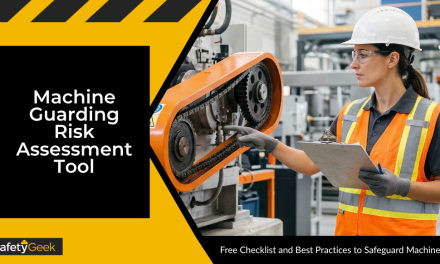
Fixed guards and interlocking devices both keep workers away from moving parts. Fixed guards work for rarely accessed areas, while interlocks allow access but safely shut down equipment if breached.
For instance, an interlocking light curtain on a press stops the machine the instant someone crosses into danger, offering protection that’s instant and reliable.
Ventilation and Ergonomics
Local exhaust ventilation systems capture chemical fumes before they spread, especially when paired with HEPA filters. Clean air zones become the norm, not the exception.
Use ergonomic improvements like adjustable workstations and mechanical lifts to reduce strain. Here, solutions don’t rest on memory. They’re built in. This keeps productivity high and health costs low, reinforcing safety as a profit center.
Building a positive safety culture makes engineering controls even stronger. Use the strategies from Your Ultimate Guide to Building a Safety Culture That Sticks to keep everyone engaged.
The real value of engineering controls safety is multiplication; a single change can protect many people, over many years.
Examples of Engineering Controls in Industry
Engineering controls are proven winners across all kinds of worksites. Here are standout examples that can spark new ideas.
Manufacturing: Machine Guarding
Fixed guards paired with light-curtain interlocks on press machines cut amputations to zero over twelve months. The right system prevents risky access but still lets needed tasks happen safely.
Operators reported greater confidence and better focus on quality. When safety works seamlessly, everyone wins.
Construction: Material Handling
A construction firm slashed back injuries by 60% using automated conveyors for heavy loads. The investment boosted productivity and employee well-being.
The lesson: controls that fit the real workflow drive easy adoption.
Healthcare and Labs: Ventilation
Chemical fume hoods set at 100 ft/min face velocity cut exposures by 90% in a pharmaceutical lab. Not only were workers safer, but the quality of work improved, saving on both sick days and scrapped experiments.
Noise Control
Acoustic enclosures with high NRC panels took noise levels from 95 dB down to 75 dB, so workers no longer needed hearing protection. With better communication and less fatigue, mistakes dropped and teamwork improved.
These examples show how effective engineering controls safety can transform workplaces and drive bottom-line results.
Now It’s Your Turn
You’re set with the blueprint to make engineering controls safety your profit center. Here’s how to get started:
Immediate Actions:
- Download the OSHA Hierarchy of Controls PDF and share it with your team
- Walk your workplace and spot three hazards that could be reduced with engineering controls
- Meet with process engineers about possible solutions
Goals for This Week:
- Assess hazards in your highest-risk areas
- Research vendors offering the engineering controls you need
- Build a business case showing the savings from preventing injuries
Long-Term Success Steps:
- Set up a review process for new equipment and processes
- Connect with firms specializing in safety solutions
- Track the ROI of every engineering control
Make your case for safety stick with tips from Make a Case for Safety: 10 Little Known Ways.
Every engineering control you add is a lasting win. These safeguards protect workers for years and set you up with a braggable track record. Safety isn’t just an expense. When you use engineering controls wisely, it becomes your ultimate profit center.
Share your stories or questions about engineering controls below. Let’s grow a community of safety professionals who support each other in building amazing, safer workspaces that last.
You got this. Your team deserves a workspace where going home healthy is the norm, and now you’ve got the tools to make that happen.
Frequently Asked Questions
What are engineering controls in workplace safety?
Engineering controls are physical modifications to equipment, processes, or workspaces designed to eliminate or isolate hazards at their source. Unlike PPE or administrative controls, they do not rely on worker behavior and provide consistent, reliable protection.
How do engineering controls fit into the hierarchy of controls?
Engineering controls are the third level of the hierarchy, following elimination and substitution. They are often the most effective when hazards cannot be completely removed or replaced with safer alternatives, serving as engineering solutions to control risk.
Can engineering controls improve productivity as well as safety?
Yes. Engineering controls not only reduce injury risk but often increase efficiency by automating safety measures and reducing downtime caused by accidents or manual safety procedures. This makes them a true profit center for organizations.
How do I monitor the effectiveness of engineering controls?
Monitoring requires regular safety assessments, audits, and tracking key performance indicators (KPIs) like incident rates, equipment uptime, and cost savings. Ongoing maintenance and feedback from workers ensure controls continue to function properly.
What are some common examples of engineering controls?
Examples include machine guards, local exhaust ventilation systems, ergonomic workstation designs, interlocks, acoustic enclosures for noise control, and physical barriers that separate workers from hazards.
Hi, I'm Brye (rhymes with sky)! I am a self-proclaimed safety geek with two decades of general industry safety experience. Specializing in bringing safety programs to a world-class level and building a safety culture, I have trained and coached many safety managers, just like you, on how to effectively manage workplace safety in the real world. I would love to help you too.