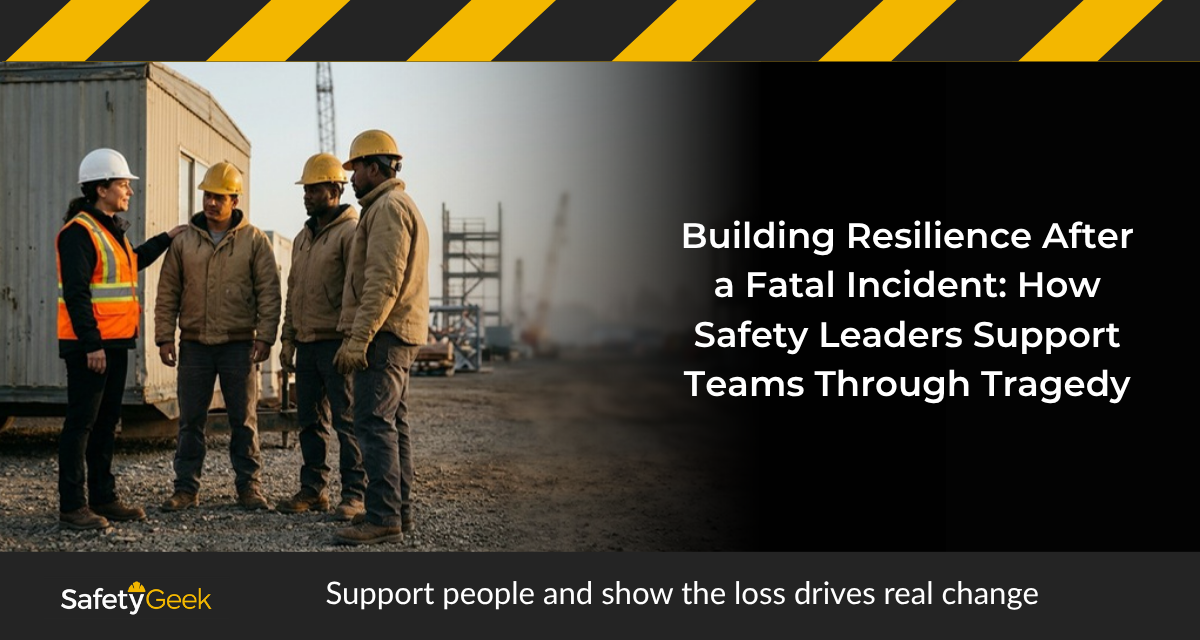
A fatal incident changes a worksite in an instant. Beyond the investigation and the paperwork, you’re leading people who witnessed it, responded to it or worked beside the individual affected. How you show up in the days and months that follow shapes whether your team recovers with trust intact. Here’s how to support people emotionally and strengthen safety measures so your crew can see the loss is driving real change.
Start With the People, Not the Paperwork
Once the emergency response is complete and you’ve met your obligation to notify OSHA of a fatality within eight hours, turn your attention to your crew. Pause work if you can. Share what happened in person, stick to confirmed facts and avoid speculation. Make sure the family hears the news before anyone else does, and follow their wishes about what gets shared.
Then ask the question that matters most: what do these people need right now? Some will want to talk. Others will want quiet, structure or time with family. Your job is to make every option available.
5 Ways to Support Your Team Emotionally
Strong reactions are normal after a traumatic event. Critical incident stress typically lasts between two days and four weeks, OSHA notes. Symptoms that persist beyond that window may point to post-traumatic stress and call for professional support.
Here are a few practical ways to help:
- Don’t rush anyone back. Offer time off, flexible schedules or lighter duties for those who need it.
- Bring in trained professionals. Connect your team with your employee assistance program or a crisis specialist. Debriefings work best when a trained facilitator leads them.
- Make support stigma-free. Mental health challenges are common in construction, with 25.5% of construction workers reporting anxiety at least monthly. Clearly communicate with your team that asking for help is a strength, not a weakness.
- Check in one-on-one. The VA’s National Center for PTSD points out that simple gestures from leaders, like a call or attending a memorial service, signal that the workplace cares in the aftermath of loss.
- Look after yourself, too. You may be carrying this loss as well. Lean on your own support network so you can keep leading.
Show Your Team That Safety Is Changing
Grief is often tangled up with worry, as workers think about whether something similar could happen to them. Visible, honest action is the best reassurance you can offer.
Falls, for example, are the leading cause of death among construction workers. Many of those falls happen on scaffolding. Whatever hazard was behind your incident, your team needs to know you’re taking it seriously.
Here’s how to show your team you’re serious about safety:
- Be transparent about the investigation. Share the findings you’re allowed to, and give a realistic timeline for the rest. Staying silent often invites rumors.
- Look beyond the obvious cause. A strong investigation will examine workload, staffing and scheduling, not just the final step in the chain of events.
- Verify your controls immediately. Reinspect equipment, confirm start-of-shift inspections are happening and refresh training on the specific hazard involved.
- Ask the people doing the work. Invite workers to participate in the corrective action process. They often know which fixes will hold up in the field.
- Close the loop. Report back when each corrective action is complete. Follow-through is how you rebuild trust.
Build Resilience for the Long Term
Resilience doesn’t mean “getting over it.” It means your team has the support, trust and habits to keep going while still honoring the loss.
Start by scheduling check-ins at the one-month, three-month and six-month marks, and be mindful of anniversaries. Remember the person your crew lost in a way that feels right to their family and co-workers.
At the same time, you’ll want to reinforce psychological safety so workers feel free to stop a job or report a concern without fear of blame. Left unchecked, psychological hazards can cause interpersonal issues, stress and strain in the workplace. Be sure to train supervisors to recognize signs of distress and know when to connect someone with help.
Moving Forward Together
You can’t undo a tragedy, but you can shape how your team moves through it. Lead with empathy, act on what you learn and keep showing up. When your crew sees that care and accountability go hand in hand, they’re more likely to look out for one another and trust that your commitment to their safety is real.