Estimated reading time: 8 minutes
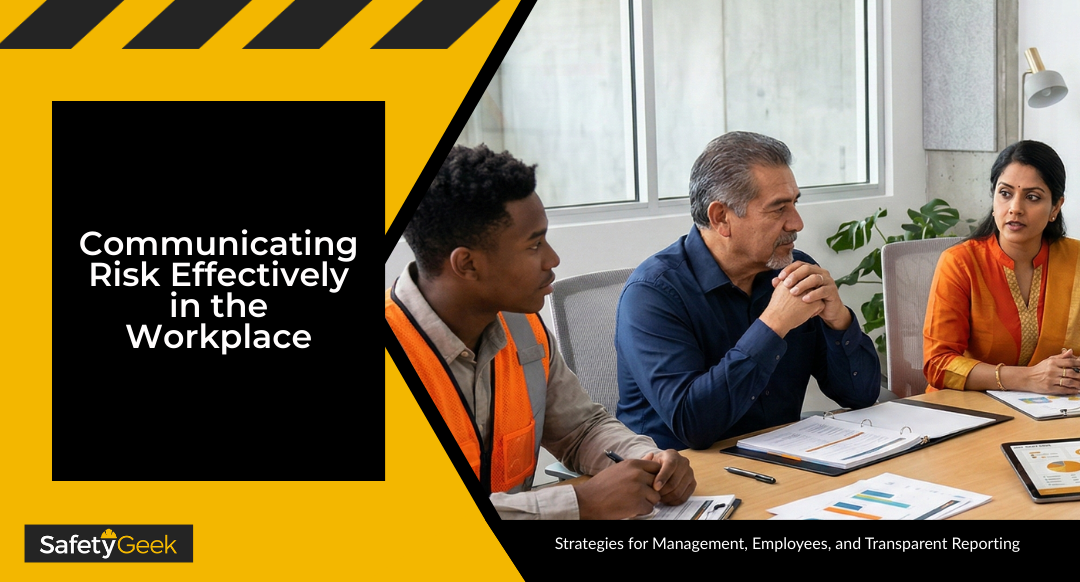
Communicating risk effectively in the workplace is essential for ensuring safety and operational success. Miscommunication about hazards often leads to preventable incidents, making clear risk communication a top priority for management, employees, and safety teams. This blog post explores strategies to improve workplace risk communication, highlighting the importance of transparency, tailored messaging, and engaging all levels of the organization.
The primary keyword communicating risk effectively in the workplace frames the entire discussion, emphasizing practical approaches to translate complex safety information into clear, actionable messages. From management-focused business impact explanations to employee engagement techniques and transparent reporting, this post offers comprehensive guidance to build a robust safety culture.
By understanding the three pillars of effective risk communication and applying the presented tips, organizations can reduce risks, improve compliance, and enhance trust among all stakeholders.
Key Takeaways
- Clear, tailored messaging is vital for management to understand business impacts of safety risks.
- Employee communication requires diverse channels, straightforward language, and two-way feedback.
- Transparent risk reporting builds trust and supports proactive decision-making.
- Using visuals and aligning with the ISO 31000 framework improves communication effectiveness.
- Consistent, honest updates on risks foster a strong safety culture and stakeholder confidence.
Workplace incidents often result from miscommunication about known hazards, not a lack of awareness. When safety teams fail to convey risks clearly, consequences range from compliance failures to preventable injuries, affecting the entire organization.
Communicating risk effectively in the workplace means delivering clear, actionable safety and operational hazard information that enables informed decision-making. The EPA’s definition of risk communication emphasizes the interactive exchange of information among stakeholders regarding risk assessment and management. True risk communication goes beyond sharing data; it ensures everyone understands their role in managing workplace hazards.
Miscommunication has serious consequences. Research from NCBI on risk communication shows that unclear messaging leads to poor safety implementation, compliance failures, and increased incident rates. If employees fail to grasp hazard severity or management misses the business impact of a risk, costly results follow.
This article covers three pillars of workplace risk communication: how to explain safety risks to management with business-focused messaging, employee risk communication strategies for workforce engagement, and transparent risk reporting to build trust throughout your organization. You’ll find proven techniques to transform technical safety briefings into clear communications that drive meaningful change.
Why Effective Risk Communication Matters in the Workplace
Effective risk communication lays the groundwork for proactive hazard control, regulatory compliance, and stronger trust organization-wide. NOAA’s risk communication best practices highlight the need for shared understanding between risk managers and stakeholders, leading to better decisions and a stronger safety culture.
Key benefits:
- Builds trust with transparent, consistent messaging
- Supports proactive hazard identification and mitigation
- Promotes regulatory compliance through clear protocols
- Boosts employee engagement in safety initiatives
The ISO 31000 framework, context, assessment, review, aligns with risk communication transparency. A communication strategy with these elements adapts as your organization’s risk landscape changes.
Weak workplace risk communication often creates cascading problems: inconsistent safety practices, missed warnings, and reactive risk management. Research on communication failures confirms that gaps between departments can result in safety oversights and avoidable incidents.
For example, if maintenance reports equipment issues in technical terms, but production managers do not fully understand, the hazard may go unaddressed, resulting in breakdowns, downtime, or injuries. Transparent risk reporting and effective communication avert such incidents by making risks understandable and urgent to all stakeholders.
Investing in communicating risk effectively in the workplace pays off in fewer incidents, smoother compliance audits, and higher stakeholder confidence in the safety process.
How to Explain Safety Risks to Management: A Critical Component of Communicating Risk Effectively in the Workplace
Management prioritizes business continuity, financial return, and legal risk when evaluating safety initiatives. Tailoring your risk communication to these priorities by translating technical hazards into business impact statements ensures safety risks receive prompt attention.
Frame hazards in terms of business outcomes:
- Instead of technical descriptions, highlight potential fines, litigation risk, and productivity impacts.
- For example, explain that a confined space hazard could lead to significant fines or legal exposure, tying the risk to operational and financial consequences.
Data visualization best practices and NOAA’s guidelines emphasize using heat maps, bar charts, and dashboards. These simplify complex risk information, making it accessible for decision-makers.
Present example: “A 5% increase in slip-and-fall incidents costs $250,000 annually in claims and causes a 15% productivity loss. Installing non-slip flooring costs $75,000 and reduces these expenses and insurance premiums.”
Use decision trees to show different mitigation strategies with costs and expected risk reductions. This format helps management weigh investments against risk reduction, leading to better-informed choices.
Schedule risk briefings to align with management meetings. Regular dashboards with leading indicators, like near-miss reports and training rates, keep risks visible and actionable.
For practical advice on management communication, visit Simple Tweaks You Need to Know Before Talking to Management and learn to craft effective management-focused messages.
THE ALL-ACCESS PASS RESOURCE PAGE
Get all the FREE templates, safety management resources, PDFs, spreadsheets, and more...
Employee Risk Communication Strategies
Employee risk communication strategies require targeted messaging that engages all staff, making hazards and mitigation relevant at every level. Success depends on using formats, channels, and feedback methods that fit different learning styles and job functions.
Research on message clarity finds that using clear, jargon-free language and real-world examples strengthens understanding. Break down complex risks: Replace “permissible exposure limits” with “breathing these fumes for over 30 minutes without protection can cause permanent lung damage.”
Reach every employee group using multiple channels:
- Toolbox talks for hands-on workers
- Digital platforms for remote teams
- Visible posters onsite
- Newsletters for office-based staff
Oregon State University research demonstrates employees are more receptive to safety information from trusted sources; supervisors, safety representatives, and peer leaders.
Promote two-way communication. NOAA’s feedback best practices suggest using surveys, Q&A sessions in safety meetings, and anonymous suggestion boxes for employee input.
An effective communication calendar may include:
- Weekly safety huddles (10 minutes) on urgent hazards
- Monthly newsletters on key updates
- Quarterly town halls for major changes
- Annual surveys on safety culture and communication
If your team handles hazardous materials, don’t just issue technical manuals. Use videos, visual guides, and small-group training. Follow up with discussions to confirm understanding and address gaps.
Link each employee’s actions to team safety outcomes. When discussing PPE use, make clear how individual compliance impacts team risk and organizational safety.
For more on employee engagement in safety, view Employee Engagement Must Be More Than a Safety Committee and How to Improve Employee Engagement in Safety.
The Role of Transparent Risk Reporting
Transparent risk reporting involves providing timely, honest updates on risk status, mitigation, and incidents in formats that encourage trust and support decisions. Research on transparency shows that consistent, open reporting builds strong safety cultures.
Consistent reporting builds credibility. NCBI research asserts that regular, predictable reports build trust, even during setbacks.
Key elements:
- Analyze incidents and share corrective actions
- Report leading indicators (training, audits)
- Provide regular risk assessment updates
- Track mitigation progress
- Highlight new hazards and responses
Leverage technology for automated data and accessible dashboards. Risk-tracking tools and heat maps highlight urgent areas, while alerts notify stakeholders of critical changes.
NOAA’s case study demonstrates how dashboards make complex data accessible, and this applies equally in a workplace context.
For a facility, transparent reporting might include monthly summaries for executives, detailed breakdowns for managers, and practical summaries for all staff. Ensure both digital and print access as needed.
Balance praise with honesty. If incidents spike, explain root causes, corrective actions, and future plans. This fosters credibility and demonstrates responsive leadership.
For more on trust-building through safety reporting, explore Why Management Support is So Vital to a Safety Program.
Actionable Tips to Communicate Risk Effectively in Your Workplace
Know Your Audience and Customize Messages
Adjust your communication style for management or front-line employees. Leadership presentations should focus on ROI and strategy; employee messages should emphasize practical and personal safety benefits. NOAA research confirms the value of audience-specific messaging.
Use Visuals and Clear Narratives
Simplify information. Replace jargon with visual aids such as charts, infographics, and step-by-step guides. According to visual communication best practices, visuals significantly boost information retention.
Foster Two-Way Communication
Incorporate regular feedback using meetings, suggestions, and structured Q&A. Research on communication effectiveness shows that interactive approaches build trust and increase program adoption.
Maintain Transparency and Consistency
Consistent, honest updates about risk, including both improvements and setbacks, reinforce trust. Share lessons learned to prevent repeat incidents and foster a culture of continuous improvement.
Integrate with ISO 31000 Framework
ISO 31000 principles offer structure for risk communication. Set clear objectives, seek regular feedback, and review communication effectiveness to close gaps.
Plan Communication Timing and Frequency
Align updates with operational cycles and regulatory milestones. Time communications for maximum relevance, whether before budget periods or during changes in risk exposure.
Measure Communication Effectiveness
Monitor metrics like training completion, near-miss reporting, and safety meeting attendance. Use the data to identify communication gaps and refine strategies.
Now It’s Your Turn
Start strengthening your approach by assessing your risk communication practices:
- Are management presentations tied to business outcomes and decision-making?
- Do employee messages use plain language and helpful visuals?
- Is transparent reporting consistent and accessible for all stakeholders?
- How robust are your two-way feedback mechanisms?
- Could more open risk reporting build trust within your safety program?
Pick one improvement area to implement in the next 30 days. Whether you develop management dashboards, set up employee suggestion systems, or regularize transparent reporting, these changes will help align everyone’s understanding and participation.
Effective risk communication is ongoing. With each clear, actionable conversation, you build a safer, more resilient organization. Take your next step today.
Frequently Asked Questions
Q: Why is communicating risk effectively in the workplace important?
A: Effective communication ensures all stakeholders understand hazards, enabling timely and appropriate mitigation, reducing incidents, supporting compliance, and building trust.
Q: How can I tailor risk communication for management?
A: Focus on business impacts such as productivity loss, financial risk, and legal exposure. Use visuals, decision trees, and align messaging with business priorities to maintain their attention.
Q: What are the best methods to engage employees in risk communication?
A: Use clear, jargon-free language, multiple communication channels (toolbox talks, posters, newsletters), and promote two-way feedback through surveys and Q&A sessions.
Q: How does transparent risk reporting improve workplace safety?
A: Open, consistent reporting builds credibility and trust, encourages proactive risk management, highlights corrective actions, and involves all levels of staff in safety culture.
Q: How do I measure the effectiveness of risk communication?
A: Track metrics such as training completion rates, near-miss reports, safety meeting attendance, and employee feedback to identify areas needing improvement and adapt strategies.
Hi, I'm Brye (rhymes with sky)! I am a self-proclaimed safety geek with two decades of general industry safety experience. Specializing in bringing safety programs to a world-class level and building a safety culture, I have trained and coached many safety managers, just like you, on how to effectively manage workplace safety in the real world. I would love to help you too.