Estimated Reading Time: 6 minutes
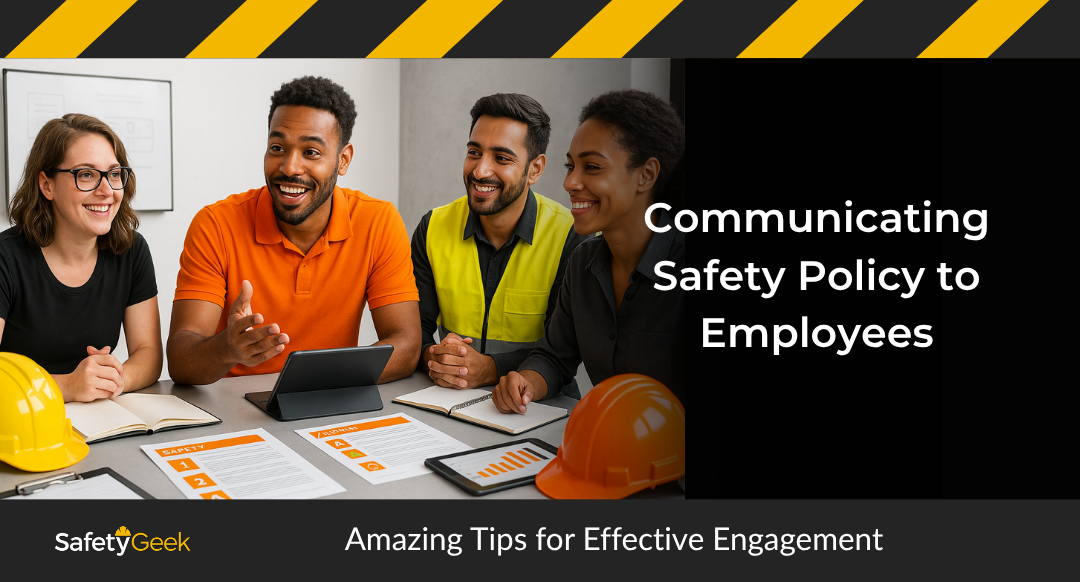
Communicating safety policy to employees is more than a regulatory necessity; it’s a vital component of building a safe and trusting workplace culture. When employees truly understand and engage with safety policies, everyone benefits.
This blog post explores effective strategies for delivering safety messages, engaging staff in safety policy, and explaining company safety rules to your workforce in a way that resonates. From simplifying complex protocols to fostering two-way dialogue, we delve into practical steps to make safety communication clear and impactful.
Read on to discover how to transform your safety policies from overlooked documents into actionable practices that your employees embrace and live by.
Key Takeaways
- Clarity is crucial in safety communication; simplify complex protocols into clear, actionable steps.
- Engage staff through daily touchpoints, such as huddles, role-play exercises, and interactive training sessions.
- Explain safety rules using the Why-How-What structure to enhance understanding and compliance.
- Foster two-way dialogue by encouraging employee feedback and acting on their suggestions.
- Reinforce safety behaviors regularly through recognition and celebration of wins.
Handing employees a dense manual full of safety rules might look like due diligence, but if no one reads it, what’s the point? Communicating safety policy to employees is about more than compliance—it’s about getting your message across in a way that sticks, protects people, and strengthens your culture. When your workforce understands and actually uses your safety policies, everyone wins.
Why Communicating Safety Policy to Employees is Critical
Safety communication goes beyond preventing incidents—it’s about building trust and creating a culture where people look out for each other. When safety policies aren’t clear or engaging, employees miss critical steps that could have prevented close calls or even serious injuries.
Research shows that unclear communication directly contributes to workplace hazards. One client of mine dealt with a close call during a lockout procedure, because an important step was lost in 15+ pages of technical language.
Effective company policy communication helps your people understand their responsibilities and trust leadership. That’s what inspired me to create the five-step Safety Geek Method. It takes safety policy from overlooked to action-oriented, bridging knowledge and behavior right there on the job.
Step 1: Effective Safety Message Delivery Starts With Clarity
Take the guesswork out of your messaging. Ditch technical jargon and long PDF handbooks. Make your content useful in the real world.
Plain-English checklists outperform complicated manuals. I’ve helped teams replace multi-page written procedures with simple visual tools. One construction crew saw lockout compliance jump from 60% to 95% after switching to a three-color-coded spreadsheet.
Keep materials short and visual—infographics, one-page summaries, and quick-reference guides. Pair visual cues with clear instructions and place them where workers can actually use them.
Research backs up that employees remember safety instructions better when they’re presented in small, digestible pieces. This isn’t about simplifying—it’s about being effective when it matters most.
Step 2: Engaging Staff in Safety Policy Through Daily Touchpoints
People absorb safety information better when they’re involved. That means moving beyond PowerPoint presentations to active, frequent learning.
Daily safety huddles with role-play exercises turn training into real-time practice. In one warehouse, we scrapped generic forklift training for interactive walk-throughs of actual hazards and scenarios. It made safety feel real—and fun.
Celebrate wins to maintain high morale and promote safe behaviors. Recognition boards and “Safety Hero” shout-outs go a long way. One team even created safety stickers to reward positive actions, and within months, compliance improved by 40%.
Short quizzes and mobile check-ins help track understanding. Keep them brief—just a few questions based on real situations workers encounter. These tools ensure you’re closing knowledge gaps before an incident happens.
Safety should become part of your team’s daily rhythm, not a once-a-month reminder.
Step 3: Explaining Company Safety Rules to Your Workforce the Right Way
Clarity is key when explaining company safety rules to your workforce. Break down complex protocols using the Why-How-What structure:
- Why: The purpose of the rule (“Wear safety glasses to protect your eyes from debris”).
- How: The exact action (“Inspect the lenses before each shift, and clean them if visibility is reduced”).
- What: The expected result (“Maintain clear vision and avoid injury from airborne particles”).
Tools like video demonstrations and 60-second mobile tutorials help people see safe behavior in action. I worked with a team to simplify their forklift training into three quick visual guides. The outcome? New operators reached competence 30% faster, and seasoned drivers stopped skipping critical steps.
Visuals reduce misinterpretation, especially with multilingual teams. Instead of reading between the lines, your team can compare their real-world actions to clearly shown best practices. It eliminates the guesswork.
Step 4: Two-Way Dialogue: Engaging Staff in Safety Policy Through Feedback
Communication isn’t complete until you’ve closed the loop with your people. That means feedback—real, raw, and ongoing.
Create safe, anonymous ways for employees to share concerns and suggest improvements. Online surveys or digital suggestion boxes are quick wins.
But the gold lies in conversation. Casual “safety café” sessions held off the clock can spark empowering insights. I led one where a worker mentioned that an emergency shower was blocked. Turns out, no manager saw it because they weren’t on that floor daily. That tip got it cleared within 24 hours.
Let your team know: “I Got You.” Follow up on ideas quickly. Even a simple “We looked into it, and here’s what’s next” shows employees they matter.
Step 5: Reinforce and Celebrate Wisely
Keep safety alive using everyday moments—no big events required.
Use morning huddles, group messages, or spontaneous kudos to reinforce safety wins. Noticing someone double-check their PPE? Say something in the moment. Simple praise goes a long way.
Create fun, quarterly challenges or mini-quizzes with small prizes. Encourage peer-to-peer recognition with “You Got This” shout-outs for workers who go above and beyond.
When your people see that safety matters every day—and that great behavior gets noticed—it becomes part of who they are, not just what they do.
Mini Case Study & Results
- A manufacturing company implemented these steps and saw both a drop in incidents and a rise in employee engagement.
- Their safety rep said: “These steps are awesome—our team actually reads the rules now!”
Now It’s Your Turn
Ready to make safety messages stick?
- Review your current policies—what’s confusing or too long?
- Reformat using the Why-How-What model.
- Add one new engagement strategy: quizzes, huddles, or recognition moments.
- Start the dialogue. Ask your team, “What safety rule doesn’t make sense?”
- Celebrate your wins—early and often.
You’ve got this. With the right approach, your team will not only remember the rules—they’ll live them.
For more insights, explore how to define safety responsibilities and improve your safety observation strategies.
Let’s turn your safety policy into something that inspires action, not yawns.
Frequently Asked Questions
- Why is communicating safety policies important?
Effective communication ensures that employees understand and adhere to safety protocols, reducing incidents and building a culture of trust and responsibility.
- How can I make safety policies more engaging for my staff?
Use interactive methods like daily huddles, role-play exercises, and recognition programs to make safety a dynamic part of the workday rather than a static document.
- What is the Why-How-What structure?
It’s a communication method that explains the purpose (Why), the action (How), and the expected result (What) of a safety rule, enhancing clarity and compliance.
- How do I encourage employee feedback on safety policies?
Create anonymous channels like surveys or suggestion boxes and foster open conversations through casual meetings to gather honest input from your team.
- What are effective ways to reinforce safety behaviors?
Regularly recognize and celebrate safe practices through spontaneous praise, challenges, or peer-to-peer acknowledgments to motivate continuous adherence to safety protocols.
Hi, I'm Brye (rhymes with sky)! I am a self-proclaimed safety geek with two decades of general industry safety experience. Specializing in bringing safety programs to a world-class level and building a safety culture, I have trained and coached many safety managers, just like you, on how to effectively manage workplace safety in the real world. I would love to help you too.