Estimated Reading Time: 8 minutes
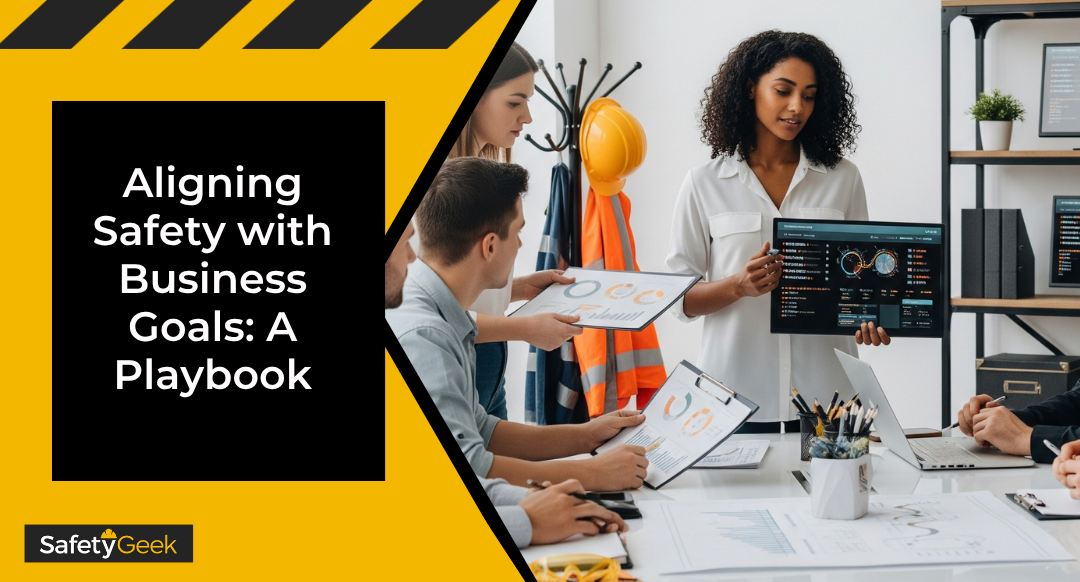
Strategic safety management is more than just ticking compliance checkboxes. It’s about aligning safety initiatives with business goals to drive productivity and growth. When safety becomes an integral part of a company’s strategy, it transforms from a regulatory burden into a profit center, enhancing morale and company performance.
By proactively connecting safety strategies to business objectives, organizations can unlock the full potential of their teams. Aligning safety with business priorities ensures every department understands the role of safety in achieving key outcomes like revenue growth, cost control, and operational efficiency.
This playbook outlines a five-step approach to integrating strategic safety management into your business planning cycle. From understanding your business objectives to activating a safety influencer system, these steps will help you build sustainable systems that drive real results.
What’s safety really doing for the bottom line? That question has echoed through too many leadership meetings. And too often, safety leaders don’t have a clear answer. When safety gets treated as a compliance checkbox or a regulatory burden, its real strategic potential gets lost. But here’s the reality: Aligning safety with business goals creates a profit-center mindset. When done right, strategic safety management drives productivity, improves morale, and strengthens company performance. Once safety becomes part of the business language, its impact amplifies across every department. This five-step strategic playbook will help you connect safety strategy to company objectives, integrate safety into business planning, and create sustainable systems that drive results.
Key Takeaways
- Aligning safety with business goals turns safety into a profit center.
- Strategic safety management improves productivity, morale, and company performance.
- Linking safety initiatives to business KPIs justifies investments and gains leadership buy-in.
- Integrating safety into the planning cycle ensures lasting accountability.
- Activating a safety influencer system engages respected voices to promote safety.
- Tracking and reporting safety metrics alongside business indicators enhances decision-making.
What’s safety really doing for the bottom line? That question has echoed through too many leadership meetings. And too often, safety leaders don’t have a clear answer. When safety gets treated as a compliance checkbox or a regulatory burden, its real strategic potential gets lost. But here’s the reality: Aligning safety with business goals creates a profit-center mindset. When done right, strategic safety management drives productivity, improves morale, and strengthens company performance. Once safety becomes part of the business language, its impact amplifies across every department. This five-step strategic playbook will help you connect safety strategy to company objectives, integrate safety into business planning, and create sustainable systems that drive results.
Why Strategic Safety Management Matters
Strategic safety management focuses on proactively aligning safety initiatives with business priorities. It’s not about posters or one-time campaigns, it’s about making safety part of the company’s DNA. Strategic alignment means every department understands how their work contributes to company goals. When safety aligns this way, teams stop seeing safety as a sideline task and start viewing it as a shared priority. One safety leader I worked with proved this powerfully. By tying reductions in incidents to productivity gains and lower downtime, she earned executive support and transformed safety meetings from a chore to a conversation leadership actually wanted. Why does it work? Because when people feel protected, they perform better. Research supports that aligned teams are more innovative, more engaged, and less likely to leave. Strategic safety management isn’t just responsible—it’s smart business. Linking safety strategy to company objectives helps justify investments, gain leadership buy-in, and build systems that directly contribute to growth.Step 1: Understand Your Business Objectives
Before safety can support the business, it has to understand it. Most companies focus on five primary goals:- Revenue Growth
- Cost Control
- Customer Satisfaction
- Operational Uptime
- Innovation
Step 2: Map Safety Goals to Business KPIs
Here’s where it all clicks. Create a simple spreadsheet with columns: Business KPI, Safety Metric, Baseline, Target, and Owner. This visual helps leadership clearly see how safety connects to performance. Two examples:- Reducing incident rate from 3.2 to 2.0 = 5% increase in production output
- Achieving 100% safety training = 8% drop in hiring costs due to improved retention
Step 3: Integrate Safety into Your Planning Cycle
Strategic safety management works best when safety planning is baked into your existing business process, not layered on top. The Plan-Do-Check-Act cycle aligns well with company-wide planning:- Plan objectives tied to business goals
- Do by implementing safety initiatives
- Check metrics and results
- Act by adjusting based on insights
Step 4: Activate the Safety Influencer System
The Safety Influencer System taps into respected voices across the company. Think of them as your internal marketing team for safety. The process:- Identify champions respected in their departments
- Coach them in short bi-weekly sessions
- Equip them with stories, data points, and messaging
- Recognize wins through shout-outs and dashboards
- Ops: “Safety reduces downtime and improves shift performance”
- HR: “Safer conditions improve retention and morale”
- Finance: “Injury prevention lowers risk exposure and costs”
- Procurement: “Vendor safety practices minimize future incidents”
Step 5: Track, Report, and Adjust
Your tracking system should reflect both business impact and human outcomes. The ideal dashboard shows:- Left column: Safety KPIs
- Center: Trends and visuals
- Right column: Financial KPIs
- Total incident rate
- Cost per near-miss
- Safety training ROI
- Employee morale scores
- Weekly check-ins for quick updates
- Monthly deep dives for strategic insights
- Quarterly reviews to recalibrate and plan
Overcoming Common Roadblocks
– Resistance from execs? Lead with data and real-life stories. – Siloed efforts? Use your influencer system to bridge departments—see Organizational Alignment Examples. – Tight budgets? Start with small pilots that show quick ROI and scale from there.Real-World Example
One strategic safety leader noticed a disconnect between safety metrics and business reviews. She used a simple mapping exercise, integrated safety updates into management meetings, and quickly demonstrated how preventing just three incidents saved over $75K and improved morale scores by 12%. For more on aligning compliance and safety impact, check out Align Security and Compliance and Strategic Alignment Explained.Now It’s Your Turn
– Identify your company’s top three business goals – Add safety metrics into your planning and reporting cycle – Launch the Safety Influencer System Strategic safety management isn’t a side project—it’s a growth tactic. By linking safety strategy to company objectives and integrating safety into business planning, you’re building a stronger, safer, and more successful organization. Have a safe day!Frequently Asked Questions
Q: What is strategic safety management? A: Strategic safety management involves aligning safety initiatives with business objectives to enhance productivity, morale, and overall company performance. It integrates safety into the core business strategy rather than treating it as a separate compliance task. Q: How does aligning safety with business goals benefit a company? A: Aligning safety with business goals turns safety into a profit center. It helps reduce costs associated with injuries and downtime, improves employee engagement and retention, and can lead to higher productivity and innovation. Q: What are some ways to integrate safety into the business planning cycle? A: You can integrate safety by including it in annual planning, quarterly reviews, monthly operations meetings, and weekly huddles. Using the Plan-Do-Check-Act cycle for safety initiatives ensures ongoing assessment and improvement aligned with business processes. Q: What is the Safety Influencer System? A: The Safety Influencer System involves engaging respected team members from various departments to champion safety initiatives. These influencers promote safety messages, share successes, and help bridge communication gaps across the organization. Q: How can I demonstrate the value of safety initiatives to leadership? A: Link safety metrics to business KPIs. Show how safety improvements lead to cost savings, increased productivity, and other tangible benefits. Presenting data and real-life examples can help gain leadership support and investment.Hi, I'm Brye (rhymes with sky)! I am a self-proclaimed safety geek with two decades of general industry safety experience. Specializing in bringing safety programs to a world-class level and building a safety culture, I have trained and coached many safety managers, just like you, on how to effectively manage workplace safety in the real world. I would love to help you too.