Estimated reading time: 9 minutes
Effective workplace safety inspections are the critical foundation of any strong safety culture. Catching hazards before they lead to incidents protects your team and demonstrates that safety isn’t just about compliance—it’s about leadership and real-world prevention. This blog post walks you step-by-step through conducting meaningful inspections, relying on proven frameworks and checklists to elevate your results.
You’ll discover how to use the 4-Step Safety Geek System, build a reliable workplace hazard inspection checklist, and lead walk-throughs that truly strengthen your operations. Whether you’re new to inspections or want to reinvigorate your current process, the strategies inside will change how you approach safety, helping you earn credibility and actionable improvements every time you step onto the floor.
Key Takeaways
- Effective workplace safety inspections are proactive tools for risk prevention and safety culture transformation.
- The 4-Step Safety Geek System: Plan, Inspect, Document, and Follow-Up leads to consistent, actionable improvements.
- Use checklists and zone mapping to focus your inspections and avoid missed hazards.
- Open conversations with workers during inspections bring hidden risks to light.
- Digital documentation with photos and real-time notes builds credibility and streamlines corrective action.
- Following up on corrections and celebrating wins fosters engagement and accountability.
That faint humming sound behind the compressor during a Tuesday walk-through? It led me straight to a frayed electrical cord that could have sparked a serious incident. This is precisely why effective workplace safety inspections matter — they help us catch the invisible hazards and act before harm strikes.
This guide is your blueprint for doing safety inspections that actually make a difference. You’ll learn the proven 4-Step Safety Geek System, how to build a solid workplace hazard inspection checklist, and how to conduct walk-throughs that can transform your safety culture.
By the end, you’ll have a repeatable system, a stronger safety presence, and the confidence to lead inspections that protect your team and build your credibility as a safety professional.
Why Effective Workplace Safety Inspections Matter
Effective workplace safety inspections identify and reduce risk before someone gets hurt. They’re your first line of defense against injuries and a statement of leadership, showing your team their safety is taken seriously.
Early in my career, I watched a coworker slip off an unsecured step-stool during a routine task. Thankfully, they weren’t badly hurt, but that near-miss shifted everything for me. Up until then, I’d been walking through workplaces without really seeing them. That incident made me level up and treat inspections as crucial to safety culture.
When you inspect with intention — not just to check boxes — things change. Workers feel seen. Managers take safety conversations seriously. Your inspection checklist becomes a document your whole team relies on, not just a one-time form.
The ripple effects are powerful. Teams start reporting things without being asked. Inspection data turns into meaningful improvement. Safety isn’t just a compliance chore anymore — it becomes part of how your operation runs and grows.
THE ALL-ACCESS PASS RESOURCE PAGE
Get all the FREE templates, safety management resources, PDFs, spreadsheets, and more...
The 4-Step Safety Geek System for Inspections
At Safety Geek, we teach a framework that makes inspections work in the real world — even when your day is packed and resources feel stretched. Here’s how it breaks down:
PLAN: Set Yourself Up for Success
Planning is what makes inspections effective. Without a clear plan, hazards slip by unnoticed.
Start with your incident reports and safety data. Are certain zones showing repeated problems? Does one piece of equipment pop up often in injury logs? Use this info to pick a focus.
Grab your floor plan to map out high-risk areas — like chemical storage rooms, machine shops, or tight warehouse aisles. Instead of “check everything,” set clear goals like “verify PPE compliance near grinding stations” or “confirm flammable cabinets are labeled and ventilated.”
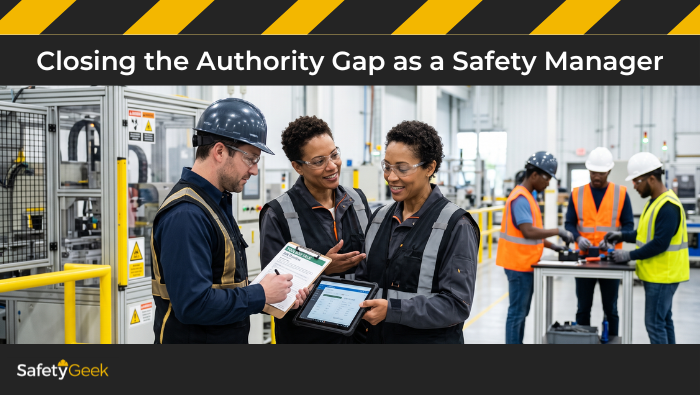
Coordinate with supervisors before your walk so your timing doesn’t interrupt operations, and you can talk to workers during active tasks. Conversation reveals things even your checklist can’t.
INSPECT: Walk the Site with Purpose
It’s more than a walk-through — this is targeted observation with your eyes and ears dialed in.
Start with the riskiest zones: machinery, chemicals, heavy traffic areas. Use zone mapping to stay focused and make sure each area gets consistent attention over time.
Watch for PPE compliance, blocked exits, unguarded machines, and cluttered areas. These visual red flags are often linked to deeper issues.
Talk to workers. A simple “Noticed anything off today?” question draws out what isn’t obvious, like that tripping hazard near the line that’s been bothering people for weeks.
DOCUMENT: Capture What Matters
Documentation turns your inspection into a roadmap for solving real issues — and building credibility.
Use a system that lets you log hazards by zone, risk level, and corrective action. Washington State’s Labor & Industries has a great example of how to do this cleanly.
Photos help tell the story. Blocked exits, damaged rails, or unlabeled containers — snap them and include reference points so others know where and what it is.
Use a digital spreadsheet or app. Handwritten notes? That’s how critical info disappears before fixes happen. And always timestamp — patterns over time show systemic issues that need bigger solutions.
FOLLOW-UP: Close the Loop
Want inspections that actually move the needle? Follow-up is the secret weapon.
Assign each corrective action to a person, with a realistic deadline. “Fix the loose handrail” isn’t enough. Try: “Facilities team to repair handrail on stairwell near dock by next Tuesday.”
Circle back. Don’t just assume it’s fixed. Check it. A completed log might say “done,” but someone still using duct tape on a handrail isn’t truly fixed.
Highlight wins. Mention completed fixes in team huddles. That positive reinforcement boosts engagement and shows that safety concerns don’t go into a black hole.
If the same hazard keeps popping up, dig deeper. Maybe there’s a training gap or equipment failure driving that risk.
How to Do Safety Inspections: A Hands-On Walk-Through
Let’s talk real-world inspections. The kind that keep people safe, not those rushed lap-around-the-floor routines.
First, show up with your customized checklist. If you need a starting point, California’s Division of Industrial Relations has a solid template ready for tweaking to your industry.
Work zone by zone. Focus your time based on risk: daily in equipment zones, weekly in the warehouse, monthly in offices.
Use zone maps or color-coded spreadsheets so you rotate coverage consistently. High-risk = red, admin areas = green. This saves time and avoids missed sections.
Talk to workers. A few open-ended questions can reveal tons. If someone is always stretching awkwardly at a workstation, think ergonomics. If they mention chemical odors, check ventilation. Their insights bring hazards to the surface.
Capture findings on-site using a tablet or inspection app. Snap a photo, record a quick voice note, assign a corrective task — all while you’re standing there. No more retyping notes or losing pages to spilled coffee.
And don’t rush. Take enough time to catch how workers really perform their tasks, not just the cleaned-up version.
Now It’s Your Turn
Putting this in action starts with a few simple steps.
- Review your past inspection logs and injury reports. Look for patterns.
- Map out your facility zones. Color-code by risk level.
- Schedule your next inspection with a specific goal — not just “general review.”
- Use a digital tool for documenting findings in real-time. Photos and voice memos save time later.
- Assign corrective actions and follow up consistently.
- Celebrate small wins. Recognizing fixes motivates the whole team.
Use these inspections not just as a tool for compliance, but as a way to build trust. When done well, they drive cultural change, team engagement, and stronger safety leadership.
You’ve got this — now go lead the kind of inspections that make a real impact.
Frequently Asked Questions
- Why are workplace safety inspections important?
Effective safety inspections proactively identify hazards before they cause incidents or injuries. A regular inspection process not only protects workers but also shows that safety is valued, building a strong company culture and reducing long-term costs and disruptions. - What makes an inspection truly effective?
The most effective inspections are focused, systematic, and involve real engagement with workers. Using a checklist, prioritizing high-risk zones, and documenting findings digitally ensures consistency and accountability. Following up and ensuring corrective actions are completed closes the loop. - How often should workplace safety inspections be done?
Frequency depends on risk: high-risk areas (like equipment zones or chemical storage) may need daily checks, while offices or administrative areas might only require monthly reviews. Regular reviews of incident reports can help fine-tune your schedule. - What should be included on a workplace safety inspection checklist?
An effective checklist covers physical hazards (blocked exits, unguarded machinery), PPE compliance, housekeeping, chemical storage and labeling, and observed unsafe practices or conditions. You can find great templates at this resource for customization. - How should inspection findings be documented?
Use digital tools whenever possible—spreadsheets, apps, or cloud-based forms help you record hazards by zone, assign corrective actions, and add photos. Timestamp entries and keep records organized by inspection round, so you can spot trends and ensure nothing is missed. - What is the best way to ensure follow-up is done?
Assign each corrective action to a specific person, with a clear deadline and expectations. Review progress in team meetings and recognize when fixes are completed. Consistent follow-up fosters accountability and shows your commitment to worker safety.
Hi, I'm Brye (rhymes with sky)! I am a self-proclaimed safety geek with two decades of general industry safety experience. Specializing in bringing safety programs to a world-class level and building a safety culture, I have trained and coached many safety managers, just like you, on how to effectively manage workplace safety in the real world. I would love to help you too.