Estimated reading time: 8 minutes
Administrative controls safety is essential for creating safer jobsites without coming across as the “safety police.” This blog post dives deep into proven administrative controls safety techniques that help you develop safe work procedures and implement rules and guidelines that employees actually follow. By shifting focus from mere compliance to meaningful behavior change, you can achieve safety results that leadership values and that are easy to brag about.
Administrative controls include rules, guidelines, and procedures designed to change how people work in order to reduce hazard exposure. When implemented correctly, these controls shape daily habits and foster a culture of safety that goes beyond checklists and regulations.
In this post, you’ll discover actionable steps, real-world examples, and implementation strategies that enable you to overcome common pitfalls like pencil whipping and build genuine buy-in with your team and leadership.
Key Takeaways
- Understanding administrative controls safety: Learn how behavior-shifting systems protect your people.
- Why rules alone fail: Find out how to make controls work instead of getting pencil whipped.
- Step-by-step process: Get actionable ways to establish safe work procedures supervisors actually use.
- Implementation strategies: Learn methods for implementing safety rules and guidelines that win respect, not resentment.
- Real-world examples: See administrative controls in action across industries.
- Overcoming common failures: Stop pencil whipping and build REAL buy-in.
- Measuring success: Simple methods to prove ROI and get your seat at the table.
What Are Administrative Controls in Safety?
Administrative controls mean rules, guidelines, and systems that change how people work to reduce hazard exposure. Unlike engineering controls, which physically change the workplace, administrative controls rely on people making safe choices daily. This includes policies, work practices, scheduling tweaks, and behavior-shifting programs.
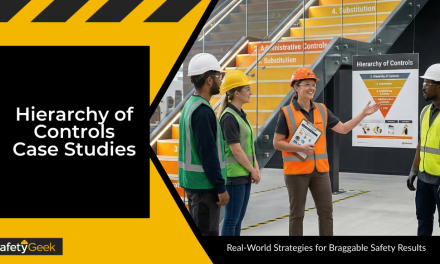
Administrative controls sit at the fourth level on the Hierarchy of Controls. They’re your go-to when you can’t eliminate or engineer the hazard away. And they’re more reliable than leaving things up to PPE alone.
In the Safety Management Cycle, administrative controls fit best in the Develop and Implement & Train phases. They fill the gap between hazard ID and real-world follow-through. It’s not just about spotting problems, it’s about creating systems supervisors can teach, and workers can actually use.
But here’s the thing… their success depends on people. So you can’t hand over a policy and walk away. You’ve got to lock it in with culture, coaching, and real conversation.
Why Focus on Administrative Controls Safety?
You aren’t alone if you feel frustrated watching rules get ignored or programs gather dust. Pencil whipping is real. Busywork checklists often distract from what really keeps people safe. But administrative controls safety creates safeguards that transform habits, not just binders.
Done right, these controls become a profit center. They cut risk, boost efficiency, and finally show leadership the return on investment. You stop begging for the budget because you can prove impact through fewer incidents, better morale, and retention.
The CDC highlights the role of administrative controls when higher-level solutions aren’t feasible. These systems are practical, and they beat “do it right or else” programs every time.
So when you shift your approach and treat safety as the Golden Opportunity, you drive operational excellence leadership can’t ignore. That’s your formula for getting your seat at the table. For more leadership strategies, check out How to Solve Leadership Accountability Challenges.
Establishing Safe Work Procedures Using Administrative Controls
Start with the Identify phase of the Safety Management Cycle. Find your hazards, culture roadblocks, and weak spots in current procedures. Look for where people shortcut, supervisors roll their eyes, or the frontline tunes out the trainers.
Next, step into the Develop phase and focus on simple, field-friendly procedures. Procedures should be boiled down: easy to teach, easy to remember, genuinely useful.
Step-by-step approach for developing safe work procedures:
- Involve employees from the start. Tie in both leaders AND your frontline. See Benefits of Employee Involvement for how this builds buy-in.
- Write for clarity and real use. Use short sentences and visuals. Make it about real situations, not theory.
- Pilot and adjust. Test with a small crew, take notes on what works, and tweak. Skip the top-down rollout.
Don’t over-complicate! If your people need a manual to understand your manual, you’re making safety harder. Administrative controls work best when they’re clear, simple, and relevant.
Remember, you’re the guide on the side. Not the ruler in the safety police hat. Your mission is to make coaching safety EASY, not add more red tape.
THE ALL-ACCESS PASS RESOURCE PAGE
Get all the FREE templates, safety management resources, PDFs, spreadsheets, and more...
Implementing Safety Rules and Guidelines Effectively
Implementing safety rules and guidelines that actually work takes more than barking orders. You need strategy. And your success depends on empowering supervisors to lead these conversations, not just hand out consequences.
Use this sequence for effective roll-out and accountability:
- Get visible commitment from leadership. Senior buy-in isn’t optional.
- Deliver real-world, scenario-based training. Practice the high-risk situations, not just read from a manual.
- Communicate consequences clearly and fairly. People need to know what’s at stake.
- Equip supervisors with tools and authority. They need the power to coach and correct in real time.
- Model the culture top to bottom. Consistency builds trust. Two sets of rules ruin it.
Effective implementation happens when workers understand WHY, not just WHAT. Use stories and real consequences. And keep feedback both ways; procedures should evolve with the job, not stay stuck in theory.
Most importantly, make feedback ongoing. If things aren’t working, ask your team. Administrative controls only stick when they make people’s jobs better, not just different.
Examples of Administrative Controls That Work
Effective administrative controls tackle risk by changing behaviors and processes. Here are top examples industry-wide:
- Job rotation: Switch tasks often to prevent repetitive stress.
- Scheduled breaks: Mandate rest to cut fatigue and mistakes.
- Work permits & required checklists: Force pre-task risk assessment for high hazards. Hot work permits keep welding and cutting safe.
- Standard Operating Procedures (SOPs): Step-by-step guides to prevent skips or shortcuts. Lockout/tagout procedures are a must for maintenance safety.
- Daily toolbox talks: Five-minute safety chats beat quarterly meetings.
- Access control policies: Limit high-risk areas to qualified, trained folks only.
- Behavior-based observation programs: Regular, real-time feedback to catch trends early. More on this at Administrative Control – Wikipedia.
| Example | How It Controls Risk | Industry Fit |
|---|---|---|
| Job Rotation | Cuts repetitive injuries | Manufacturing, Assembly |
| Scheduled Breaks | Reduces fatigue errors | Construction, Healthcare |
| Work Permits | Ensures hazard assessment | Energy, Chemical Processing |
| Toolbox Talks | Reinforces awareness | All Industries |
| Access Controls | Stops untrained entry | Labs, Utilities, Mining |
These methods deliver braggable results. The secret? Pick controls that fit both your hazards AND your company culture.
Common Challenges and How to Overcome Them
You’re not alone if you run into pencil whipping, check-the-box culture, or rules without buy-in. These crop up most in the Implement & Train and Coach & Observe phases of the Safety Management Cycle. Common failures happen when you chase paperwork, not people.
Fix pencil whipping by connecting actions to real outcomes. Don’t stop at signed checklists, ask workers to explain why steps matter. Coach on behaviors, not just compliance.
Relationship comes before enforcement. Pair policies with supervisor huddles. People follow leaders they trust.
Build visible buy-in at the top. Leadership credibility comes from action, not signatures. Celebrate early adopters and show off their wins.
And here’s what I’ve seen work: even skeptical teams switch gears when supervisors start asking for feedback and make safety a two-way conversation. Small wins build momentum… patience with the process, urgency with fixing hazards. That’s how you move from ignored rules to “owned habits.”
Measuring and Analyzing Administrative Controls Effectiveness
Measurement happens in the Analyze phase of the Safety Management Cycle. Here’s how you prove ROI and keep improving.
Key metrics to track:
- Quality of safety observations (not just quantity). See Effective Safety Observations for how to boost this.
- Near miss reporting: More reports signal growing safety culture.
- Training completion and retention: Test what people remember, not just if they showed up.
- Behavioral compliance rates: Are safe habits sticking?
- Frequency of supervisor coaching: Leaders set the tone.
The right data shows impact beyond injury rates. Fewer incidents save money, boost productivity, and build reputation. Tie safety measures to business results leaders already watch, and you’ll EARN that seat at the table.
Remember, the goal isn’t perfection. It’s continuous improvement. Use data to decide what’s working, what needs fixing, and what drives your culture forward.
Frequently Asked Questions About Administrative Controls Safety
What’s the difference between administrative controls and engineering controls?
Administrative controls use rules and procedures to change how people work, relying on consistent human action. Engineering controls physically remove or reduce hazards, so safety happens no matter what people do. For more on engineering controls, see Engineering Controls Safety Guide.
How do I prevent pencil whipping with administrative controls?
Tie each procedure to a real-life story or consequence. Observe behaviors, not just paperwork. Train supervisors to coach, not just check boxes. Relationships turn “must do” into “want to do.” Learn more at Why Saying “Good Job” is NOT Safety Coaching and The Coach of the Coaches.
What are the most effective examples of administrative controls?
The best administrative controls match your hazards and your culture. Popular, proven methods are job rotation, scheduled breaks, work permits, daily chats, and real-time observation programs for fast feedback.
How long does it take for administrative controls to show results?
Quick wins will show up in weeks, like better observations or more near-miss reports. Full culture change takes longer, often 6-12 months. Focus on steady progress, not instant perfection.
Can administrative controls work for small companies with limited resources?
Yes, sometimes even better than in big firms! Smaller teams mean faster communication and quicker culture shifts. Use basic checklists, face-to-face talks, and clear, simple procedures. Strong leadership matters more than fancy tech.
Take Action: Building Braggable Results with Administrative Controls
Ready to get those braggable results? You got this, Safety Friend. Here’s a simple plan to jumpstart your administrative controls safety journey:
- Audit ONE procedure this week. Pick the highest-risk activity. Look for any gap between policy and daily practice.
- Engage leadership with data and a quick-win pilot. Pick a problem, propose a 30-day fix, and define “win” upfront.
- Coach supervisors hands-on. Role-play the rollout and do real observations. Give them tools and the OK to act.
- Keep embedding into culture. Make tweaks based on what your team tells you. Celebrate every team that buys in.
You’re the guide on the side. Administrative controls safety works when you make it easier for supervisors to coach, and workers to succeed.
Now It’s Your Turn
Pick ONE administrative control to review or try out this week. Maybe it’s your first real toolbox talk, an honest checklist audit, or talking with a supervisor about observation quality.
What’s your top challenge with implementing safety rules and guidelines right now? Share your scenario in the comments. I got you, and together, we’ll turn administrative controls safety into your profit center. You got this!
Hi, I'm Brye (rhymes with sky)! I am a self-proclaimed safety geek with two decades of general industry safety experience. Specializing in bringing safety programs to a world-class level and building a safety culture, I have trained and coached many safety managers, just like you, on how to effectively manage workplace safety in the real world. I would love to help you too.