Estimated Reading Time: 8 minutes
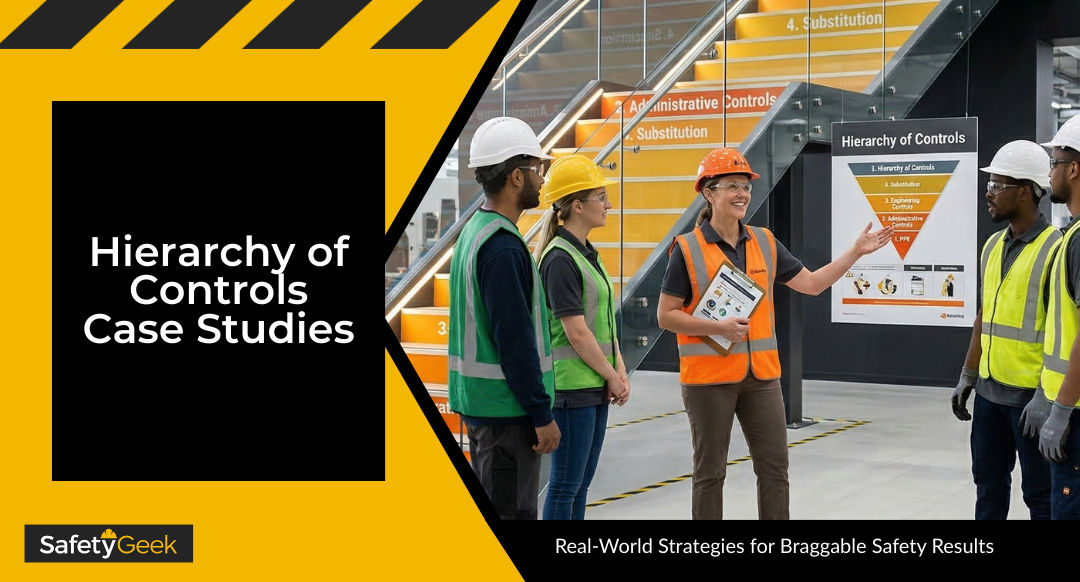
The hierarchy of controls is a fundamental framework that safety professionals use to stop hazards before they cause harm. But real-world application requires more than just theory; it calls for proven, field-tested strategies. This post dives into practical case studies that show how the hierarchy of controls leads to braggable safety results across diverse workplaces.
From elimination to personal protective equipment (PPE), the blog post explores four detailed examples that map hazard controls to the Safety Management Cycle. You’ll learn how the right mix of strategies and team engagement can overcome common obstacles like resistance and confusion, unlocking safer, more productive job sites.
Whether you’re new to the hierarchy of controls or looking to improve your current approach, these insights and tools will empower you to turn theory into real-life wins.
Key Takeaways
- Four case studies demonstrating elimination, engineering, administrative, and PPE controls in action.
- Each control mapped step-by-step to the Safety Management Cycle phases: Identify, Develop, Implement & Train, Coach & Observe, Analyze.
- Practical solutions for common challenges like pencil whipping and supervisor pushback.
- Emphasis on worker buy-in and strategic supervisor engagement for sustained results.
- Resources and frameworks from Safety Geek to help apply these methods smoothly.
Ever wonder how safety pros actually apply the hierarchy of controls to stop hazards before they cause harm? The real secret: the most successful hazard control strategies use field-tested case studies, not just theory, so you get those braggable results faster.
But here’s the thing… even when the textbook sounds easy, the real-world rollout is where it gets tricky. If you’ve struggled to make controls stick or felt overwhelmed trying to get others on board, you’re in the right place. You got this. And I got you.
Key Highlights of This Article
- Four field-tested case studies showing elimination, engineering, administrative, and PPE controls that worked at real sites
- Step-by-step breakdowns of how each control maps to the Safety Management Cycle (Identify, Develop, Implement & Train, Coach & Observe, Analyze)
- Practical lessons you can use for your own challenges this week
- Common obstacles decoded (pencil whipping, supervisor pushback, wrong control selection) with real solutions
- Actionable steps to improve at least one hazard control at your site using these proven strategies
- Direct connections to Safety Geek’s coaching resources and frameworks for smoother implementation
What Is the Hierarchy of Controls? A Quick Refresher
The hierarchy of controls ranks safety measures from most to least effective: Elimination, Substitution, Engineering, Administrative, and, last, PPE.
Elimination means removing the hazard completely. Substitution swaps in something safer. Engineering controls isolate the hazard using barriers or system changes. Administrative controls use rules, training, or schedules to limit exposure. PPE is your gear when all else fails.
But here’s the thing… this isn’t just a poster on your wall. It’s a practical part of the Safety Management Cycle – especially in the Develop phase, where you pick AND build the right controls that work in real life.
The hierarchy isn’t theory. It’s YOUR hazard control game plan.
Safety Geek training breaks down each level into actions that actually get results. No more second-guessing if your solutions really match the hazard.
Real Examples Hierarchy of Controls: Field-Tested Case Studies
These hierarchy of controls case studies come straight from job sites like manufacturing floors, construction projects, and warehouses. Safety pros just like you faced real risks and found what gets braggable results.
Here’s how each control worked step-by-step, perfectly mapped to our Safety Management Cycle.
Case Study 1: Elimination in Manufacturing
At a chemical processing plant, workers mixed toxic compounds daily. Injury and exposure risks stayed high… even with top-shelf PPE.
They solved it by automating the mixing process. Robotic systems took over the most dangerous steps. No more human contact with harsh chemicals.
Safety Management Cycle:
- Identify: Audit caught repeated exposures during manual mixing.
- Develop: Searched automation that ended human contact.
- Implement & Train: Installed robots, trained operators.
- Coach & Observe: Checked every shift for compliance with the new workflow.
- Analyze: Tracked incidents and cost savings.
Zero exposure incidents. Big compliance gains. Extra bonus – unexpected cost savings from less hazardous waste.
Safety Geek’s SOP templates help you track and document elimination actions – so you always earn your seat at the table for future projects.
Case Study 2: Engineering Controls in Factory Operations
A manufacturing facility dealt with machine entanglement injuries and awkward postures. Training alone wasn’t enough.
Their solution: install machine guards and isolation barriers. They added ergonomic stations so workers didn’t have to bend and twist.
Safety Management Cycle:
- Identify: Reviewed injuries caused by machines.
- Develop: Designed physical guards and new stations that kept production going.
- Implement & Train: Swapped out setups, trained everyone on the changes.
- Coach & Observe: Supervised the switch so everyone adopted the changes.
- Analyze: Measured reduced injury rates.
Engineering controls made up 35% of all controls in just 107 days. Machine injuries? Way down.
Engineering controls work because they don’t rely on everyday perfect behavior.
Safety Geek’s coaching resources support supervisors rolling out system changes, so you get buy-in fast and keep the gains long-term.
THE ALL-ACCESS PASS RESOURCE PAGE
Get all the FREE templates, safety management resources, PDFs, spreadsheets, and more...
Case Study 3: Administrative Controls in Warehouse Operations
At a busy distribution center, fatigue drove accidents during long, repetitive shifts. Rates were spiking…
Management set up job rotations, required breaks, and locked down hazardous zones when fatigue peaked. They tightened LOTO procedures and made communication crystal clear.
Safety Management Cycle:
- Identify: Verified fatigue patterns in incident logs.
- Develop: Created new shift rotations and break periods.
- Implement & Train: Launched schedule with full supervisor rollout.
- Coach & Observe: Tracked whether breaks and rotations actually happened.
- Analyze: Measured incident and productivity data.
Administrative controls showed up in 53.6% of real-world cases. Fatigue incidents fell fast, and productivity held steady. Once workers saw better safety and felt real results, new routines stuck.
Safety Geek modules show you how to get buy-in for these changes, so you never look like the safety police. When your team sees procedures protect them, not just the company, resistance drops.
Case Study 4: PPE Done Right in Construction
A construction team faced dust and chemical exposures and couldn’t control risks higher on the hierarchy because of site realities.
So, they went beyond basics. The team upgraded PPE, added comprehensive fit-testing, focused on comfort, and set up new maintenance protocols. Workers weighed in on gear selection.
Safety Management Cycle:
- Identify: Noted dangerous levels during monitoring.
- Develop: Brought in new PPE based on worker feedback.
- Implement & Train: Did hands-on fit-testing, trained on care and use.
- Coach & Observe: Checked compliance and gear condition daily.
- Analyze: Monitored use rates and lowered exposures.
Exposure incidents fell noticeably. PPE worked because workers were part of the process… not just told what to wear.
Safety Geek protocols offer you step-by-step plans for PPE compliance, so you don’t nag – you coach.
Why These Case Studies Matter: Practical Lessons for Safety Friends
You don’t need a huge budget – you need systematic thinking and the right approach.
Three pillars from Safety Geek’s Safety Influencer System break it down:
- Operational Expertise: Higher-level controls beat behavior-based strategies every time. Always push for elimination or engineering if possible.
- Hidden Triggers: When workers have a say, control effectiveness triples. The PPE win in construction grew from worker buy-in. Same with administrative changes in the warehouse.
- Strategic Engagement: Supervisor allies block resistance. One study saw 71 control change denials where leadership wasn’t brought in at the start.
Successful hazard control depends on systems, not heroics.
Safety Geek helps you become the guide on the side, not the safety police. Your programs run themselves when you set up the right framework and coach others to keep it going.
Remember: Safety is your profit center. Every incident you prevent saves money and builds your professional reputation. These case studies show you how to do it, step by step.
Overcoming Common Frustrations with Applying Controls
Most safety pros battle pencil whipping, supervisor resistance, and control confusion. If you’ve felt like a “team of one” stuck wearing the safety police hat, you’re not alone.
But here’s how you flip the script…
In the Identify Phase: Be HONEST about why higher-level controls “can’t” work. Don’t blame cost without hard numbers. Sometimes elimination costs less than lifetime PPE.
Develop Phase: Bring your team in early to help pick controls. When they brainstorm solutions, buy-in skyrockets.
Coach & Observe Phase: Lead through coaching. Ditch enforcement for encouragement. Our training powers up your coach of the coaches style fast.
The truth? Budget and regulations are not your main obstacles. Isolation and “solution-from-above” thinking stop more wins than anything else.
Safety is the Golden Opportunity. You can grab it with systems and the right mindset.
The Safety Geek approach gives you proven frameworks that motivate real change. When you frame controls as a team project – not orders – the resistance cracks.
Frequently Asked Questions About Hierarchy of Controls Case Studies
How do I convince management to invest in higher-level controls like elimination or engineering?
Show the full cost picture – not just initial expenses. Add in ongoing PPE, repeated training, injury costs, and process slowdowns. The chemical plant elimination case saved money, even beyond exposures and compliance.
What if my team pushes back against new controls?
Pull them into the process from day one. The construction PPE program worked because workers influenced which gear to buy and how to use it. With shared ownership, pushback drops.
How do I choose which hierarchy level to start with?
Always start with what’s possible. Use the Safety Management Cycle: Identify, Develop, Implement, Coach, Analyze. Go as high on the hierarchy as you realistically can, and don’t skip engineering just because elimination isn’t an option.
Can administrative controls ever work as well as engineering controls?
Administrative controls work best paired with other levels. And they MUST solve a real pain point. The warehouse rotation and break case succeeded because it ended fatigue… not just because a rule was made.
How can I track if my controls are actually working?
Watch leading indicators, not just incidents. Study compliance rates and worker engagement. The engineering control case tracked how fast teams adopted new setups… not just injury counts.
Now It’s Your Turn
Here’s how you put these hierarchy of controls case studies to work this week:
- Pick ONE hazard you currently cover with a lower-level control. Review your steps using the Safety Management Cycle. How did you identify the hazard? What controls exist now?
- Choose one hierarchy level from these examples and match it to your site. Can you eliminate it like the chemical plant? Add engineering barriers like the factory? Use rotation or breaks from the warehouse model?
- Pilot on a small scale. Pick one crew or area. Apply the strategies from these case studies. Analyze what changes and what buy-in you see before scaling up.
Safety Friend, you’re not in this alone. You got this. And I got you.
Need a full framework? Safety Geek training gives you proven, actionable plans for hierarchy of controls. NO guesswork – just braggable results.
What’s the one hazard where textbook advice failed you the most? How did you actually fix it? Drop your story in the comments or join us in the Safety Geek community. Your experience could be the win another Safety Friend needs right now.
Safety is people-first work. Let’s get those braggable results… and build safety that lasts.
Hi, I'm Brye (rhymes with sky)! I am a self-proclaimed safety geek with two decades of general industry safety experience. Specializing in bringing safety programs to a world-class level and building a safety culture, I have trained and coached many safety managers, just like you, on how to effectively manage workplace safety in the real world. I would love to help you too.