Estimated Reading Time: 8 minutes
Hey, Safety Friend. Ever get that feeling your machine guarding risk assessment tool isn’t quite right, but you can’t put your finger on the exact issue? You know there’s risk… but pinpointing the “what” and “how” keeps slipping through the cracks, and getting leadership on board feels uphill. You’re not alone, and you’re definitely not the only one struggling to prove these gaps.
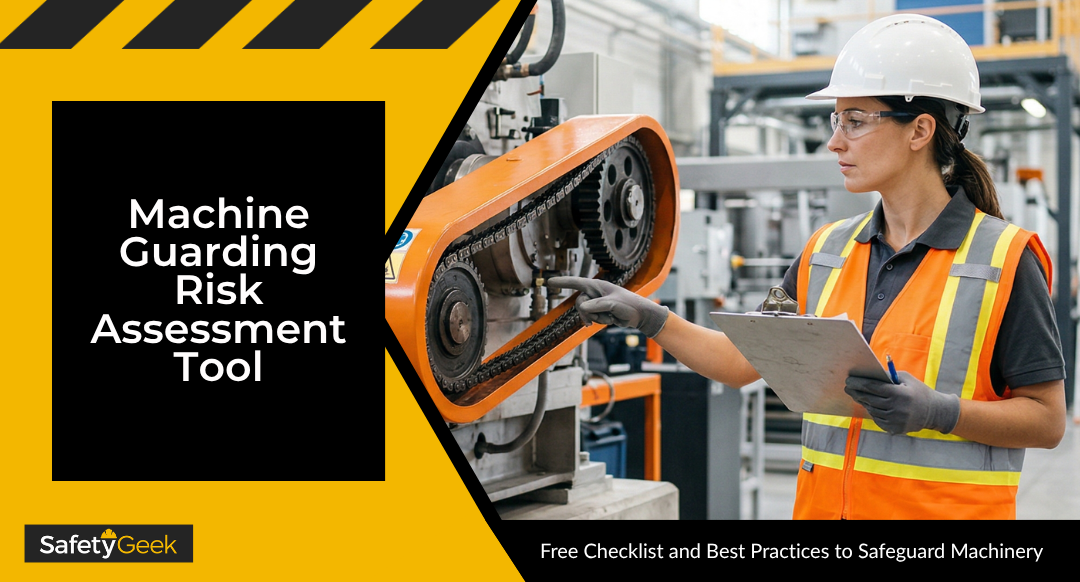
A machine guarding risk assessment tool is a structured checklist or template that guides you to spot, assess, and control hazards from moving machine parts before they put someone in the hospital. Using a risk assessment tool keeps your process tight and builds a solid case you can bring to leadership. You’re getting a ready-to-use machine guarding checklist, a breakdown of guard types, and the best practices real safety pros use to safeguard machinery for braggable results.
This post walks you through what a machine guarding risk assessment tool really is, why it’s essential, and how to use it effectively within the Safety Management Cycle. Along the way, you’ll discover the four key types of machine guards, best practices that go beyond just hardware, and actionable steps you can take right now to improve safety at your facility.
Key Takeaways
- Understand what a machine guarding risk assessment tool is and common misuse pitfalls
- Learn the four main types of machine guards for the right application
- Discover best practices that integrate people, training, and systems – not just equipment
- Use a free, practical machine guarding checklist step-by-step for your facility
- See how the Safety Management Cycle integrates risk assessment into a continuous improvement process
- Get tangible actions you can implement immediately, regardless of team size
What Is a Machine Guarding Risk Assessment Tool and Why It Matters
A machine guarding risk assessment tool is an organized checklist or digital template that walks you through four key steps: identifying machinery hazards, picking the right guard type for each hazard, flagging training and inspection needs, and documenting every decision for accountability.
OSHA’s Machine Guarding eTool and ISO 12100 both say risk assessment is THE foundation of safeguarding. These are not “nice-to-have” steps… they’re the entire process.
But here’s the thing… most safety pros skip the system and head straight for hardware. They slap a guard on a machine, check a box, and call it good. That’s not risk assessment. That’s pencil whipping with better lighting.
When you use a REAL risk assessment tool, you build a documented case showing leadership exactly where the real risks are, what you did, and what needs attention. That’s your seat at the table. That kind of documentation is what separates a trusted safety advisor from someone just wearing the “safety police hat.”
The Safety Geek’s risk assessment resources come from real-world, frontline problem-solving… not some textbook. You get a starting point built for messy, complicated, but very REAL facilities.
How Machine Guarding Fits Into the Safety Management Cycle
Safety isn’t a one-and-done checklist… it’s a cycle. Your machine guarding risk assessment tool plays a role at every phase of the Safety Management Cycle.
Here’s how machine guarding fits the Safety Management Cycle:
- Identify: The tool guides you as you spot pinch points, shear hazards, and caught-in risks before anyone gets hurt.
- Develop: Turn your findings into written programs, SOPs, and guard selection decisions.
- Implement and Train: After guards are installed, use Safety Geek training modules for real, effective training… not just another slideshow.
- Coach and Observe: Get back on the floor. Do regular inspections, coach supervisors, spark real conversations, and build awareness.
- Analyze: Track guard failures, near-misses, and injury trends… then report back to leadership with data – not gut feel.
But here’s the thing… if you spot a shear hazard during Identify, then months later forget to circle back in Analyze to check if that guard still works, you’ve broken the cycle. Broken cycles lead to broken workers.
The Safety Management Cycle makes machine guarding an active, ongoing system… not a one-time project. That’s what best practices for safeguarding machinery truly look like. The Safety Geek’s training programs follow this cycle so you develop systems thinking, not just compliance thinking.
Types of Machine Guards: Know Your Options Before You Choose
Knowing the types of machine guards isn’t just about passing an OSHA inspection. It’s about picking the RIGHT guard for each hazard so you lower real risk… not just pad your paperwork.
According to OSHA’s machine guarding standards, the four primary types are:
- Fixed Guards: Permanent barriers that stay put. They deliver the highest protection and need the least supervision. Full covers over moving parts or point-of-operation doors are examples. Use these where possible.
- Interlocked Guards: These automatically shut down the machine if the guard is opened or removed. Think electrical interlocks on access panels. Great for machines that need regular access, but you can’t rely on judgment alone.
- Adjustable Guards: Repositionable for different tasks or material sizes, like a bandsaw blade guard. These need supervisors to stay on top… because humans tend to “forget” proper resets.
- Self-Adjusting Guards: Move on their own as the workpiece moves through, like a spring-loaded guard on a saw. They’re hands-off but offer less consistent protection, depending on the task.
Here’s a real concern: If your shop installs adjustable guards everywhere because “that’s what’s always been there,” and supervisors aren’t checking them, workers will do what’s fastest… and that’s NOT always what’s safest. Choosing the right guard type for your risk, task, and level of supervision is one of the biggest impact moves you’ll make. The Safety Geek’s resources include practical, human-based guidance for guard selection… not just what’s in the engineering manuals.
THE ALL-ACCESS PASS RESOURCE PAGE
Get all the FREE templates, safety management resources, PDFs, spreadsheets, and more...
Best Practices for Safeguarding Machinery That Actually Work
Compliance is the LOWEST bar you should ever aim for. NIOSH research and OSHA’s guidelines say the best programs blend engineering, administrative controls, training, and behavioral accountability. You need the whole mix to see braggable results.
Best practices for safeguarding machinery that move the needle:
-
- Engage frontline supervisors early. You can’t be everywhere. Bring supervisors into the risk assessment process from day one, so they take true ownership.
- USE your machine guarding risk assessment tool every. single. time. Not just for audits. Not just after something breaks. Use it every time a new machine hits the floor… or a near-miss pops up.
- Pair guards with real training. A guard without training is a false sense of security. Workers MUST know what the hazard is, why the guard exists, and what to do if it’s missing or broken.
- Track guard bypasses as a KPI. If workers are taking guards off to get the job done, that’s a system problem, not a people problem. Document and investigate every bypass instance.
- Build accountability step by step:
- Lock in commitment from supervisors and leadership.
- Train your people.
- Spell out clear consequences.
- Give them authority to act.
- Reinforce… every time.
Miss a step, your system falls apart.
Real safeguarding means you reduce real risk and change behavior, not just install hardware and shuffle files. Too often, all the right guards are installed, every checklist is filed… and six months later there’s still an injury, because no one explained why the guard matters. Hardware is useless if the behavior isn’t there.
The Safety Geek’s behavioral safety training tools are built so best practices for safeguarding machinery become daily habits… not just yearly reminders. Habits protect people at 6 AM, not compliance paper.
How to Use the Free Machine Guarding Checklist With Your Risk Assessment Tool
The best checklist is the one you actually use. Keep it simple. Make it task-specific and tie it directly to your real machines. Here’s your walkthrough:
- List every machine and each task. Start with high-frequency, high-risk equipment. Document the tasks and who performs them.
- Identify hazard types for each machine. Use checklist prompts to flag: pinch points, shear points, caught-in/caught-between, ejected parts, and moving elements.
- Choose the right guard type. Match the hazard, task frequency, and supervision level to the four main types of machine guards.
- Set inspection frequency. Decide how often each guard needs checking and assign a supervisor, not just “the safety department.”
- Document training needs. For every machine and user, note what training is needed, what’s done, and when refreshers are due.
- Review the trends. After each inspection cycle, pull your checklist data and scan for patterns. Are short-cuts happening? Are some guards always bypassed? Use that info to sharpen your Analyze phase.
The goal isn’t just “did you complete the checklist?” – you want the INSIGHTS the checklist produces. The OSHA eTool and similar templates give you a good starting structure, but you’ll want to customize for your actual machines and hazards.
Be honest… seen a checklist downloaded, used once, then forgotten for two years? That’s not the system. The REAL system is using the checklist predictably, reviewing the findings, and feeding improvements back into your Develop and Implement phases.
The Safety Geek’s full risk assessment toolbox and on-call coaching will help you move from “I finished the checklist” to “I run a program the boss RESPECTS.”
Frequently Asked Questions About Machine Guarding Risk Assessment Tools
What is the purpose of a machine guarding risk assessment tool?
A machine guarding risk assessment tool lets you systematically spot hazards, pick the right controls, assign accountability for checks and training, and document your actions… every time. It turns a big, overwhelming task into a repeatable, rock-solid process. You want to reduce real risk, not just make more paperwork.
What are the four types of machine guards?
The four types are fixed, interlocked, adjustable, and self-adjusting guards. Fixed guards don’t move and are the most reliable. Interlocked guards stop operation if moved. Adjustable guards can be set up for different tasks but need supervisor oversight. Self-adjusting guards move as the workpiece does.
How often should machine guards be inspected?
OSHA says machine guards should be inspected regularly as part of your routine safety program. Frequency depends on machine use and risk – high-risk machines need checks daily or every shift, with the supervisor directly responsible. For more on effective safety inspections, see our guide.
What is pencil whipping in safety and why is it dangerous?
Pencil whipping means you fill out the inspection checklist without actually doing the inspection. This creates a false sense of compliance, and real hazards get ignored. If an accident happens and your checklist says everything was fine… you’ve lost your credibility and left the company wide open.
How does a machine guarding checklist support the Safety Management Cycle?
The checklist helps you IDENTIFY hidden risks, feeds the DEVELOP phase with needed controls, and drives the ANALYZE phase by generating trends and lessons learned. Use it consistently and you turn machine guarding into a living system of continuous improvement.
Now It’s Your Turn
What’s your toughest machine guarding challenge right now? Are you trying to get supervisors on board with inspections? Stuck picking the right type of guard? Struggling to get leadership to listen?
Drop your question – or your most recent win – in the comments below. If you’ve used a machine guarding risk assessment tool and found something that worked, share it. Our Safety Geek community grows stronger when we learn from each other.
And if you’re staring at old pencil-whipped checklists wondering where to start… I got you. Pick one machine. Start now. Need a jumpstart? Check out how to get started as a new safety manager – you’re not alone in this journey.
You got this, BSF.
Hi, I'm Brye (rhymes with sky)! I am a self-proclaimed safety geek with two decades of general industry safety experience. Specializing in bringing safety programs to a world-class level and building a safety culture, I have trained and coached many safety managers, just like you, on how to effectively manage workplace safety in the real world. I would love to help you too.