Estimated Reading Time: 8 minutes
TL;DR: Running a one-person safety department in manufacturing works when you stop trying to do it all yourself. Give up the idea that you’re the safety police, hand day-to-day ownership to front-line supervisors, and protect your time for the few things only you can do. Prioritize the hazards that drive lost time first, build systems that run without you, and delegate through the chain of command. You’re a team of one on paper, not in practice.
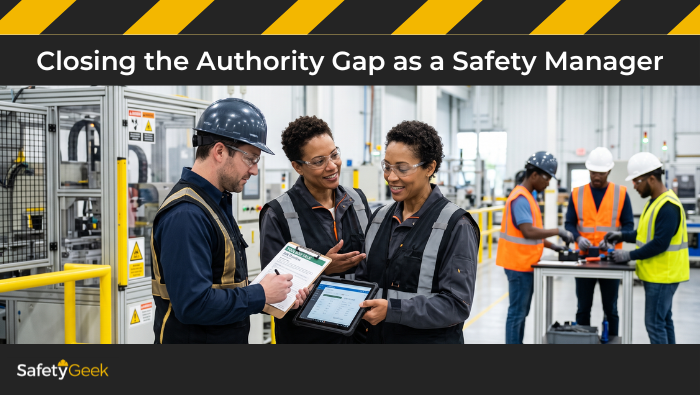
Running a one-person safety department in manufacturing comes down to one shift: you stop being the doer and start being the guide. You cannot personally watch 500 people, write every procedure, and chase every corrective action. So you build systems and hand the day-to-day ownership to the supervisors who are already on the floor.
Do you ever get that Sunday-night dread… the feeling that no matter how many hours you put in, the pile never gets smaller? Being the only safety person on site is one of the hardest jobs in this profession. You’ve got the responsibility for everyone’s safety and almost none of the authority to make people do anything about it.
Key Takeaways
- A one-person safety department fails when the safety manager tries to BE the program instead of building it
- Three things drive the overwhelm: reactive firefighting, admin overload, and responsibility without authority
- Front-line supervisors should own day-to-day safety compliance… you’re the coach, not the cop
- Prioritize the hazards that cause the most lost time first, not the loudest fire of the day
- The Line of Power lets you delegate real ownership even though you have no hire-fire authority
- Systems and processes are what let one person cover an entire facility
Why a One-Person Safety Department Feels Impossible
A one-person safety department is a role where a single professional is responsible for the entire safety function of a facility, often covering hundreds of employees across multiple areas and shifts. It feels impossible because the job is built on a lie… that one person can watch, correct, and document everyone.
You can’t. And the sooner you accept that, the sooner you get your life back.
There are three things quietly crushing you. The first is reactive firefighting. You spend your whole day chasing the incident that already happened instead of preventing the next one.
The second is admin overload. Paperwork, filing, and recordkeeping swallow the hours you should be spending on the floor. Many safety managers end up acting like a glorified administrator instead of a manager, buried in forms while the real work waits.
The third is responsibility without authority. You’re accountable for safety, but you can’t fire anyone, and you can’t force a supervisor to run a toolbox talk. This is the trap that makes the job feel crippling.
And the stakes are real. OSHA reports 5,283 fatal work injuries in a single recent year, and manufacturing carries an injury rate above the national average. When you’re the only safety person on site, that weight sits on your shoulders alone… which is exactly why you can’t afford to work this way.
You Were Never Meant to Do Safety Alone
The thing nobody tells you the day you take the job as a team of one is this: you were never supposed to enforce safety by yourself. Safety is an auxiliary position that sits outside the direct line of power. Your job is to be the subject matter expert and the coach of the coaches, not the person policing every worker.
Front-line supervisors already have the authority you don’t. They can direct, correct, and discipline their own people.
When you try to do their job for them, you undercut them AND you burn yourself out. So you give it back.
Even OSHA’s own management leadership guidance tells employers to identify front-line people to lead the safety effort, coordinate activities, and track progress. That’s not a suggestion to add more to your plate. It’s permission to distribute the work to the people closest to it.
This is the shift from safety doer to safety leader. You stop being the glue holding everything together, and you start building supervisors who own safety as part of their job.
One person can’t cover a plant. A plant full of supervisors who own their areas can.
The Priority Framework for a Team of One
When you’re a department of one, the hardest skill is deciding what NOT to do. You will never get to everything, so you triage. The rule is simple: work on the hazards that cause the most harm and the most lost time before anything else.
Not every task deserves your hours. Musculoskeletal injuries alone make up over a third of all lost-time workplace injuries, according to NIOSH research. If those are draining your facility, they come before the color of the floor tape.
What gets measured gets managed… so pull your BLS injury data and let the numbers pick your battles.
Here’s how to sort your day when everything feels urgent:
| Do This First (High Impact) | Do This Later or Delegate (Low Impact) |
|---|---|
| Controlling hazards that cause lost-time injuries | Filing and organizing old records |
| Coaching supervisors to run their own safety | Personally attending every routine inspection |
| Building systems and standard procedures | Chasing one-off housekeeping items |
| Reporting safety’s financial impact to leadership | Re-formatting paperwork nobody reads |
Notice the pattern. The high-impact column is work only you can do… strategy, coaching, systems, and speaking the language of the executives. The low-impact column is work you should automate, delegate, or drop.
When you protect your time for the first column, one person suddenly covers a lot more ground.
THE ALL-ACCESS PASS RESOURCE PAGE
Get all the FREE templates, safety management resources, PDFs, spreadsheets, and more...
How to Delegate When You Have No Authority
Delegation is the whole game for a one-person safety department, and it’s where most people get stuck. You think, “I can’t delegate… I’m not their boss.” True.
But you don’t delegate through authority. You delegate through the Line of Power.
The Line of Power is the principle that corrections and assignments must come through an employee’s own chain of command, not from safety directly. You don’t tell the operator to wear gloves. You equip the operator’s supervisor to own that expectation.
The direction flows through the person who actually has the power to enforce it.
That’s how you hand off real ownership without a single ounce of formal authority. You build the tools, you train the supervisors, you audit the activity, and you report the results up. The supervisors run the day-to-day, and you coach them when they need it.
This works even across a huge, spread-out operation. Kelly Dunn came into a director role covering 130 offices and felt the exact overwhelm you feel. She stopped trying to direct everyone herself, implemented office safety coordinators to own safety locally, and shifted her energy to influencing leadership with business language.
One person, one system, an entire organization covered.
Build Systems That Run Without You
The reason a team of one drowns is that the program lives in their head instead of in the system. If you’re the only thing holding safety together, then safety stops the day you’re out sick. Your goal is the opposite… a program that runs whether you’re there or not.
That’s what the Safety Management Cycle is built for. It’s the five-stage recurring system every program runs on: Identify hazards, Develop controls and tools, Implement and train, Coach and observe, then Analyze the data and start again. When each stage has a home and an owner, the work keeps moving without you personally pushing it.
Start with your task-based tools. A solid job hazard analysis becomes your observation forms, your coaching topics, your training material, and your procedures all at once.
Build the tool once, and it feeds everything else. That’s exactly what a safety manager wearing every hat desperately needs.
The transformation isn’t about working more hours. It’s about turning your knowledge into repeatable systems so the facility carries the load, not just you. That’s how one person builds a world-class program without burning out.
Frequently Asked Questions About Running a One-Person Safety Department
How many employees can one safety manager handle?
There’s no fixed ratio… OSHA and NIOSH point to risk-based staffing, not a headcount rule. A single safety professional can support hundreds of employees IF supervisors own daily compliance and the program runs on systems. Without delegation, even 50 employees can overwhelm one person.
What should a solo safety manager focus on first?
Focus on the hazards causing the most injuries and lost time. Pull your incident data, find the patterns, and control those first. Then build systems, coach supervisors to own the day-to-day, and skip the low-impact busywork until the high-risk items are handled.
How do I delegate safety if I’m not anyone’s boss?
You delegate through the Line of Power. Corrections and assignments flow through each employee’s own supervisor, not from you. You give supervisors the tools, training, and coaching to own safety in their area… you’re the guide on the side, not the enforcer.
How do I stop being the safety police as a team of one?
Hand day-to-day compliance back to front-line supervisors who already have the authority. Shift your role to coaching, systems, and reporting value to leadership. When supervisors own enforcement, you stop being the bad guy and start being the trusted expert everyone actually listens to.
Can one person really build a strong safety culture alone?
Yes, but not by doing it all yourself. Culture comes from the top, so you influence leadership to model it and equip supervisors to reinforce it daily. Your job is to design the system and coach the people who carry it… the facility builds the culture, you build the framework.
Now It’s Your Turn
Running a one-person safety department in manufacturing isn’t about doing more. It’s about handing the day-to-day to the people who already have the authority, protecting your time for the work only you can do, and building systems that run without you.
Here’s what to do this week:
- List every task on your plate and split it into “only I can do this” versus “a supervisor could own this”
- Pick your single highest-risk, highest-lost-time hazard and make it your priority
- Have one conversation with a supervisor about owning safety in their area through their own chain of command
- Turn one job hazard analysis into a reusable observation form and coaching topic
You don’t need more hours. You need a system and the confidence to stop carrying it all yourself.
If you’re drowning as a department of one and you’re ready to stop being the safety cop, watch my free training. It walks you through the exact system I teach safety leaders all over the world to earn a real seat at the table and get the support you need… without fighting for it every step of the way.
You got this. I got you, Safety Friend.
Hi, I'm Brye (rhymes with sky)! I am a self-proclaimed safety geek with two decades of general industry safety experience. Specializing in bringing safety programs to a world-class level and building a safety culture, I have trained and coached many safety managers, just like you, on how to effectively manage workplace safety in the real world. I would love to help you too.