Estimated Reading Time: 8 minutes
TL;DR: Overwhelmed safety managers have more mental health support than they realize… it just never gets handed to you. Your Employee Assistance Program is the front door. Peer communities, professional safety associations, trauma-trained therapists, and crisis lines like 988 fill in the rest. This guide walks through every resource, who each one is for, and how to build real support when you’re a department of one.
The mental health support resources for overwhelmed safety managers fall into five buckets: your EAP, peer communities, professional safety associations, licensed therapists, and crisis lines. Most safety managers only ever use one of them, if any. The rest sit unused, even though you carry more emotional weight than almost anyone in the building.
Here’s the conversation nobody’s having in this profession. You’re the one who shows up after the incident, calms the crew, files the report… and then drives home with all of it still sitting in your chest. You’re a department of one, so there’s no one down the hall who gets it, and asking for help can feel like admitting you can’t handle the job.
You can handle the job. You just shouldn’t have to handle it alone.
Key Takeaways
- Overwhelm and burnout in safety management are predictable occupational risks, not personal weakness.
- Your EAP is free, confidential, and available to you… not just the employees you protect.
- Peer communities and professional associations break the isolation of being a department of one.
- Crisis support is always available. Call or text 988 any time, day or night.
- A trauma-trained therapist matters more than a general counselor when serious incidents are involved.
- Protecting your own capacity is a leading indicator of whether your safety program survives long-term.
Why Overwhelmed Safety Managers Carry So Much Stress
Safety management is a high-exposure role that loads one person with responsibility, emotional weight, and very little authority to match. You’re accountable for outcomes you don’t fully control, you absorb the stress of every incident, and you do it while everyone else gets to move on. That combination is a textbook setup for chronic stress and burnout.
And this isn’t a you problem. The NIOSH guidance on supporting mental health at work is clear that work-related stress comes from organizational root causes first… workload, lack of control, scheduling, and isolation… long before it’s ever about individual resilience. Safety managers check nearly every one of those boxes.
The repeated exposure is its own risk. When you investigate the same kinds of incidents over and over, the weight accumulates quietly until it shows up as cynicism, exhaustion, or emotional numbness. That slow build has a name, and I cover it fully in this piece on vicarious trauma in safety management roles.
So if you’ve been feeling fried and wondering whether you’re just not cut out for this, read that again. The role is hard by design. Needing support is the normal response to an abnormal load… not a sign you’re failing.
Mental Health Support Starts With Your EAP
An Employee Assistance Program (EAP) is a free, confidential workplace benefit that connects you with short-term counseling and referrals for personal or work-related challenges. Most plans cover three to eight counseling sessions per issue, plus a referral network if you need ongoing care. And here’s the part most people miss… it covers you, the safety manager, not just the workforce you’re trying to protect.
EAP use is confidential. Your employer pays for the program but does not see who calls or what you discuss. You can use it for work stress, anxiety, grief after an incident, sleep problems, family issues, or just to talk to someone who isn’t inside your building.
The OSHA guide on supporting mental health in the workplace specifically encourages leaders to promote EAP use and to talk about stress without stigma. That guidance is aimed at you as a leader… but it applies to you as a human being doing a heavy job, too.
Here’s the move this week. Look up your EAP phone number before you need it, and save it in your phone. Most people have access and never use it, and the worst time to go searching for the number is the night after a bad call.
Support Resources Beyond Your EAP
Your EAP is the front door, not the whole house. The real support system for an overwhelmed safety manager is a stack of resources, each one built for a different kind of weight. Knowing which one to reach for saves you from white-knuckling through something that has a clear path to help.
Use this table as your map. When the stress hits, you’ll know exactly where to turn instead of trying to figure it out in the moment.
| Resource | Best For | How to Access |
|---|---|---|
| Employee Assistance Program | First call after a tough stretch, short-term counseling, referrals | Your HR portal or benefits packet |
| 988 Suicide & Crisis Lifeline | Immediate emotional crisis, any time of day or night | Call or text 988 |
| SAMHSA National Helpline | Free, confidential treatment referrals and information | Call 1-800-662-HELP (4357) |
| Trauma-trained therapist | Ongoing work after incidents, fatalities, or recurring stress | EAP referral or insurance behavioral health |
| Professional association | Peer connection, resources, mentorship, community | ASSP, NSC, or a local safety council |
| Peer safety community | Day-to-day venting and people who actually get it | Online groups, local chapters, the Academy |
A few of these deserve a closer look. If you or a coworker is ever in immediate emotional crisis, the 988 Suicide and Crisis Lifeline connects you to free, confidential support 24/7 by call or text. For treatment referrals and information, the SAMHSA National Helpline runs around the clock as well.
For ongoing support, the National Safety Council’s workplace mental health resources treat mental health as a core safety topic, not a side issue. That framing matters, because it gives you the language to take your own wellbeing as seriously as you take a machine guarding hazard.
THE ALL-ACCESS PASS RESOURCE PAGE
Get all the FREE templates, safety management resources, PDFs, spreadsheets, and more...
Breaking the Isolation of a Department of One
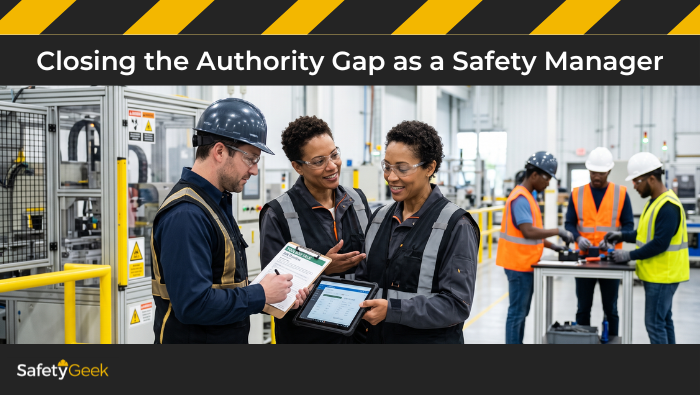
The hardest part of safety management isn’t the regulations. It’s being the only person in the building who carries this specific weight, with nobody in the next office who understands it. That isolation is a direct risk factor for burnout, and it’s the one resource gap you have the most power to fix.
Start by widening your circle beyond your own plant. Professional associations like ASSP and the National Safety Council, plus local safety councils, are full of people doing your exact job at other companies. A monthly call with one peer who gets it does more for your head than a dozen articles ever will.
Then work on normalizing the conversation, both for yourself and your team. The NAMI toolbox talks for mental health are built for manufacturing and slot right into your existing safety meetings. When you talk about mental health the same way you talk about lockout/tagout or PPE, you make it safe for everyone… including you.
This is exactly why the Safety Leadership Academy community exists. Safety professionals carry weight that almost nobody outside this work understands, and having a room full of people who do is its own kind of medicine. You can read more about the full landscape of mental health in safety management and why it belongs on every safety leader’s radar.
When Peer Support Isn’t Enough
Peer connection handles the day-to-day accumulation. But some weight is too heavy for a venting call with a friend, and knowing the difference protects you. There’s no shame in needing more… there’s only risk in pretending you don’t.
Watch for these signals that it’s time to bring in a professional. Persistent sleep disruption that lasts for weeks, intrusive thoughts or flashbacks about an incident, emotional numbness that doesn’t lift between events, difficulty being present at home, or a growing sense that the work has lost all meaning. Any one of these is a reason to call your EAP or a therapist.
When a serious incident is involved, ask specifically for a trauma-trained therapist rather than a general counselor. General counseling is great for life stress and grief, but it’s underpowered for trauma. This matters most after a fatality, which is its own kind of weight… I walk through it in this guide on coping with workplace fatalities as a safety professional.
One simple rule cuts through the doubt. If you feel worse a month after a tough event than you did the week of, that’s your signal to get help. Stress softens with time. The heavy stuff hardens without support.
Frequently Asked Questions About Mental Health Support for Safety Managers
Can I use my company’s EAP for work stress, or just personal problems?
Both. EAPs are built for work-related stress, burnout, anxiety, and grief after incidents, alongside personal and family issues. Your conversations are confidential, and your employer never sees who calls or what you discuss. As the safety manager, you’re a covered employee too, so the benefit is yours to use.
Is it normal to feel burned out as a safety manager?
Yes, and it’s common. Safety management combines high responsibility, low authority, repeated exposure to incidents, and the isolation of a department of one. NIOSH ties burnout to those exact organizational conditions, not to personal weakness. Feeling fried is a normal response to an abnormal load, and it’s a signal to add support, not to push harder.
What should I do if my company doesn’t offer an EAP?
You still have options. Check your health insurance for behavioral health benefits, which often cover therapy at low cost. Community mental health centers offer sliding-scale fees, and the SAMHSA National Helpline at 1-800-662-HELP gives free referrals 24/7. Professional associations and peer communities also fill the gap when no internal program exists.
How do I find other safety managers to talk to?
Start with professional associations like ASSP and the National Safety Council, plus your local safety council, where you’ll meet people doing your exact job elsewhere. Online safety communities and forums help too. The goal is one or two peers you can call regularly, so the weight of the role stops being something you carry completely alone.
When should I see a therapist instead of leaning on peer support?
See a therapist when symptoms get worse instead of better, when sleep stays broken for weeks, when you have intrusive thoughts or numbness that won’t lift, or when a serious incident is involved. Peer support handles daily stress. A trauma-trained therapist handles the heavier work that venting alone can’t reach.
Now It’s Your Turn
You protect everyone else in the building. The mental health support resources in this post exist so someone protects you, too… and most of them are already within reach.
Here’s where to start this week:
- Save your EAP number in your phone today, before you ever need it.
- Pick one resource from the table above and take a single action… make the call, join the group, or look up a therapist.
- Find one peer who does this job and set up a standing monthly check-in.
- Add a mental health toolbox talk to your next safety meeting to normalize the conversation for your team.
One more thing worth remembering. Protecting your own capacity isn’t separate from running a good safety program… it’s part of it. When your program runs on proven systems instead of your sheer personal output, you carry less, and you last longer in a career that genuinely needs you.
That’s exactly what we build inside the Safety Leadership Academy… the systems, the influence skills, and the community of people who understand this work. When you book a Safety Leadership Roadmap Session, you’ll walk away with a clear picture of where your program stands and what it would look like to build support around you instead of resting it all on your shoulders.
You got this, Safety Friend. And when you don’t, you’ve got people. I got you.
Hi, I'm Brye (rhymes with sky)! I am a self-proclaimed safety geek with two decades of general industry safety experience. Specializing in bringing safety programs to a world-class level and building a safety culture, I have trained and coached many safety managers, just like you, on how to effectively manage workplace safety in the real world. I would love to help you too.