Estimated Reading Time: 9 minutes
A green yellow red scaffold tag system is a visual status card hung at every scaffold access point. Green means inspected and cleared for normal use. Yellow means usable only with the restrictions written on the tag. Red means stay off it. OSHA doesn’t mandate the colors under 29 CFR 1926.451, but it does require competent person inspections and warning tags on existing hazards.
The green, yellow, red scaffold tag system works like a traffic light for scaffold status. Green says the scaffold was inspected and is safe to use as built. Yellow says use it with the restrictions written on the tag, and red says nobody climbs.
The thing that nobody is telling you about tags… hanging them is the easy part. Running them so the color actually means something is where most scaffold programs quietly fall apart.
Then OSHA shows up and asks who signed the yellow tag on the north scaffold last Tuesday, and the whole system rests on whether one person remembers.
Key Takeaways
- The colors are an industry convention, not an OSHA color mandate. OSHA regulates inspection and hazard warning, not the paint.
- A competent person owns every tag. Inspect scaffolds before each work shift and after any event that could affect structural integrity.
- Yellow is the tag that gets people hurt. It only works when the restriction is spelled out in plain language.
- Every tag carries six things: scaffold ID, date and time, inspector name, status, restrictions, and the re-inspection trigger.
- The tag belongs at the access point, not on the back side where nobody climbing will ever read it.
- Scaffolding remains among OSHA’s Top 10 most-cited standards, with roughly 1,900 citations a year.
What Green, Yellow, and Red Scaffold Tags Actually Mean
A scaffold tag is a status card hung at a scaffold’s access point that tells anyone about to climb whether the structure is safe, restricted, or off limits. The color communicates status in about half a second, which is exactly why the traffic light convention stuck across the industry.
Green means a competent person inspected the scaffold, found no deficiencies, and cleared it for normal use. Yellow means the scaffold is usable, but something about it is out of the ordinary, so specific conditions are written on the tag. Red means the scaffold is incomplete, damaged, or failed inspection.
The color is a summary. The words on the tag are the actual instructions, and workers have to be taught to read both.
| Tag color | What it means | What the worker does |
|---|---|---|
| Green | Inspected this shift, no deficiencies, built to standard | Use it normally, following scaffold training |
| Yellow | Usable with conditions… missing a midrail, reduced load rating, harness required | Read the restriction and follow it exactly, every time |
| Red | Under erection or dismantling, damaged, or failed inspection | Do not climb. No exceptions, no “just for a second” |
| No tag at all | Status unknown | Treat it as red and go find the competent person |
That last row is the one most programs never write down. And it’s the one that saves you, because an untagged scaffold on a busy site is almost always a scaffold somebody is still working on.
What OSHA Requires From a Green Yellow Red Scaffold Tag System
Here’s where safety leads get surprised. OSHA never wrote a rule that says green means go and red means stop on a scaffold.
What OSHA requires is the work behind the tag. Under 29 CFR 1926.451, a competent person inspects the scaffold before each work shift and after any occurrence that could affect its structural integrity. That same standard puts a competent person in charge of erection, alteration, moving, and dismantling.
The tag proves the inspection happened and communicates the result to everyone who wasn’t there when it did.
The warning piece has its own home in the regulations. OSHA’s accident prevention signs and tags rule at 1926.200(h) requires tags as a temporary way to warn employees of an existing hazard. A red tag on a partially erected scaffold is a textbook use of that requirement.
Then there’s the training side. 29 CFR 1926.454 requires scaffold users to be trained to recognize hazards and understand the procedures that control them. A color system nobody was trained on is decoration, not communication.
Why the Colors Being Optional Is Good News
Because OSHA doesn’t dictate the colors, your written program is what gives them legal weight. You define what each color means, who assigns it, and what a worker does when they see it.
That written definition is what an OSHA inspector reads when they want to know if your crews had a fighting chance of getting it right. It’s also what protects you on a multi-employer site where a subcontractor shows up using a completely different color scheme.
Consistency beats color choice every time. OSHA’s scaffolding eTool walks through the inspection and access requirements the tag is summarizing, and none of it hinges on which crayon you picked.
What Belongs on Every Scaffold Tag
A tag with a color and nothing else is a guess. A tag with six pieces of information is a record, and it takes about 45 seconds to fill out.
Here’s what goes on the card, front and back:
- Scaffold identifier and location. Tower 3, north elevation. Generic tags on a site with fourteen scaffolds tell you nothing.
- Inspection date and time. Time matters, because pre-shift means pre-shift. A date alone can’t tell you whether the swing shift was covered.
- Inspector name and signature. Print and sign it, so the record survives a wet Sharpie and a bad memory.
- Status. The color, plus the word written out. Some of your crew is colorblind, and roughly 1 in 12 men has some form of color vision deficiency.
- Restrictions or deficiencies. This is the whole point of the yellow tag. “Midrail missing bay 4, fall arrest required east side” beats “use caution” every day of the week.
- Re-inspection trigger. Next shift, or immediately after modification, high wind, or impact. Put it in writing so nobody has to guess how long green stays green.
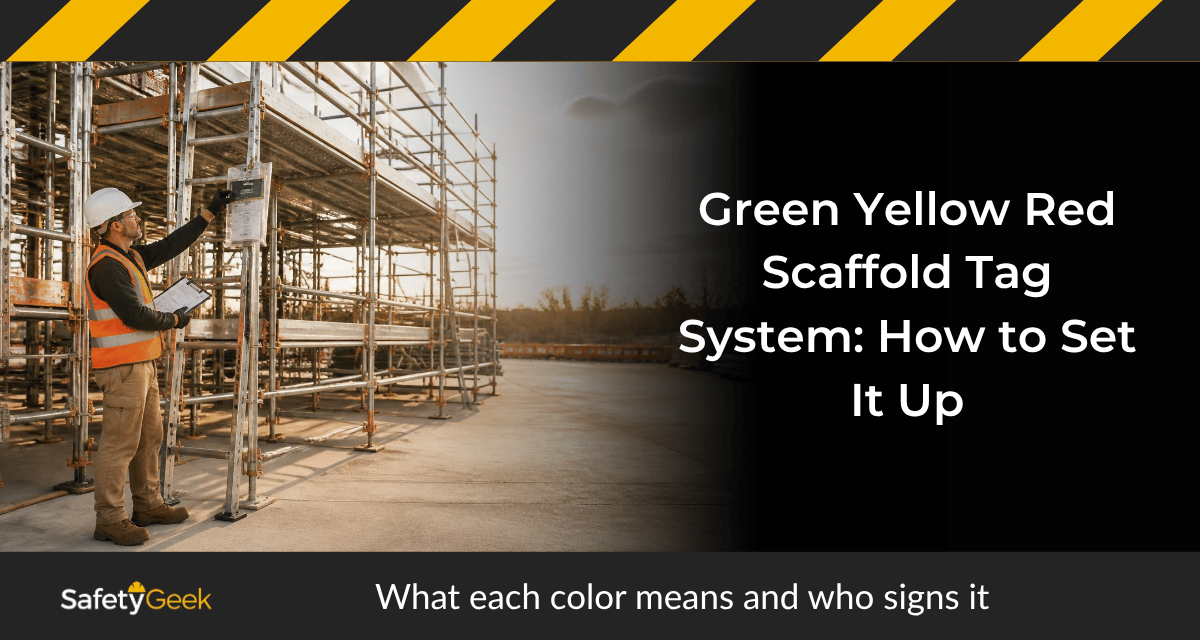
Use a weatherproof holder with a replaceable insert card and hang it at the access point, at eye level, on every ladder or stair tower into the scaffold. A tag on the far side of a structure is a tag nobody reads.
One more thing that pays for itself… keep the used insert cards. They become your inspection record, and a shoebox of signed cards has settled more OSHA questions than any binder I’ve seen.
THE ALL-ACCESS PASS RESOURCE PAGE
Get all the FREE templates, safety management resources, PDFs, spreadsheets, and more...
How to Build the Tag System in Five Steps
Most sites already own the tags. What they’re missing is the system that makes the tags mean something on a Tuesday when it’s raining, and the crew is behind schedule.
Here’s the build, in order.
1. Write the definitions on one page. Green, yellow, red, and untagged, each with a one-sentence meaning and one sentence on what the worker does. Reference 1926.451 and your scaffold types directly so it’s clearly a program, not a poster.
2. Designate your inspectors in writing. Only a designated scaffold competent person signs a tag, and that designation letter needs to name their authority to red-tag a structure and stop work. Build in a backup so vacations don’t create a gap.
3. Standardize the hardware. One holder style, one card format, mounted at every access point across the whole site. Mixed formats are how a subcontractor’s yellow ends up meaning something different than yours.
4. Train the users, not just the erectors. Everybody who steps on a scaffold learns the four statuses and the “no tag means red” rule. Fifteen minutes at orientation covers it, and 1926.454 already requires the training.
5. Audit the tags, not just the scaffolds. Once a week, walk the site and check dates, signatures, and whether the restrictions on the yellow tags match what’s actually built. Track the miss rate as a number.
That last step is where a tag program turns into a safety system. You’re running the full Safety Management Cycle on one small process… you identified the hazard, developed the control, implemented and trained it, and now you’re coaching and analyzing whether it holds.
Pull the same structure your workplace safety inspection process already uses and the tag audit takes twenty minutes a week.
Where Scaffold Status Tags Break Down on Real Jobsites
Scaffolding lands on OSHA’s Top 10 most-cited standards year after year. Preliminary FY 2025 data reported by Safety+Health Magazine put scaffold violations around 1,900, keeping 1926.451 near the top of the list.
The tag failures behind those numbers repeat themselves on site after site.
Stale green tags. The card says green, the date says nine days ago. That’s not a green scaffold… that’s an unverified one, and an inspector will read it exactly that way.
Yellow as a catch-all. Crews start using yellow for anything they’re unsure about, with “use caution” scribbled in the restriction box. Within a month, yellow means nothing and everybody climbs anyway.
Tags hung where nobody walks. A tag on the back elevation of a tower is a tag for the auditor, not the worker. It has to be at the point of access.
Signatures without authority. A foreman signs the card because he’s the one standing there. If he wasn’t designated in writing as a competent person, the inspection technically didn’t happen.
Competing systems on a multi-employer site. Your yellow means restricted, and the mason contractor’s yellow means “erected by us, ask before use.”
Two definitions of the same color on one jobsite is a near miss waiting for a schedule crunch.
Notice the pattern. When five different crews all miss the same step, that’s a system problem, not five careless employees.
The fix is never a louder toolbox talk. It’s making the right move the easy move… a holder that only fits one card, a tag that can’t be filled out without a date, an audit that catches the stale ones before OSHA does.
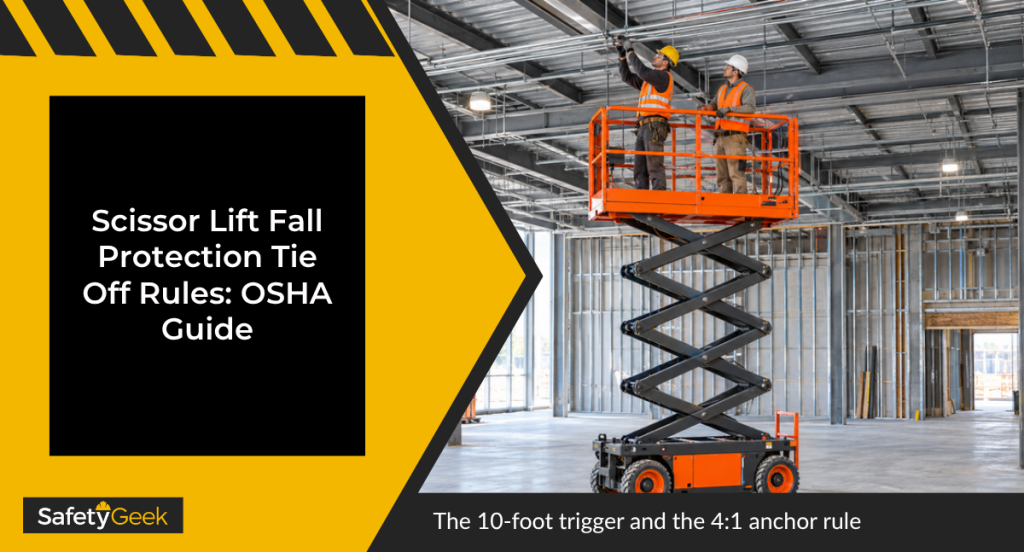
The same logic applies to the structural rules the tag is certifying. If your inspectors aren’t solid on the scaffold 4 to 1 height ratio rule or the scaffold load capacity calculation formula, a green tag just means somebody looked at it. Fall protection is the other big one, and the OSHA 10-foot rule for scaffolds decides what a restriction on a yellow tag should even say.
Frequently Asked Questions About Scaffold Tag Colors
Does OSHA require green, yellow, and red scaffold tags?
No. OSHA doesn’t specify tag colors for scaffolds anywhere in 29 CFR 1926.451.
What OSHA requires is a competent person inspection before each shift and tags that warn employees of existing hazards under 1926.200(h). The color system is an industry convention your written program defines.
Who is allowed to sign a scaffold tag?
Only a competent person designated by the employer in writing. That person has to be able to identify scaffold hazards and hold the authority to stop work and correct them. A supervisor who hasn’t been formally designated signing the card doesn’t satisfy the inspection requirement.
How long is a green scaffold tag good for?
Until the next work shift, or until anything happens that could affect structural integrity. Modifications, high winds, vehicle impacts, and dropped loads all reset the clock immediately. If the date on the card isn’t from this shift, treat the scaffold as unverified until it’s re-inspected.
What does a yellow scaffold tag mean?
The scaffold can be used, but only under the specific conditions written on the tag. Common examples are a missing midrail requiring fall arrest on one side, a reduced load rating, or restricted access to one level. If the restriction isn’t written out, the tag is useless.
Do scaffold tags replace a written inspection record?
They can, if you keep them. A signed and dated insert card is documentation of who inspected what and when. Save the used cards or log the same data digitally, because OSHA’s question is never “do you have tags,” it’s “show me the inspections.”
Now It’s Your Turn
A green yellow red scaffold tag system is only as strong as the inspection behind the card. The colors communicate, but the competent person, the written definitions, and the weekly audit are what make the communication true.
Here’s what to do this week:
- Walk your active scaffolds and check the date on every tag. Anything older than the current shift gets re-inspected today.
- Write your one-page color definition, including what an untagged scaffold means.
- Confirm every person signing a tag has a written competent person designation on file.
- Add a five-minute tag check to your weekly site walk and track the miss rate.
Compliance is the floor here, not the finish line. The safety leads who actually change how a jobsite runs build systems that do the enforcing for them, so they stop being the person nagging about tags and start being the person leadership listens to. That’s the whole idea behind the Safety Influencer System, the free training that walks through how it’s done.
Start with the tags on the scaffolds you already have up. You got this, Safety Friend.
Hi, I'm Brye (rhymes with sky)! I am a self-proclaimed safety geek with two decades of general industry safety experience. Specializing in bringing safety programs to a world-class level and building a safety culture, I have trained and coached many safety managers, just like you, on how to effectively manage workplace safety in the real world. I would love to help you too.