Estimated reading time: 12 minutes
Machine guarding employee training is essential to preventing amputation injuries in the workplace. By building skills, habits, and awareness, this training helps workers avoid dangerous shortcuts involving guards. This post explores the best practices to deliver hands-on, repeatable training that integrates into a living safety cycle, reducing serious injuries and gaining leadership support.
Effective machine guarding employee training does more than check boxes; it connects operators to the reasons behind each guard, ensures supervisors engage as coaches, and uses data to continuously improve safety outcomes. Whether you’re leading a team or working solo, these strategies provide a path to reducing amputation injuries sustainably.
In this article, you’ll learn what to include in your training, how to make it stick, and how a culture of safety can transform your entire operation. From hazard assessment through leadership engagement, the techniques shared here offer a comprehensive framework tailored for real-world success.
Key Takeaways
- Machine guarding employee training connects operators to the “why” behind every guard, not just the rules.
- Preventing amputation injuries requires hands-on, visual, and skill-based training; signed forms alone won’t suffice.
- Best practices include hazard assessment, tailored training, ongoing observations, supervisor coaching, and data-driven improvements.
- Training is an ongoing cycle within the Safety Management Cycle, not a one-and-done event.
- Leadership buy-in significantly impacts training effectiveness and safety culture development.
- Even a single-person team can build a world-class program with the right systems, mindset, and tools.
What Is Machine Guarding Employee Training?
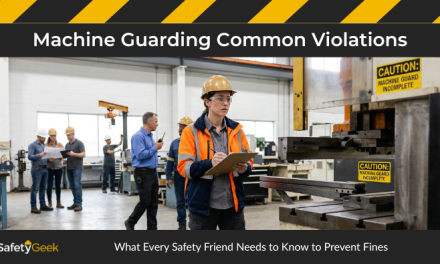
Machine guarding employee training teaches workers why guards are critical, how to inspect and maintain them, how to start up and shut down safely, and why bypassing is NEVER allowed. Operators, maintenance techs, and supervisors ALL need this knowledge to keep hands, arms, and fingers safe.
According to OSHA’s machine guarding safety guidance, guards block contact with moving parts, nip points, sparks, and debris. Training usually covers fixed guards, interlocks, adjustable and self-adjusting guards, and presence-sensing devices like light curtains.
But here’s the thing… “Don’t remove the guard” just scratches the surface. Trainers need to dig into pre-use guard inspections, verifying interlocks, reporting issues, and the full lockout/tagout steps tied to maintenance. OSHA’s Trainer’s Guide for machine safety sets competency-based training as the standard. That means operators prove skills, not just show up.
This fits perfectly into the Safety Management Cycle, starting at Phase 1: Identify hazards with Job Hazard Analyses (JHAs). Your training is only as solid as the risk groundwork it stands on.
Why Effective Machine Safety Training for Operators Actually Matters
OSHA compliance gets you a passing grade, but it doesn’t prevent amputations by itself. Regulations have been around for decades… but amputations keep happening. That’s why “machine safety training for operators” needs to go way beyond “Don’t remove the guard.”
When your training works, it changes habits and thinking. There’s a big leap from knowing the rules to truly understanding the serious, real consequences of skipping them. One operator follows policy. Another is invested in staying safe because he GETS why.
When training fails, here’s what’s at stake:
- Amputations change lives permanently… hands, fingers, and arms lost forever.
- Lost days, costly claims, and heavy team morale drops hit your bottom line.
- Reputation and confidence in safety take a massive hit after a serious injury.
- Safety pros lose authority when preventable injuries happen on their watch.
- OSHA citations and lawsuits create expensive, lasting headaches for leadership.
But when machine safety training for operators WORKS? Injury rates drop. Supervisors become safety allies. Executives notice real results. You move from compliance cop to respected “guide on the side.” And you EARN your seat at the table because your data backs it up.
Best Practices for Machine Guarding Employee Training
Here’s how to build a machine guarding employee training program that truly works… and gets you braggable results, even as a team of one.
1. Assess Risks and Tailor Training to Each Machine
Every machine has unique dangers. A conveyor, a press, and a saw all require different types of guards and different training. Start by:
- Doing JHAs (Job Hazard Analyses) for every machine
- Using the Hierarchy of Controls (Elimination, Substitution, Engineering – like guards, Administrative, PPE)
- Identifying overlooked hazards and double-checking guard effectiveness
OSHA’s guidance stresses that guards need to work without creating new risks and must stay in place during normal operation. Your training should use examples and guard types specific to YOUR gear.
This is Phase 1 (Identify) and Phase 2 (Develop) of the Safety Management Cycle. Identify hazards first, then tailor your training to what you found.
2. Make Training Visual, Hands-On, and Practical
Most adults tune out slide decks. Real learning sticks when you use:
- Pre-training awareness quizzes and post-training skill checks
- Photos showing good vs. bad guarding
- Live machine walkarounds and guard inspections
- Practice sessions for typical equipment tasks (including startup and lockout/tagout)
Competency beats attendance every time. If an operator can identify all guards, explain their purpose, and safely start up… that’s real protection, not pencil whipping.
THE ALL-ACCESS PASS RESOURCE PAGE
Get all the FREE templates, safety management resources, PDFs, spreadsheets, and more...
3. Train Supervisors as Coaches, Not as the Safety Police
Compliance theater dies when supervisors become coaches. A coach of the coaches shapes culture faster than any single training event.
Supervisors should:
- Model safe machine startup and shutdown every time
- Ask questions and reinforce guard checks in the moment
- Include safety checks in every walk and crew huddle
- Actively report and correct near-misses or guard bypasses
Supervisors ignoring guard bypasses leads to serious events. Teach supervisors their real power is in daily conversations – not checking boxes on forms.
Tie this to our full guide on Becoming the Coach of the Coaches and multiply your impact.
4. Reinforce with Frequent Observations and Coaching
One-and-done training isn’t a program. It’s a starting point. Ongoing observation is where most safety programs break down.
Set a schedule for regular guard observations. Here’s what to look for:
- Guard status before and during operation
- Hand placement and working habits
- PPE use alongside guards
- Lockout/tagout steps for all maintenance
- Immediate reporting of missing or damaged guards
Quarterly works for most, monthly for high-risk areas or new staff. Use the same forms every time so you can see trends.
5. Analyze Data and Continuously Adjust Training
You can’t fix or brag about what you don’t measure. Track:
- Training completion rates and skill assessments
- Observation notes, near-miss reports, and guard-related incidents
- Trends by department, work group, or shift
Update your training every year – PLUS any time incidents, observations, or near-misses reveal new risks. This is Phase 5 – Analyze – in the Safety Management Cycle.
Results equal respect. Showing leadership a 40% drop in injuries moves you from compliance enforcer to seat at the table candidate.
Check out Why You Need to Implement A Data-Driven Safety Program for a deep dive.
6. Eliminate Pencil Whipping and Build Accountability
Pencil whipping – when people fake sign-offs or skip real checks – is a hidden killer. It creates fake confidence and real risk.
Build systems where:
- Transparency gets rewarded
- Problems are reported, not hidden
- Safety success is recognized publicly
- Real learning from errors is expected, not punished
Accountability means honesty, not punishment. Reward the people who catch issues in the moment.
7. Drive Behavior Change Using Hidden Triggers
People change for reasons that matter to them, not just rules. Connect guarding to what truly matters:
- Getting home safe
- Keeping their hands
- Doing their job well and pain-free
Make guard checks a professional standard. When you overhear an operator explain why the guard matters to a new hire, you know your culture is strong.
8. Keep Training Alive as a Cycle
Machines change. So do people, processes, and hazards. Build a calendar that includes:
- Initial training for everyone new
- Annual skill refreshers
- Event-triggered retraining after incidents or equipment changes
- Add-on education through OSHA Outreach or advanced courses
Continuous improvement is the standard for guarding. Your training should evolve right along with your workplace.
Preventing Amputation Injuries Requires a Culture Change
No safety training survives without real leadership support. Preventing amputations at scale takes a full-culture commitment.
Culture change starts at the top. When you see a plant manager stop to check guards on a walk, that’s HUGE. When a supervisor actually stops production for a missing guard, THAT builds the safety culture.
Your job isn’t to police people. It’s to build SYSTEMS… and coach leaders into making the safe choice the easy choice. When your programs keep moving even when you’re not there, you win.
Safety Geek’s leadership engagement workshops and coaching tools are built for this. Get your leaders invested in success, not just compliance.
Common Challenges and How to Overcome Them
Every program faces roadblocks. Here’s how to tackle the big three:
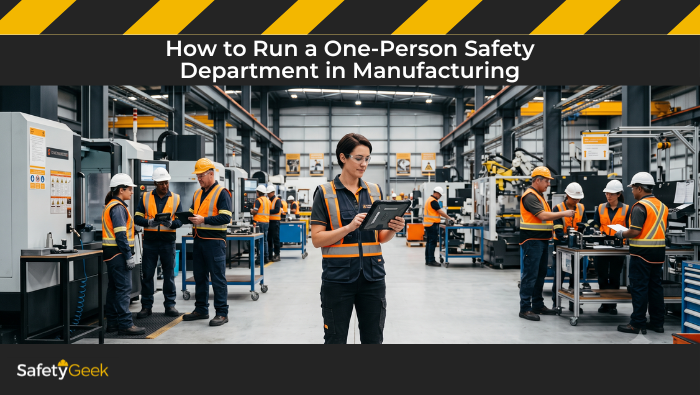
- Team of one burnout? Build supervisor coaches. Let them handle daily accountability. Your focus: coach the coaches, not do it all yourself.
- Resistance and pencil whipping? Use Hidden Triggers. Find out what really matters to your team. Celebrate those who step up. Shine a light on real learning, not fake compliance.
- Not enough time or tools? Modular, ready-to-use training kits and checklists save hours. Safety Geek’s programs help you cover more ground – FAST – even with just one person.
Real change is slow… but SO worth it. You got this. I’m your guide on the side for every step.
Frequently Asked Questions About Machine Guarding Employee Training
What should be included in machine guarding employee training?
Machine guarding employee training must include the specific types of guards in use, the reason for each guard, steps to inspect guards before and during operation, lockout/tagout steps tied to maintenance, how to report guard problems, and what happens if guards are bypassed. OSHA’s trainer guidance recommends competency-based training, NOT just a sign-in sheet. Tailor training to each machine and work group.
How often should machine guarding training be refreshed?
Refresh machine guarding training every year for all employees who work around guarded equipment. Retrain any time a new machine comes in, an incident or near-miss points to a gap, when operators move to new roles, or if observations show unsafe habits. In between, quarterly coaching observations keep skills sharp.
Who needs machine guarding training?
All machine operators need guarding training, as do maintenance techs and supervisors who oversee those employees. Supervisors require focused training on coaching, observing, and holding their teams accountable for machine safety. Every group plays a unique part in preventing amputation incidents.
What are the most common causes of machine guarding failures in the workplace?
Top causes include removing guards for maintenance and not putting them back, bypassing guards for speed or convenience, supervisors ignoring guard problems, and poorly designed guards that are hard to use. Most failures come from culture, not lack of knowledge.
How does machine guarding training connect to OSHA requirements?
OSHA standards like 1910.212 require employers to provide guards and train on their use. Meeting OSHA’s minimums keeps you compliant, but real prevention takes a living cycle of skill-building and culture work.
TAKE ACTION: What You Can Do This Week to Strengthen Your Machine Guarding Program
You don’t need perfection to start. Take one bold step this week.
- Walk your site and pick your three highest-risk machines using JHA criteria (guard complexity, operator experience, incident history). Start your hazard review with those.
- Meet with one supervisor and have a real talk – not a training. Ask them what coach of the coaches looks like for machine guarding in their area. Listen for barriers.
- Pull up your current training and compare it to these eight best practices. Note where you shine and where the gaps are. Build your 90-day plan from that gap list.
Safety Geek’s training bundles and consulting sessions close those gaps fast. Stop guessing. Start protecting people for REAL.
Now It’s Your Turn
Safety Friend… where are YOU getting stuck with machine guarding employee training? Are you fighting pencil whipping? Battling leadership indifference? Carrying the load as a team of one?
Drop your wins and your stuck points in the comments. I’m always ready to help you map out next steps as your guide on the side.
You got this.
Hi, I'm Brye (rhymes with sky)! I am a self-proclaimed safety geek with two decades of general industry safety experience. Specializing in bringing safety programs to a world-class level and building a safety culture, I have trained and coached many safety managers, just like you, on how to effectively manage workplace safety in the real world. I would love to help you too.