Estimated Reading Time: 7 minutes
Respirator medical evaluation procedures require a licensed health care professional (PLHCP) to clear a worker before any fit test or required respirator use, per OSHA 1910.134(e). The worker completes the mandatory Appendix C questionnaire (or an equivalent exam), the PLHCP reviews it confidentially, and the employer receives a written opinion stating only whether the worker can wear a respirator. You re-evaluate when symptoms, job changes, or a PLHCP say so.
Respirator medical evaluation procedures come down to one rule: medical first. Before anyone gets fit tested or wears a required respirator, OSHA 1910.134(e)(1) says a licensed health care professional has to confirm they are medically able to wear one. No clearance, no respirator.
And here is where it trips up so many safety leads. You are a department of one, the respirators showed up, the crew wants to get to work, and you are not totally sure what “medically cleared” even means. You are not alone in that, and the process is more learnable than it looks.
Key Takeaways
- Medical evaluation always comes first – before fit testing and before required respirator use (OSHA 1910.134(e)(1)).
- The Appendix C questionnaire is mandatory – workers complete Sections 1 and 2 of Part A, and you cannot read their answers.
- A PLHCP makes the call – a physician or other licensed health care professional reviews the evaluation and sends you a written clearance opinion.
- The clearance letter is limited on purpose – it tells you whether the worker can wear a respirator and any limits, not their medical details.
- There is no annual requirement – you re-evaluate based on symptoms, job changes, or a PLHCP recommendation, not the calendar.
- Online and in-clinic both work – OSHA allows either, as long as a PLHCP oversees it and confidentiality holds.
What Respirator Medical Evaluation Procedures Actually Require
A respirator medical evaluation is a screening process that determines whether a worker can safely wear a respirator without putting their health at risk. Wearing a respirator is work. It adds breathing resistance, heat, and sometimes psychological stress, and not every body handles that the same way.
OSHA built the medical-first sequence right into 1910.134(e)(1). The standard says you provide the evaluation before the worker is fit tested or required to use the respirator. That order is not a suggestion, and skipping it is one of the most common ways programs get cited.
So what does the evaluation have to capture? At minimum, the information in OSHA’s respiratory protection standard Appendix C, Part A, Sections 1 and 2. You can use the questionnaire or an in-person exam that gathers the same information, but you cannot water it down.
Here is what I see trip people up. They treat the medical evaluation like a formality, a piece of paper to file, instead of a real safety control.
But a worker with an undiagnosed heart condition or severe claustrophobia can be put in real danger by a tight-fitting respirator. The evaluation exists to catch that before it becomes an incident on your watch.
How to Use the OSHA Appendix C Questionnaire
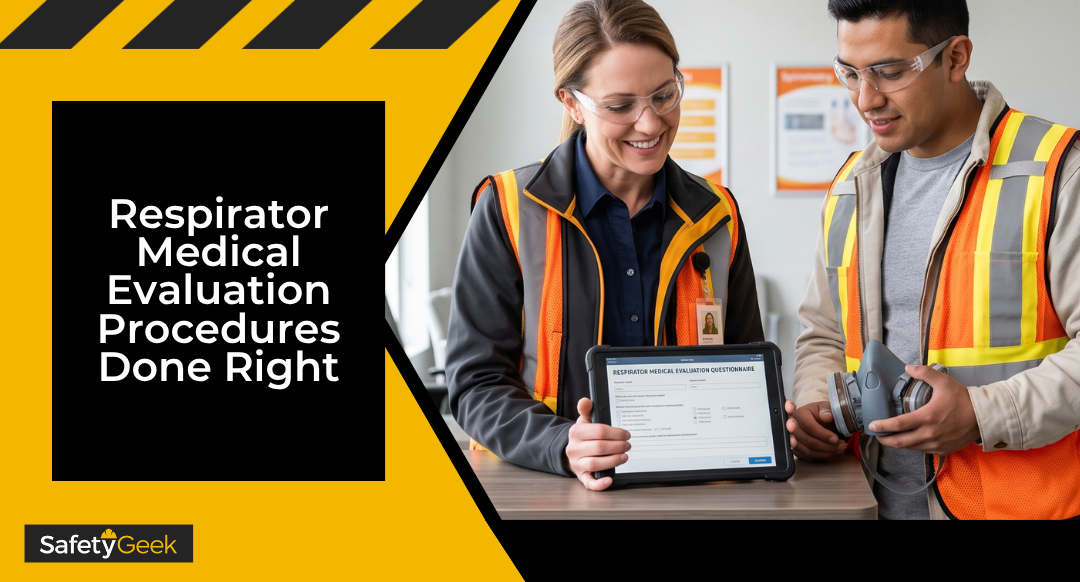
The OSHA Appendix C questionnaire is the backbone of most medical evaluations. It is a standardized set of health questions covering heart, lung, and other conditions that affect respirator use. OSHA makes it mandatory when you use the questionnaire method, and it has to be done before fit testing.
Part A is what matters most for you. Sections 1 and 2 are required, and the worker has to answer them. Part B holds extra questions a PLHCP can use at their discretion.
The big rule safety leads miss: you do not get to read the answers. The completed questionnaire goes straight to the PLHCP, not across your desk. OSHA requires the evaluation to be confidential, done on work time or at a convenient time, and in a language the worker actually understands.
This confidentiality piece is spelled out in OSHA’s respirator medical evaluation guidance, which makes clear the employer never reviews the responses. Build your process so the paperwork bypasses you entirely. A sealed envelope or a direct online submission both do the job.
If a worker answers yes to certain questions in Part A, Section 2, the PLHCP must offer a follow-up exam. That is normal. It does not mean the worker is disqualified, it means the professional needs a closer look before clearing them.
Who Clears the Worker and What the Letter Says
A PLHCP, or physician or other licensed health care professional, is the person OSHA authorizes to review the evaluation and decide whether a worker can wear a respirator. This is not a call you make as the safety lead. Your job is to set up the process, not to grade the answers.
After the review, the PLHCP sends you a written recommendation. People call it the clearance letter. And by design, it tells you very little.
The letter can only include a few things: whether the worker is medically able to use a respirator, any limitations on that use, whether a follow-up is needed, and confirmation the worker got a copy. That is it. The diagnosis, the test results, the personal health history, none of that comes to you.
| What the clearance letter includes | What it does NOT include |
|---|---|
| Whether the worker can use a respirator | The worker’s diagnosis |
| Any limitations on respirator use | Specific test results |
| Whether a follow-up exam is needed | Personal medical history |
| Confirmation the worker received a copy | Answers to the questionnaire |
Keep that letter in your records. It is the proof a PLHCP cleared the worker, and it is exactly what an inspector asks for. Store the clearance, not the medical details.
THE ALL-ACCESS PASS RESOURCE PAGE
Get all the FREE templates, safety management resources, PDFs, spreadsheets, and more...
When to Re-Evaluate, Plus Online vs In-Clinic
There is no annual respirator medical evaluation. OSHA does not put a date on it. Instead, 1910.134(e)(7) lists the triggers that require a fresh evaluation.
Re-evaluate when any of these happen:
- A worker reports symptoms, like shortness of breath, chest pain, or dizziness, tied to respirator use.
- A PLHCP, supervisor, or you flags that the worker needs another look.
- Your program information shows a reason to re-evaluate.
- The job changes in a way that adds physical strain, such as new PPE, heavier work, or higher heat.
Now the question I get constantly: can we do this online? Yes.
OSHA allows an online questionnaire as long as a PLHCP reviews it and confidentiality holds. Many programs run routine clearances online and send flagged cases to a local clinic.
| Factor | Online questionnaire | In-clinic exam |
|---|---|---|
| Speed | Often reviewed same day | Days to schedule |
| Cost | Lower per worker | Higher per worker |
| Best for | Routine, healthy workers | Follow-ups and complex cases |
| Spirometry or EKG | Not included | Available when needed |
There is also voluntary use to think about. If a worker wears a respirator that is not required, you still have responsibilities under OSHA’s voluntary respirator use rule. For voluntary use of anything beyond a basic filtering facepiece, a medical evaluation is still smart, because the breathing burden is the same.
Once a worker is cleared, the next step is fit testing, and the clearance has to be in hand first. If you need a refresher on that stage, walk through respirator fit testing procedures before you schedule it.
Building Medical Evaluations Into Your Program
This is where good safety leads separate from great ones. A one-time scramble to clear everyone is not a program. Baking medical evaluations into a repeatable system is.
I run this through the Safety Management Cycle. You identify who needs a respirator, develop the written process, implement and train on it, then coach and observe to keep it current. The medical evaluation is not a side errand, it is a built-in checkpoint.
- Tie it to onboarding and job changes so no one starts respirator work uncleared.
- Set up a PLHCP relationship with clear turnaround times and confidential handling.
- Track clearances alongside fit test dates and training records.
- Watch for the triggers that call for a re-evaluation.
A medical evaluation only works inside a real program. If you are starting from ground zero, our guide to creating a respiratory protection plan gives you the full structure to drop this into.
For the actual forms, the respiratory protection program template includes the OSHA medical questionnaire and the records you will need. And if you want to pressure-test what you have built, the most common respiratory protection program violations show exactly where medical evaluations fall apart.
Frequently Asked Questions About Respirator Medical Evaluations
Do workers need a medical evaluation before every fit test?
No. The evaluation happens before the first fit test and before required respirator use, not before every annual fit test. After that, you only re-evaluate when OSHA’s triggers apply, like new symptoms, a job change that adds strain, or a PLHCP recommendation.
Can I see my employees’ medical questionnaire answers?
No, and this is a common compliance trap. The completed questionnaire goes directly to the PLHCP, never to you. You receive only a written clearance opinion stating whether the worker can wear a respirator, so build your process so the answers bypass you entirely.
Who can perform a respirator medical evaluation?
A physician or other licensed health care professional, known as a PLHCP, must perform or review the evaluation. That can happen through an in-person exam or by reviewing the Appendix C questionnaire. As the safety lead, you set up the process and keep the records, but you do not make the medical decision.
Is a medical evaluation required for voluntary respirator use?
It depends on the respirator. For voluntary use of basic filtering facepieces like N95s, OSHA does not require a full program, but for any other respirator used voluntarily, a medical evaluation is required. Even when it is optional, providing one is the safer call.
How often do respirator medical evaluations expire?
OSHA sets no expiration date and no annual requirement. A clearance stays valid until a trigger calls for a new evaluation, such as the worker reporting symptoms, a job change that increases physical strain, or a PLHCP recommending another look. Many employers still set their own re-check intervals as a smart habit.
Now It’s Your Turn
Respirator medical evaluation procedures really do come down to one habit: medical first, every time. Get the clearance before the fit test, keep the answers out of your hands, and build the whole thing into a repeatable process.
This week, take these steps:
- Confirm your sequence – no fit test or required respirator use without a current medical clearance on file.
- Lock in a PLHCP who handles questionnaires confidentially and gives you fast turnaround.
- Set up confidential intake so completed questionnaires never cross your desk.
- Build the triggers into your program so you catch when someone needs a re-evaluation.
- File the clearance letters with your fit test and training records.
If you want the rest of the questions your crew will throw at you, the common respiratory protection questions guide covers them in plain language. And when you are ready to run your whole program on a system instead of putting out fires, my free course walks you through the Safety Management Cycle step by step.
You have got this, Safety Friend. Get the clearance, protect your people, and let the process do the heavy lifting.
Hi, I'm Brye (rhymes with sky)! I am a self-proclaimed safety geek with two decades of general industry safety experience. Specializing in bringing safety programs to a world-class level and building a safety culture, I have trained and coached many safety managers, just like you, on how to effectively manage workplace safety in the real world. I would love to help you too.