Estimated reading time: 6 minutes
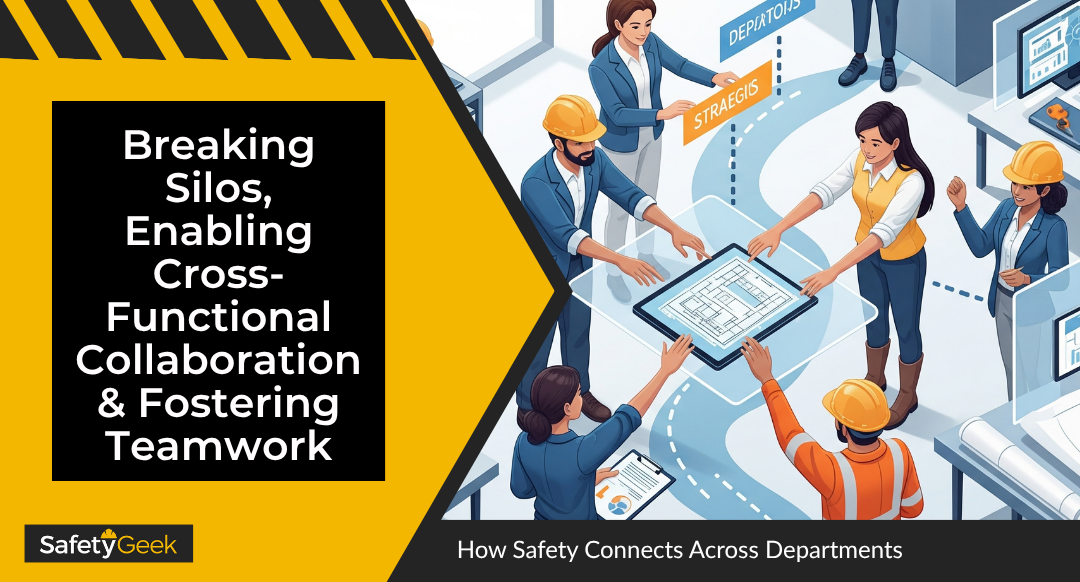
Cross-functional safety collaboration is essential for organizations aiming to break down departmental silos and enhance workplace protection. When safety is treated as a shared mission across all departments, it leads to improved communication, faster hazard response, and a significant reduction in overall risk.
This blog post explores the importance of connecting safety across departments and presents the SAFER framework—a proven, people-driven method to foster collaboration and teamwork organization-wide. By learning from real-world examples and avoiding common pitfalls, organizations can improve safety outcomes and build a stronger safety culture.
Discover how dismantling safety silos not only benefits the organization strategically but also protects your most valuable asset—your people.
Key Takeaways
- Breaking down safety silos improves communication and reduces risks across departments.
- Cross-functional safety collaboration leads to measurable improvements like reduced incident rates and faster hazard mitigation.
- The SAFER framework offers a practical approach to fostering collaboration and dismantling silos.
- Real-world examples, such as Alcoa’s transformation, demonstrate the benefits of shared safety initiatives.
- Implementing collaborative structures and aligning leadership are crucial steps towards improved safety performance.
Safety connects across departments when organizations treat workplace protection as a shared mission, not an isolated task. When safety is confined to specific teams, silos form—trapping critical information, delaying response times, and increasing overall risk. These barriers undermine prevention strategies and can lead to serious consequences.
According to AchieveIt, 77% of leaders identify silos as a major obstacle to strategic success. Conversely, companies that dismantle these barriers see measurable improvements in safety outcomes. The key lies in three pillars: breaking safety silos, enabling cross-functional collaboration, and fostering teamwork organization-wide.
This guide introduces the proven SAFER framework (Scan, Align, Facilitate, Evaluate, Repeat)—a people-driven method built on experience and data. You’ll learn from real-world transformations like Alcoa’s success story, avoid pitfalls like Boeing’s 737 Max failure, and apply practical tactics to improve collaboration and safety outcomes.
Why Departmental Safety Silos Persist
Departmental safety silos form when teams manage safety independently, without sharing processes or data. These barriers lead to redundancy, blind spots, and fractured communication that erode safety performance.
Key causes include:
- Mistrust between departments
- Unclear responsibilities
- Technology gaps
- Leadership misalignment
For example, if production doesn’t trust maintenance feedback, or quality ignores operations concerns, vital information never reaches the right teams. Lack of Defining Safety Responsibilities highlights this lack of trust as a key barrier. These gaps mirror the communication failures behind Boeing’s 737 Max incident, where poor cross-team dialogue on safety features had devastating consequences.
The data reinforces this issue. 77% of leaders see silos as obstacles to achieving key safety and strategic goals. Eliminating these barriers starts with tackling root causes and fostering open information flow.
Strategic Benefits of Cross-Functional Safety Collaboration
Cross-functional collaboration aligns safety priorities across departments, enabling faster hazard identification, elimination, and response. Organizations applying this strategy realize tangible benefits:
- 25-40% reduction in incident rates
- 30% faster risk mitigation
- Elimination of recurring safety failures
- Better compliance through joint reporting
Salesforce research confirms that breaking silos improves performance metrics by 25-40%. In terms of safety, these gains reduce injuries, lower compensation costs, and boost regulatory performance.
Alcoa’s transformation proves the power of collaboration. When managers and union reps aligned around shared safety outcomes, new hazards came to light and teams co-developed prevention strategies. Teams were empowered to pause production when safety was compromised—something unheard of in siloed workplaces.
Take another example: the maintenance team notices abnormal vibration in a machine. In a siloed setup, this detail might stay contained. But in a collaborative environment, this insight travels quickly to production, who shares their own observations. The result? A proactive response that prevents a serious incident.
Collaboration builds organizational learning that outlasts compliance cycles. Teams begin identifying patterns and sharing insights that drive consistent improvement. IRMI notes that cross-team best practice sharing helps eliminate repeat mistakes and strengthens safety performance over time.
THE ALL-ACCESS PASS RESOURCE PAGE
Get all the FREE templates, safety management resources, PDFs, spreadsheets, and more...
Framework for Breaking Departmental Safety Silos
The SAFER framework is a step-by-step guide to dismantling safety silos and replacing them with lasting collaboration.
Scan: Map Current Safety Landscape
Start by assessing current safety workflows, data systems, and communication processes. Identify where disconnects, overlaps, or inefficiencies exist.
Interview team leads to learn how they manage safety issues. Map every department’s workflows to show how—and whether—they intersect. In one example, you may discover that production logs safety incidents digitally, maintenance uses paper logs, and warehouse teams rely on spreadsheets. These inconsistencies limit visibility and delay response.
Capture this data in a shared dashboard that shows where processes can align.
Align: Secure Leadership Buy-In and Define Shared KPIs
Leadership must back cross-functional safety as a priority. Present a clear business case using data on incident reduction, cost savings, and faster response times. AchieveIt stresses the importance of unified leadership in countering silo-based structures.
Next, develop KPIs that reflect collective outcomes. Instead of department-level incident rates, use metrics like “time to communicate hazards across departments” or “joint initiative participation rates.” These shared goals push teams to collaborate rather than optimize independently.
Facilitate: Launch Collaborative Structures
Put systems in place to make collaboration routine, not optional.
Start joint safety committees with roles assigned from every department. Give these groups clear mandates, meeting cadences, and decision-making authority. Launch integrated safety training where mixed teams learn together. According to TogetherPlatform, shared learning builds trust and common understanding.
Try short-term job rotation, where safety leads spend time in another department. A production safety champion working alongside maintenance, for example, gains insight and empathy for equipment-related concerns. These relationships make future information sharing easier and more effective.
Evaluate: Track Progress and Gather Feedback
Use both numbers and stories to track your success. Measure safety performance through shared metrics and review how participation evolves across departments. Combine this with qualitative insights: pulse surveys, debriefs after collaborative efforts, and observations from facilitators.
Look for increases in idea sharing, reductions in incident lag time, and more consistent data in your safety reporting tools.
Now It’s Your Turn
To make cross-functional safety collaboration a reality in your organization, follow these steps:
- Use the SAFER framework to assess current silos and define next steps
- Align leadership on shared safety KPIs
- Form joint safety committees and integrated training programs
- Experiment with short-term role rotations for safety champions
- Track success using both hard data and team feedback
Building a culture where safety connects across departments won’t just improve your outcomes; it will protect your people.
Frequently Asked Questions
What is the SAFER framework?
The SAFER framework stands for Scan, Align, Facilitate, Evaluate, Repeat. It’s a step-by-step guide to breaking down safety silos and fostering cross-departmental collaboration.
How can I encourage leadership to support cross-functional safety initiatives?
Present a clear business case highlighting benefits like incident reduction, cost savings, and faster response times. Aligning safety goals with strategic objectives can help gain leadership buy-in.
What are some practical steps to improve cross-department communication?
Establish joint safety committees, integrated training programs, and promote short-term role rotations among safety champions to build trust and understanding across teams.
How does breaking down silos improve safety performance?
Breaking down silos leads to faster hazard identification, elimination of redundancies, improved compliance, and shared learning that prevents repeat mistakes, enhancing overall safety performance.
Hi, I'm Brye (rhymes with sky)! I am a self-proclaimed safety geek with two decades of general industry safety experience. Specializing in bringing safety programs to a world-class level and building a safety culture, I have trained and coached many safety managers, just like you, on how to effectively manage workplace safety in the real world. I would love to help you too.