Estimated reading time: 11 minutes
Empowering workplace safety is not just the responsibility of the safety manager; it’s about transforming your entire team from followers to safety champions. Traditional safety management often places the burden solely on the safety department, leading to overload and limited effectiveness. By shifting your approach from being a “doer” to a “coach”, you can engage every team member in owning their safety responsibilities.
This blog post explores how to overcome the disadvantages of traditional safety management and implement a new model where safety is integrated into every aspect of operations. We’ll discuss practical steps to empower your supervisors and employees, build true accountability, and create supportive systems that foster a strong safety culture.
By the end of this post, you’ll understand the benefits of empowering workplace safety, including improved morale, increased productivity, and a safer work environment. Let’s dive in and transform the way your organization approaches safety.
Key Takeaways
- Shift from traditional safety management to an empowered model to enhance safety culture.
- Integrate safety into daily operations to prevent it from being seen as “extra work.”
- Build true accountability with commitment, training, clear consequences, authority, and consistency.
- Provide supervisors with easy-to-use safety tools to facilitate their engagement.
- Adopt a coaching role to empower supervisors and employees to take ownership of safety.
- Create supporting systems and committees to strengthen organization-wide safety involvement.
- Empowered workplace safety leads to improved morale, productivity, and reduced injuries.
Why Traditional Safety Management Puts You at a Disadvantage
The traditional safety department model creates three significant problems that prevent real progress:
- The Safety Overload: Your desk is buried under training materials, incident reports, and compliance documents—none of which you can personally oversee long-term.
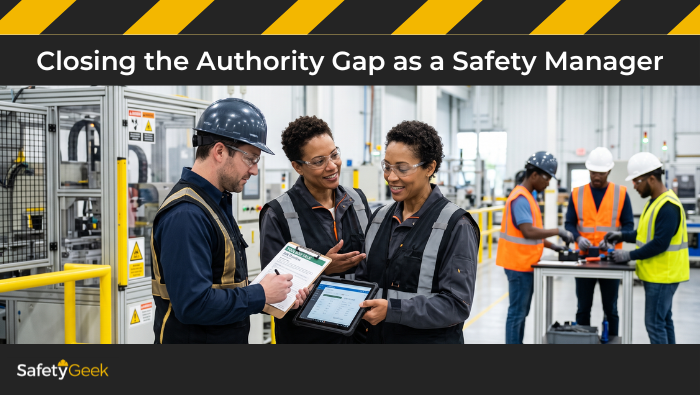
- The Authority Gap: Employees always listen to their direct supervisors first, not the safety manager who lacks direct authority over them.
- The Limitations of Regulations: Following regulations alone won’t get you to zero injuries—they’re minimum requirements, not best practices for workplace safety.
When companies add a safety department, it’s typically because injuries are increasing, insurance costs are skyrocketing, or regulatory agencies are knocking at the door. You get hired to “fix” these problems, so you focus on training, claims management, and regulatory compliance. But here’s the hard truth: Safety management isn’t just about knowing regulations or creating training programs—it’s about getting people to follow safe work practices consistently.
Your success is measured by the results that other people create. No matter how excellent your program is on paper, if people aren’t following it, it doesn’t matter. This fundamental disconnect is why traditional safety roles struggle to create lasting change.
The New Model: Safety as “Coach of the Coaches”
Imagine a football team where the coach tries to play the game instead of coaching from the sidelines. It wouldn’t work! Yet in safety, we often try to do exactly that—jumping in to correct employees instead of empowering supervisors to lead safety efforts.
The better approach positions safety professionals as subject matter experts who guide and support others rather than doing all the work themselves:
- Safety creates materials and programs; operations implements them
- Safety audits and assesses the effectiveness of programs; supervisors coach and train employees
- Safety reviews and assists in investigations; supervisors and teams conduct them
- Safety becomes a safe space for feedback rather than an adversary always correcting behaviors
- Safety influences business decisions rather than making unilateral mandates
In this model, you’re the “coach of coaches,” focusing your time on the management team rather than individual employees. When an injury occurs, you should be confident that supervisors are already taking pictures, starting the investigation, and simply keeping you in the loop—not waiting for you to handle everything.
THE ALL-ACCESS PASS RESOURCE PAGE
Get all the FREE templates, safety management resources, PDFs, spreadsheets, and more...
Five Steps to Empower Your Team with Safety Responsibilities
1. Stop Making Safety a Separate Entity
When safety becomes a separate activity, it’s easily disregarded as “extra work” rather than how business is done. The words you use matter tremendously.
Instead of scheduling “safety training,” call it “employee training” where the topic happens to be safety. Replace your safety committee with an “employee committee” that addresses safety concerns. Develop standard operating procedures that include safety alongside quality, productivity, and efficiency.
By integrating safety into everyday operations:
- Employees see safety as part of their job, not an add-on
- Managers take ownership rather than delegating “safety stuff” to you
- The organization builds safety into its operational DNA
When you stop treating safety as separate and start presenting it as an integrated part of work, it becomes harder for people to ignore or deprioritize it.
2. Build True Accountability in Safety Programs
Many managers claim they “hold people accountable” but don’t understand how accountability actually works. True accountability requires five essential elements:
- Commitment: Everyone agrees on and is committed to the policy, procedure, or practice
- Training: People must be thoroughly trained and demonstrate understanding, not just sign a form
- Consequences: Clear outcomes must exist for both following and not following expectations
- Authority: The person delivering consequences must have authority over the employee
- Consistency: The same consequences must apply regardless of who is involved or the outcome
This last point is crucial—many companies only apply consequences after an accident occurs, ignoring the same unsafe behavior when it doesn’t result in injury. This inconsistency undermines your entire safety culture.
True story: In one company, safety writeups were issued by the safety manager with little effect. When supervisors began issuing the exact same writeups for the same behaviors, everything changed. The difference wasn’t the content—it was the authority behind the message.
3. Create an “Easy Button” Toolkit for Supervisors
Supervisors don’t have 40 hours a week to focus on safety—they might have 5-10 minutes a day. To empower workplace safety, you need to create bite-sized tools that fit into their workflow:
- Bite-sized training pieces: Five-minute toolbox talks they can deliver without preparation
- Quick coaching scripts: Conversation starters for common safety concerns
- Simple audit checklists: One-page forms focusing only on critical issues
- Rapid hazard reporting cards: Easy documentation tools that take seconds to complete
While some formal training may require your involvement, supervisors can still handle reinforcement training and daily coaching. The key is to empower them to do it their way:
- Give them options and let them choose tools that match their style
- Tell them what areas to focus on based on your data analysis
- Simplify documentation requirements to the absolute essentials
- Bring in employees to assist when needed through committees or specialized roles
When you make safety activities easy and flexible, supervisors are much more likely to incorporate them into their daily routines.
4. Step Into the Coach Role Yourself
The most effective way to empower workplace safety is to transform how you interact with managers and supervisors. Instead of telling them what to do, adopt a coaching approach:
- Ask questions instead of giving answers: “What do you think caused this incident?”
- Help them find solutions: “What are some ways we could prevent this in the future?”
- Celebrate progress: “I noticed your team’s near-miss reporting is up 30%—what did you do differently?”
- Host strategy huddles: Monthly meetings where supervisors share success stories and challenges
When you position yourself as their guide rather than their enforcer, supervisors become more receptive to your expertise. You’re not the hero—you’re helping them become the hero. You’re their Yoda, helping them discover their own path to safety excellence.
This approach requires letting go of control. Safety decisions should come from team collaboration, not from you alone. Your role is to facilitate, provide expertise, and influence the process, not dictate the outcome.
5. Build Supporting Systems and Committees
The final step in empowering workplace safety is creating organizational structures that support your vision:
- Executive Safety Advisory Committee: Senior leaders who meet monthly to prioritize reported hazards and assign ownership for corrections
- Compliance Area Coordinators: Frontline employees who conduct mini-inspections and peer coaching in their work areas
- Continuous Improvement Process: Setting small, achievable safety goals tied to measurable KPIs
- Collaborative Inspection Program: Rotating employees join inspections to bring fresh perspectives
These systems provide the infrastructure needed for safety responsibility to be shared across the organization rather than concentrated in your department. They create multiple touchpoints for safety discussions and multiple channels for hazard identification and correction.
By designing your safety program this way, the entire company sees how important their role is in creating a safe workplace. They can’t rely solely on you—they must become active participants in the process.
The Benefits of Empowering Workplace Safety
When you successfully transition to this empowered model of safety management, the benefits extend far beyond reduced injury rates:
- Improved morale: Employees feel valued when their input is welcomed and acted upon
- Reduced turnover: People stay when they feel safe and see management’s commitment to their wellbeing
- Increased productivity: Safe work is efficient work—fewer disruptions and delays
- Lower insurance costs: Fewer injuries mean lower premiums and less time managing claims
- Strengthened customer confidence: Clients notice and appreciate well-maintained, safe facilities
- Cross-departmental collaboration: Safety becomes a unifying goal that breaks down silos
Safety truly becomes a profit center for your organization. While it may not appear as a revenue line on accounting charts, an empowered safety culture contributes to the bottom line through multiple channels.
As one safety professional discovered after implementing this approach: “Our quality improved, our productivity increased, and customer complaints decreased—all because we stopped treating safety as separate and started treating it as how we do business.“
Podcast - How to Get Your Team to Take on Safety Responsibilities
Brye: [00:00:00] You.
Now we all know that safety is everybody's responsibility, that we are the subject matter experts and we are guiding the program. But to truly have a safety program that is world class, that builds a culture that gets you to zero, your team needs to take on safety responsibilities. And that is one of the hardest things to get them to do because you're hired to do those things.
So we need to shift how safety is done in the workplace, and that is what today's episode is about. Let's get to it. [00:01:00] Hello? Hello, hello, my safety friends. Thank you so much for being here today. So today I have something special for you. It was about a year ago I did a presentation. For Safety Connect [00:02:00] 2024.
So I'm recording this now in 2025 in the summer. But that presentation was so well received. Like even my Safety Management Academy students that attended Safety Connect was. Can you get me a recording of that presentation so it can be found in the SMA portal when you are a student of Safety Management Academy, but I wanted to share it with you today, and it's all about getting your team.
To take on safety responsibilities because we know that safety is everybody's responsibility, but when safety is added to an organization, they tend to overload us with a lot of the work of safety things that because of the line of power and the authority that we have. We are not the best people to be doing those things.
So that's what this discussion is about. It's a little bit of a longer episode, but I hope that you enjoy [00:03:00] it. So thank you so much for listening, and I will chat with you again next week.
Brye: So the role of safety in the workplace has been set up wrong. Traditionally, over the years, we have been put at a disadvantage, and that is because safety should not be in charge of safety. We shouldn't be doing the training, we shouldn't be doing the coaching, we shouldn't be doing the investigations.
And I'm sure that you've heard that we are the coach of the coaches, but what does that mean? What does safety like that actually look like? And safety should not actually be doing the work of safety, but they should be coaching the people who do do the work. So today I wanna present to you a new model of how your safety program should be organized.
But before we get into that, let me introduce myself. My name is Brian Sergeant. I am A CSP. I have been doing safety for, [00:04:00] I think about 27 years now. I actually started out in the hospitality industry and then I landed in a transportation industry. And then from there it has just gone to many, many different programs.
I've actually started. Tens of different safety programs from the ground up in 15 different industries. I used to work with OSHA as an SGE for their VPP program, and five years ago I started the Safety Geek. And the Safety Geek is a business where I coach and train safety managers. Just like you, I help you advance your safety career, and that is my mission.
I believe that safety is one of the most important departments in any profit organization because we have a positive impact on all of the other areas of that organization. If our impact is that good, we do deserve that seat in the C-suite. So I am working [00:05:00] to elevate the role of the safety manager and that when we can do that, it'll change the way that work is done.
And in addition, it's gonna help you. So I am here for you. I'm not here for the company. I am here for you. So I coach and train safety managers. So let's talk about what we're doing today. And I do have some things that are gonna bring us around into what I'm thinking. 'cause I know when I say that we should not be doing the training and we should not be doing the investigating.
Everybody kind of freaks out a bit. Like, wait a minute, that's all I do. I see it whenever I'm speaking at conferences and I'm talking to people. I see it with my coaching clients. I see a lot of these things happening out there, and I'm just like, that should not even be in your wheelhouse. Your role is higher than that, and I'm trying to get you to change how you see your role.
So what we're gonna do is we're gonna start off with how we got to where we are now, how we got to where safety is seen in the workplace today. And then I wanna show you where we wanna go. What this [00:06:00] vision of how I think safety should be seen in the workplace looks like. Um, why it is the right path, meaning like why this is truly the right way to do safety.
And then the first steps that you can take in order to get you there. Alrighty, so how did we get here? So. I wanna discuss like how safety departments are actually formed. So if you think about how a business grows and how it starts off, I mean, so many businesses start like from a kitchen table or a garage, right?
Or something like that. And they grow. And when a business grows, it's gonna start adding different departments and it might add an HR department, it might add an operations department, it might add a finance department. Safety is one of the very last departments that most companies are going to add to their organizational chart, and usually it is added because hrs been doing the safety duties and it's getting to be too much work, or their accidents and [00:07:00] injuries are getting outta hand and there's very, very high insurance costs or.
A regulatory body has come in and said you have to have a safety person. I've seen that happen too. Um, in fact, when I was first getting started in safety, one of my very first jobs, the reason they were a multimillion dollar company and they had just added a safety department, and the reason was 'cause they were getting sued by the EPA.
So it's usually like, these are the reasons that companies add safety, right? So this is what we're going into. And then when safety managers come in or when they're hired, they are typically brought in to solve that problem, to solve the problem of there's way too much work, costs are too high, or compliance issues.
So what do the safety people do? They focus on training, right? Sounds legit. They focus on claims, they focus on regulations. But the problem with regulations definitely, [00:08:00] is that regulations are not meant to stop injuries from happening. Regulations. When they were created, it was because there was a lot of serious accidents happening in that area.
So let's use like fall protection as an example. There were a lot of falls happening, so they decided to create a regulation around it. And then as if anyone knows, going back to civics class, how laws and regulations are created in our country. You end up having this period of comments and lobbying and all of that, those regulations end up getting watered down.
So they're never the best practices. So yeah, regulations are important to know, but they're never gonna get you to a zero injury rate because they are not designed to stop incidents from happening. They're designed to stop serious incidents from happening. And our goal should be to reduce all accidents, right?
And another problem with the system is that our success is [00:09:00] measured by the results that other people create. So that problem is like no matter how good we are at our jobs, no matter how great that program we created is, no matter how much we know about the best practices, if people are not following what we put out there.
Then it doesn't matter. So safety management is not about training and regulations. It's about getting people to follow the rules, getting people to follow your policies and procedures, getting people to follow your safe work practices. Let me emphasize that. Safety management is not just about training claims and regulations.
It is about getting people to follow you and follow what you say. So this is the problem that we're facing, and we think [00:10:00] that well, we'll put out a policy and people will follow it. We'll discipline them and people will follow it. And that's not true. And we know that safety is everybody's responsibility.
Then why are you the only one out there preaching the safe work practices? Why are you the only one that's walking through the workplace and picking up the debris or correcting the poor lifting or training on equipment operation? That is what I think needs to change. So where I would like to see safety go is where safety is seen as the subject matter expert that they are the guide on the side.
They are the coach of the coaches. If you wanna use like a football analogy, you don't see the coach playing football anymore, right? The coach stays on the sideline guiding the players, right? And in our workplaces, the players are your hourly employees [00:11:00] and the coaches are your frontline supervisors, and you're the one that's coaching that coach.
Could you imagine somebody from the front office of a football game coming down and telling a player what to do? How well would that go over? How well would it go over with you if you are doing your job and somebody from the finance department comes in and tells you, well, you're doing this wrong and you're doing this wrong and you need to correct this, and our policy is this, how does that make you feel?
But we try to do it every day in safety. We go out there every day telling employees and correcting employees instead of coaching the coaches, the supervisors on how to do it better. So in my model, safety creates the materials in the programs, but it's up to operations to implement them. So when I say safety doesn't do the work, it's because [00:12:00] operations is doing the work.
We are just creating the materials and helping them as the guide on the side. Safety would audit. They would assess the department as a whole and then report back to all the departments and say, this is how you're doing. But then the supervisor will coach and train, so that way those next assessments become better safety reviews and and assists in investigations.
They don't necessarily start them. It's a supervisor that should start them and the team that completes them. But safety is there with their expertise to make sure that they've dotted all their i's, crossed all their T's, and that they thought about everything that they had to think about to get to that root cause or those contributing causes.
Right? Safety's time is spent on the management team and not with the employees. So if you focus on the people who are actually coaching the employees, things [00:13:00] will change. And we'll talk about why you don't wanna be coaching employees in just a moment. And safety becomes like a safe space for employees to come to when they do need to vent about the management team, or they wanna give you feedback or they wanna give complaints about safe work practices or hazards within the workplace.
You become a friendly spot for the employees to come and check in with as opposed to the adversary that's always out there correcting them. And safety audits the program as a whole and works to continuously improve it by making small little baby step goals to try to work on, to try to get the program even better and safety influences and is part of the business decisions.
Safety doesn't make any decisions themselves. They just help the company make the right decision. They help the company by providing them the right information, giving [00:14:00] their subject matter expert opinion, and by helping influence their decision. So that is my vision. That is my unicorn and rainbows of how safety should be run in the workplace.
And I know when I explain why this should be done, you'll likely agree with me. But it is hard to change because if you go back to how we were created, we were created because there was a problem and they hired us to solve that problem, but they're not realizing the problem is within themselves in their own operations.
Prior to hiring us, they likely had HR doing everything that they're now expecting us to do. They probably had HR doing all the training. They probably had HR doing all the policies and procedures, and they never looked to themselves that, oh, wait a minute, the supervisor should be coaching and training.
The management team should be making the safety decisions. Right. So that is our vision where safety is the guide on the side. The safety is the coach of the coaches, but safety is not actually doing the work. So if some, if let's say that you were in your [00:15:00] workplace and there an injury happened, you would be confident that your management team is filling out the accident, ate the accident report.
They've already taken pictures and started an investigation, and they give you a call just to keep you in the loop. So that way you know it's coming. It's nothing you have to rush into and correct yourself. Or if you're walking through the workplace and you see somebody doing something unsafe, all you do is have to get the supervisor's attention and point, and they'll take care of it.
Because if it comes from you, it's not as impactful as it coming from them. And then you already know that your team has done a thorough inspection of your facility or that they are regularly training their employees. Your focus is just on, are my training materials up to date? Are my training materials accurate that I'm giving them?
So why is this the right path? 'cause you might be thinking, well, if I'm not doing the training, these people are not qualified to do the [00:16:00] training. People aren't qualified to do the investigation. I am. I'm the CSP, or I'm the one with the experience. And if I keep, if I keep putting it all off on them, then what's my job?
Right. Well, your job elevates. Remember, our goal is to elevate the position of the safety manager. You don't see your chief financial officer sitting out there doing the books, right? You don't see your HR manager doing the payroll. Your their positions are elevated, so we need to elevate yours as well.
There's plenty for you to do. It's just you need to make sure you have everybody engaged. Now, the reason why this is the right path is because our results are measured by the actions of people that we have no authority over all those employees out there. We have no authority over them, but what they do affects our results.
Their results affect our success. If we can have a great policy and they don't follow it, [00:17:00] it looks bad on us. Right? So what do we do? We try to intervene and we talk to that employee instead of the root of the problem, which is actually the management team. So people will always listen to the person that has authority over them before somebody who doesn't have authority over them, and there is a line of power in every organization, and that authority comes from that line of power.
So if you think about it, you have a CEO or general manager, or the owner, the top of the company that breaks down into like C-Suite individuals. If you have those there, like your, your CFO, your COO, your CTO, um, and hopefully one day A CSO, a Chief Safety Officer, which then breaks down into the different departments and your department managers.
And then each of those departments have supervisors. And that each of those [00:18:00] supervisors, they might have team leaders or they have the, the employees themselves. There's a direct line of power from that hourly employee all the way up to the top of that pyramid. So that is the line of authority. So that person that is creating our results answers to not you, the answer to somebody else, because where are we in that chain of command or that line of power?
We're off to the side. We're just like, hi, work safe. Please work safe. Don't do that. You know? And that's the problem is that we are not in that line of power. So then it's really hard to get people to listen to us because asking somebody to go against what their boss tells them, it is really, really difficult to do.
So I wanna tell you a story. This happened to me many, many years ago, and I'm sure you guys can relate. I'm sure. Like you have first aid kits in your, in your [00:19:00] facility. I'm almost positive of that. But you know the first aid kit services that come in and they fill the first aid kits for you. I mean, they're amazing, right?
Especially when you have two locations and probably five to six first aid kits at each location to have somebody come in. And fill those first aid kits is a time saver. And it just takes a load off your back, especially if you are a safety department of one, like most of us are, right? I don't have time to fill a first aid kit, and you definitely pay me too much to be spending my time putting bandaids in a First Aid kit.
So yes, I have those services. And on top of it, I always kept comfort products in my first aid kits because I believe that if the employee is feeling well, as somebody who suffers regularly from migraines, I wanna keep working, but sometimes I need some meds to keep going and I left them at home. Right.
So. Having Ibuprofen and Tylenol [00:20:00] and stomach medicine and things like that in the first aid kit actually kept people working and then showed care and attention to our employees. So I had all those in there. I had, it was a great program, but every single month when they would come in and I'd have to sign that invoice and take it to my boss, it was a moment of tension because he would look at it.
Not knowing all the benefits, and he would just grumble about this 75 or a hundred dollars bill for first aid kits every single month. Why don't you just fill 'em yourself? Right. And I'd have to go back through all the arguments and he would sign the invoice and we would be good for another month. This went on for years, right?
And then one day, one day he was on a rampage. Something had happened and I don't remember what it was, something in sales and marketing and merchandising. I have no clue. But literally he was in the [00:21:00] office yelling, creating a hostile work environment if we wanna go that far. But he had fired seven people that day and I did not wanna lose my job.
And the invoice came across his desk and he calls me into the office and he's like, I am done. I am done with this. I don't care what you say. You cancel this first aid thing and you just start filling the first aid kit yourself. This is what I'm talking about, about someone in authority telling you what to do.
He had authority over me. I disagreed with him completely. If I had a safety expert that I could have leaned on to say, Hey, this is why in that moment I would not have done it. You do whatever your boss tells you to do because they have authority over you and you don't wanna lose your job, right? So, yeah, I canceled the first aid kit service and from that point forward, I filled the first aid kits myself until I trained an [00:22:00] employee to do it.
And that's a whole nother, that's a whole nother program. But this is what I want you to understand is authority matters. So us sitting there on the side telling somebody what to do is never going to work over their own supervisor telling them what to do. So let's also talk about why focusing on the employees don't matter.
So if you can, you think like there's a lot of programs out there, and when I first was learning behavior-based safety, they said if you can't get your management team on board, then work on the employees and the employees will, their behavior will change The management team. Like if I tell the employee they have to slow down on their work and bend their knees and lift properly, their supervisors will get it eventually.
Right? Well, that doesn't work because you're asking them to listen to you. Over their supervisor. So you might be telling them that they have to take the extra time to park, you know, a little bit away from the product. So they're not twisting and lifting, that they have to squat down, they have to lift [00:23:00] properly.
But in their mind, their boss ex expects them to lift that product really quickly and get up and go, right? So you're asking them to do something different than what their boss expects, and you are always gonna lose in that situation because of authority. Right. So another reason why we don't wanna be the ones telling the employees what to do or training the employees is that one of the best ways to learn something is to teach it the best way.
If you're weak on anything, just go teach it. You'll, you'll learn that skill so quickly. It is crazy, right? So if we have our supervisors teaching safety, safe work practices and safety concepts. They're gonna learn it. Learn. They're now gonna become safety advocates. It'll get them more involved in their day-to-day safety responsibilities, when they're actually part of the training, when they're part of the development of the, of the program.
Right. So to me, that's one of the best [00:24:00] reasons, because the thing that we struggle with is supervisors who put. Productivity over safety. But if they understood the value of safety and why these policies, procedures, safe work practices are in place, they would be more apt to train their people on it. And this is why the safety message needs to come from the supervisors and the managers, and that it's way more powerful when it comes from them instead of it coming from you.
And this is why they need to be more involved in the program. And in doing that means that they need to take over a lot of these responsibilities. Do you agree with me? If you're looking at this and you're saying, yes, that's what I want, that's what I see. I see how I can change our culture. I will. But, but you're struggling to actually get them to do it.
'cause that's what I see a lot with my students. We'll get into those next steps. Were there any questions, Brian? Yeah, Brian, we did have a, a couple good questions. Um, one of them [00:25:00] here is. Uh, from anonymous, what are some of the ways to be able to not become involved with the complaint department mentality and dwell It, dwindle everything down to safety concerns, which, yeah, that is a, a very important one.
Everything is a safety issue. Every single thing in the workplace can easily be twisted into a safety issue. So when you develop a list, so you take, take a list of those complaints and then you will bring it to, what I tell my students to set up is an executive advisory committee and be like, okay, here's the complaint.
We need to. Create a continuous improvement program to fix this or an action plan to fix this. Who's gonna take it on? Right? And if somebody comes into me, I'll be like, well what are you gonna do about it? I love that. So you accepting it is part of the issue. So if you feel like you can't confront them in that moment of being like, well, okay, I agree.
What are you gonna do about it? What did you need my help with? What part of that did you need [00:26:00] my help with? Words matter. Right. But secondly, if you don't feel comfortable doing that, then create a list and go, okay, we'll talk, and then your next manager's meeting, or if you have an E, a C, you take it to them and go, here's what's come up.
What are we gonna do about it? What are we going to do about it? I love that, that mm-hmm. You know, and that shows how powerful communication is. Just, just mm-hmm. Being that, you know, that bridge. So it is, it is not putting it all on you. We're, we're. Bringing other people involved. Mm-hmm. So we're kind of bringing in the Marines, you know, the people that, that have that authority.
Hey, this is what's going on, we need your help. Okay. Here's one more question for you, Brian. Uh, how do you think engagement and participation should be rewarded for hourly associates, associates who go above and beyond? Um, I just skipped forward on me. Yeah. Uh, let me finish the question here.
It's like my computer list who go above and beyond safety committee members, gemba walk leaders, uh, along that line. So, any ideas? [00:27:00] Um, I don't believe in incentive programs. I, if you have to have one. I I actually have a guide on that, but I am not a huge of incentive programs. I believe that it's how we do work.
But when you have people that you wanna give them extra roles, like I have a program called Compliance Area Coordinators. I'm actually giving them skills. That's how they're getting incentivized. So many of my compliance area coordinators actually moved up. We're building the leaders of tomorrow. So to me, that is the incentive that I'm giving people.
So many of my committee members, my compliance area coordinators, anybody who would help me out, they tend to be the next team leaders, the next frontline supervisors, or they leave the company and take a higher role somewhere else. So to me, that's incentive enough. Uh, the other way that I would incentivize them is I schedule the meetings over lunch.
And this is a split, this is how I kind of compromise with operations, is that I am not taking them from the workday. I'm taking their [00:28:00] lunch hour and I'm buying them lunch, and we're gonna be, uh, reviewing the reported hazards over the last week while we, while we eat lunch. I love that. That's a great idea.
Yeah. Um, one of the things you said earlier really resonated with me were, I'm not a huge football fan, but I, I loved how you, uh. Mentioned it like, like football, you know, the, the coach, every player wants to win the game. You don't have to convince people to wanna win a game. Same with safety. Everyone wants to stay safe, safe, let go home safe.
No one wants to get hurt. Mm-hmm. So that coach, all they have to do is equip support and celebrate success. Yeah. So, and I love you seem to use that same type of mentality. Yeah. So again. You, that's enough where you're, you're right. I don't think we really need to incentivize too much. Mm-hmm. Because those things are so rewarding in and of themselves.
Okay. We have one more here and we can go on. Okay. This is from Daniella or Romanoff. Uh, would promoting safety in a fun way help with encouraging the team to take on responsibilities? If so, what are some of the proven techniques that you used or have seen? Yeah, so I am, once again, I'm not a huge [00:29:00] fan of like.
I, I just look at safety as how we do our job. So I don't necessarily do any fun stuff around it because it's how we do our job and it's an expectation of you to work safely, and I'm just here to make sure. I've supported you and that I give you all of the stuff that, that you wanna do. That being said, the company as a whole, and this is gonna get into my number one in the next one, in my next part, the company as a whole should be engaging their employees and doing things to make them want to, you know, stay working there.
That's an employee morale issue and it helps reduce turnover. So like, um, at some companies I've seen, they'll set. Quarterly goals, and then they'll go and have like a pizza party at the end of those goals. Like did we hit sales numbers or expense numbers and things like that. Um, occasionally if all of a sudden it has been like 200 days since an injury, I might like throw.
An ice cream party or people love food, [00:30:00] so it's, there's gotta be food involved. But, um, things like that. But I never do anything structured and I might do like an employee appreciation week, but that's as a company as a whole, so. I love that. And again, that's part of that you equip and, and support and celebrate.
That's great. Mm-hmm. Okay. Well I think that's all the questions we got right now. So we'll let you continue. So the steps to get you started and where I said that last question kind of triggers my number one, the number one step to get you started is to stop making safety a separate entity. Safety is how we do business.
So the words that you use matter, when you call something a safety training, it is now a separate entity. When you give supervisors tasks that are safety tasks, it is now separate. And when something is separate, it can be disregarded, right? So what we need to do is stop using that term and say, we have employee training.
The topic is safety. But it's employee training. We have an employee committee, [00:31:00] not a safety committee. We have, uh, we have work procedures. We have standard operating procedures that include safety, but guess what? They also include quality, productivity, efficiency, you know, all of those things too. So we wanna stop making safety a separate entity and start just making it how we do business and an expectation.
So that is number one. And this is really hard to do 'cause you'll see me catch myself all the time. I still use the word safety 'cause it's just ingrained in me. But where I can, I try to remove that word. Right? And another way that can help you remove that word is that everything you do mix it. With hr, quality, expenses, operations, efficiency.
Once you're mixing it, it becomes this soup, and it's not just safety anymore, so it doesn't make sense to put the safety title on it. So that'll kind of help with that one. All right. Step two is to teach your management team how [00:32:00] accountability works. So, strangely enough, a lot of people don't, bel don't know how accountability works.
They say, well, we need to hold people accountable. And they think they're doing it, but they're not, or they don't know how to do it. So if you go onto the safety geek.com and do a search for accountability, you can find a whole article and an infographic and everything to help you with this. But there are five steps to accountability that your management team needs to be trained on.
And the very first step is commitment. Meaning that whatever the policy, the procedure, the work, practice, whatever it is, they are committed to it. Everybody agrees on it. Everyone is on the same page. Step two is you're gonna train everybody on it because you can't hold people accountable if they've never been trained on it.
So you're gonna train everybody on it, and you're gonna make sure that they understand that training, not just like the little check mark I told you when you signed an acknowledgement. Number three, there has to be consequences attached to it. What is going to [00:33:00] happen if they don't? Follow that policy procedure or work practice, there has to be consequences.
Thinking back to my first aid kit, I thought I was gonna lose my job, right? That was the consequences. So what are those consequences? And the person giving those consequences has to have the authority over that person. Meaning they have to be in that line of power. So it used to be at one of the places I worked that they had me write up people for safety issues.
And I could fill their HR file with safety writeups. It did nothing. It did nothing to change anything because I had no authority over that person. But the moment their supervisor wrote them up, boom, behaviors change, right Things. Things change. Things happen. They could actually get fired over that supervisor writeup.
They couldn't even get fired over my right. And step five is consistency, meaning that you have to apply the same consequences. Consistently, regardless of who it is, regardless of the results, regardless of the outcome, re regardless of [00:34:00] the situation, a lot of times people will apply consequences after an accident, but they do no consequences on that same exact behavior that didn't cause an accident.
The behavior didn't change, it's just this time an accident happened. Oh, now they're gonna get written up, but they didn't lift properly for six months and you did nothing about it. So it has to be consistent. That is accountability. That is step two. Step three is make it an easy button. You have to create, your job will be to create the materials and to analyze the data and define the gaps and create that continuous improvement products.
But the supervisor's job is to coach and train the employees and to do the investigations. So give them tools that are bite-size. They don't have 40 hours a week to do safety, right? They might have five minutes a day, 10 minutes a [00:35:00] day, give them little bite-sized training pieces. Now, I know some training has to be done by certified trainer.
Some training does need to be formal, and maybe you will be doing that, but the reinforcement of that training can be little bite-sized pieces from your supervisors. Are then still basically training people after the fact. They're still hearing it from their supervisor, even though you had to do the formal training since it took like two or three hours, right?
Because they don't have that kind of time. Although I believe formal training should be done by an employee and not necessarily by you. Whole nother discussion. Um, empower them to do it their way. So a lot of times we think that the supervisors aren't capable of doing these things. Train them how, and just give them tools that they can choose from and say, do it your way, and they will surprise you.
I have trained super rooms of supervisors over and over again, and I just give them my tools and I go, okay, give me a five minute presentation on, you know, fire extinguisher safety or something, and they knock it out of the park every single [00:36:00] time. So just give them the tools and let them do it their way.
Do not give them a structured meeting that they have to follow because it might not match their personality. Tell them what to focus on. You have the data, you know where your problem areas are. Don't let, let them guess what to coach on. 'cause if you do, they're just gonna coach on the same thing over and over again.
Give them three areas to focus on for this week and say, this is what I want you coaching on and simplify your forms. Don't let your forms get too long and too detailed a half page and only document if you absolutely need to document and bring in employees to assist them if you need to. That could be employee committees, it could be like I have my compliance area coordinator program, um, those type of things.
I know I'm running outta time, so I'm trying to do it Quick. Step four is I want you to step into the role of the coach more like a life coach. Like a football coach, [00:37:00] okay? Like you are there not to tell them what to do. You are there to help them become the hero. You are just the guide on the side. You are not the hero.
You are their Yoda. Okay? So you are there to help them find the right answer on their own. You don't decide, but you help them make decisions. You lead through collaboration and you never come up. With an answer on your own ever. It should never come from you. It should come from a team collaboration, everyone talking about the problem and coming up with different ideas, and then your executive advisory committee deciding which idea they need to go with.
And step five is create systems and processes that support this vision. So I have mentioned several things that I teach my students, which is an executive advisory committee, compliance area coordinators, continuous [00:38:00] improvement, pro programs, action planning. All that's really good. But every one of your systems and processes needs to support this vision.
So think about like your inspections. How are you collaborating with your employees and supervisors on your inspections? Are your supervisors doing inspections? Maybe you're getting pushback on that. So what happens? You do the inspection and then you stop by one work area and you start talk, chatting with employees about the inspection, or you do the inspection and you chat with the supervisor about the inspection.
And then maybe the next time you do the inspection, you grab one employee to do it with you and say, Hey, can I grab them for 10 minutes while I go inspect this little area? And that starts to wean them into. Collaboration, right? So just shift how you design your safety program and what will happen is your company will see how important their role is in safety and that you can't be the person [00:39:00] of authority that they have to be the ones out there implementing and training and doing all the things and leaning on you as the support staff.
Then they will also see the value that safety is providing to their organization. Because safety is a profit center. A lot of people don't think it is. We might not be a profit line on the on the accounting charts, but we make the company money in more ways than just reducing injuries. So it is a unicorn job.
I think that's where I'm gonna stop it 'cause I know I only got about five minutes, but if we have any other questions you are welcome to pop them in the chat. That was excellent, Brian. Yeah, I needed to, to meet with you before I took over my first role as a safety professional back in 2008. 'cause we didn't know all that and made about every, I don't, I don't know if I knew all that in 2008.
Uh, but uh, yeah, I love, uh, we're okay with questions. If anyone has any more questions, uh, be sure and throw them in. While we have Brian, we have some time. Again, she has a wealth of, uh, practical information and I love how pragmatic, [00:40:00] uh, your information is. This stuff that people can take. It's not theory.
Yeah. I can take this and run with it. You know, your, your steps. I love your integration of safety into everything that happens, and I couldn't agree more on that. Safety does impact the bottom line far more than people think. Mm-hmm. I mean, when management shows that they care about somebody. Mm-hmm.
That's huge. It's, you know, you, you can't say you care about my safety, but not. Care about work quality and you know, the environment and you listen to me and mm-hmm. You know, it's kinda like, yeah, hey, we care about your safety. We just don't care about you. Yeah. It, it doesn't work. Doesn't work. It doesn't work.
When you have a strong safety program, what, what people will notice is that their quality of the product they're producing is better. Um, you have less lawsuits, less theft issues, employee theft issues. You have less turnover of employees. Um, you have higher productivity. Um, you have better equipment, so you're, [00:41:00] you're saving money on preventative maintenance.
It's, it's all of those things, and then you actually can get more customers because then they'll walk into your workplace and you can feel it. You can, you can feel a strong safety culture when you go into a workplace, and then your customers will feel that as well. So. Bottom line. Okay. We got one more question in here.
Mm-hmm. It's hard to get operation. It's hard to get operation supervisors to respect you because you are their peer. Any suggestions from Aaron? Uh, Underwood? Yeah. So one of the best ways to get somebody to respect you is actually to ask for their help, right. Even if you don't need it. Um, it's one of the best ways to get people to like you too, is just ask for their help.
So instead of going to them and asking them to do something, just say, Hey, I've noticed this problem. How do you think we can fix it? And I really need your help. It. You know, it could be start small. Like, I need help with a copy machine. Do you know how to use it? Something you know how to do. But just asking for help kind of breaks that ice.
But then instead of like looking at them as like they're an equal to you, [00:42:00] you have to look at like you are the coach of them, right? Like you're there to help them. So it's all about how, and then you switch it to like, how can I help you reach your goals? What are your goals for today? How can I help you with that?
You help me with a copy machine, how can I help you? You know, it can just be that nice little switch, so, so that would be the biggest thing. It's collaboration. And then you have to also, whatever they tell you you should do, you have to do it regardless of if you agree with it, regardless of if you've tried it before, you have to prove to them that you're listening.
And that you value their idea and you're gonna try it. And when it doesn't work, then you can go back to 'em and go, Hey, did I do it wrong than different than you expected? This was my result. Do you have any other ideas? Right? So you're, you're building this, this back and forth collaboration with them as opposed to you have to do what I say.
Yeah. I love that, that collaboration is a key word. That is excellent. Mm-hmm. I was thinking that right when you brought that up. Well, do you have any final [00:43:00] words for us with the last few minutes here? I don't, other than truly. Really, like if you're, you're listening to me and you're just like, I don't agree with any of that.
Just really try to embrace it. It's, I, I focus more on psychology and marketing than I do regulations and trying to get people to change their behavior. To me, that's the most important thing in safety management. And if you wanna learn more about what I'm doing, just go to the Safety geek.com. You have to put the THE in there.
You'll find out lots of information about the Safety Geek and what I'm doing over there, but. Just really embrace, um, the human side of safety as opposed to the regulatory side of safety. So thank you. I appreciate you guys listening.
Sign up to receive email updates
Enter your name and email address below and I'll send you periodic updates about the podcast.
Now It’s Your Turn
Empowering workplace safety starts with you taking action to transform your approach. Here are some steps you can take immediately:
- Assess your current safety management model and identify areas where you’re acting as a “doer” rather than a “coach.”
- Begin integrating safety into daily operations by collaborating with supervisors and managers.
- Develop easy-to-use safety tools and resources tailored for your supervisors.
- Schedule coaching sessions with your management team to discuss safety responsibilities and accountability.
- Create or revamp committees and systems that support shared safety ownership across the organization.
By taking these steps, you’ll move closer to cultivating a proactive safety culture where every team member is a safety champion.
Frequently Asked Questions (FAQs)
1. How do I get upper management buy-in for changing our safety approach?
Gaining upper management support is crucial for the success of an empowered safety model. Begin by presenting the benefits, such as improved productivity, reduced costs, and enhanced employee morale. Use data and real-world examples to demonstrate how integrating safety into operations contributes to the bottom line. Engage them in discussions about aligning safety goals with business objectives, and propose forming an Executive Safety Advisory Committee to involve them directly in the process.
2. What if supervisors resist taking on more safety responsibilities?
Resistance from supervisors can often stem from overwhelm or a lack of confidence in handling safety tasks. Address their concerns by providing training, resources, and ongoing support. Emphasize that safety responsibilities are a shared effort to protect their teams and improve overall performance. Involve them in the development of safety tools and processes so they feel ownership and control over their implementation.
3. How can I ensure consistency in accountability across all departments?
Consistency in accountability is achieved by establishing clear policies and procedures that apply equally to everyone. Develop standard consequences for safety compliance and non-compliance, and ensure that all supervisors understand and agree to enforce them uniformly. Regular audits and assessments can help monitor adherence, and any discrepancies should be addressed promptly through coaching and corrective action.
4. What are some effective tools to provide to supervisors for safety engagement?
Effective tools include bite-sized training modules, quick reference guides, simple checklists, and conversation scripts for safety discussions. Customize these tools to fit the specific needs and workflows of your supervisors. Offering digital platforms or apps for hazard reporting and tracking can also streamline the process and encourage usage.
5. How long does it typically take to see results from implementing this new model?
The timeline for seeing results can vary depending on the organization’s size, culture, and existing safety practices. Generally, you may start noticing improvements in engagement and reporting within a few weeks to months. Significant reductions in incidents and tangible benefits like lower insurance costs may take longer, often several months to a year. Consistent effort and commitment to the process are key to achieving lasting results.
Hi, I'm Brye (rhymes with sky)! I am a self-proclaimed safety geek with two decades of general industry safety experience. Specializing in bringing safety programs to a world-class level and building a safety culture, I have trained and coached many safety managers, just like you, on how to effectively manage workplace safety in the real world. I would love to help you too.