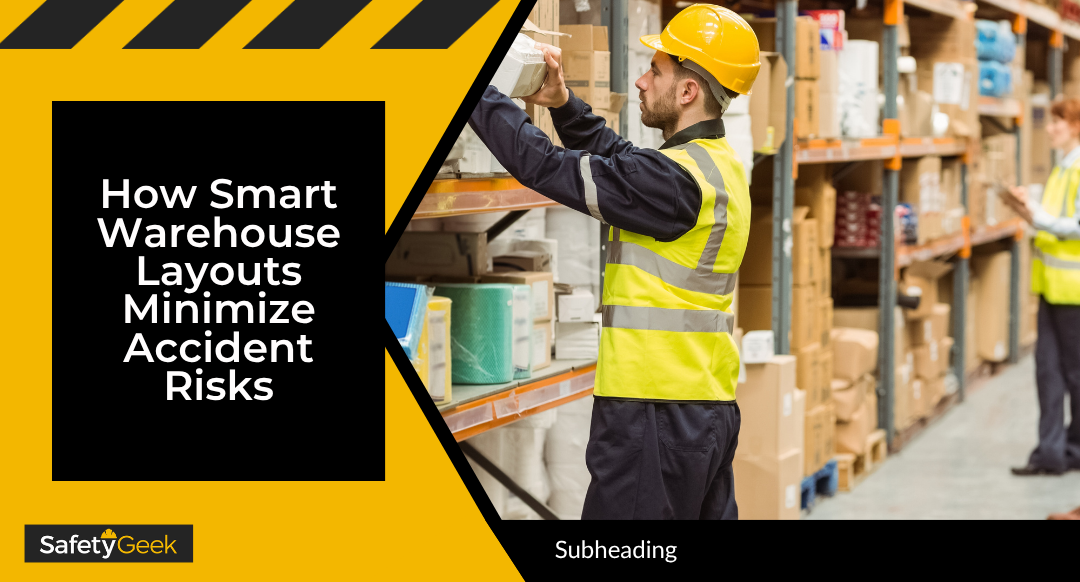
Walk onto a busy warehouse floor and your eyes immediately start cataloging hazards. While training and PPE are crucial, the physical environment itself is your most powerful and permanent safety control. Proactive warehouse optimization and layout design can eliminate risks before they ever materialize.
Why Your Warehouse Layout Is a Critical Safety Control
The warehouse sector has an injury rate more than double the average across all industries. A poorly designed layout with congested aisles, blind corners and overlapping traffic zones contributes to every major accident category:
- Slips, trips and falls cause more than 27% of nonfatal warehouse injuries
- Loading docks account for 25% of accidents
- Forklifts are involved in almost 25% of incidents
- Struck-by accidents are a leading cause of fatalities
- 24% of warehouse workers experience low back pain
The physical environment is only part of the equation. The human element matters, too. For example, inadequate lighting can influence workers’ circadian rhythms, impacting alertness and cognitive function.
Core Principles of a Safe Warehouse Layout
There are several foundational elements to any safe and effective warehouse strategy:
- Create clear, unobstructed pathways: Wide, well-marked aisles allow both people and equipment to move safely without creating bottlenecks.
- Separate pedestrian and vehicle traffic: Dedicated walkways minimize dangerous interactions between workers and moving equipment.
- Implement one-way traffic flow: This simple change drastically reduces head-on encounters in congested areas.
- Establish logical zones: Separating receiving, picking, packing and shipping areas prevents workflow cross-contamination and reduces congestion.
- Ensure adequate visibility: Eliminating blind corners and providing proper lighting gives everyone clear sightlines.
4 Layout Improvements to Enhance Warehouse Safety
Here are four key areas where companies that specialize in warehouse optimization and layout design can help you execute your safer warehouse vision.
1. Choose the Right Infrastructure and Equipment
The physical foundation matters most. Engineered storage solutions must match your inventory flow while mitigating risk. Companies that specialize in warehouse optimization and layout design, such as Arnold Machinery Company, understand safety design principles. It offers end-to-end warehouse layout consultations, simulations and installations. It also provides the racking systems, shelving, material handling equipment and automation to make it all work.
2. Install Smart Industrial Safety Lighting
OSHA sets lighting standards for a reason. Poor lighting leads to misread labels, missed spills and forklift operators blinded by glare. LSI offers LED solutions designed to maximize safety, including high-bay and low-bay options tailored to different mounting heights. It also provides durable strip lighting that helps workers maintain focus.
3. Integrate Forklift and Pedestrian Safety Technology
One of the most dangerous interactions in any warehouse happens when a forklift meets a pedestrian. While designated walkways help, technology provides active protection. Investing in these systems delivers an ROI of between 4:1 and 6:1, so the business case is strong. Carroll Technologies Group offers Elokon’s ELOshield proximity alert system, which uses forklift modules and worker vest tags to recognize pedestrian presence and automatically reduce forklift speed.
4. Design Workflows That Prioritize Ergonomics
Poor ergonomics causes silent injuries through overexertion and repetitive stress. Smart layout design places heavily picked items in ergonomic zones to minimize strain. Strongarm provides wearable sensors that deliver real-time feedback and collect movement data, helping you redesign workflows based on actual injury risk patterns.
Frequently Asked Questions
Here are answers to some common questions about smart warehouse layouts.
What makes warehouse layout such an important safety factor?
Layout directly influences every major accident category by controlling traffic flow, visibility and ergonomic stress. Designing the space correctly eliminates hazards before they require human intervention.
How can lighting affect warehouse safety beyond basic visibility?
Poor lighting impacts both physical hazards and worker wellness. Inadequate illumination affects circadian rhythms while making it harder to spot spills, read labels or navigate safely.
What return can you expect from investing in forklift safety technology?
Proximity detection and collision avoidance systems typically deliver a 4:1 to 6:1 return on investment by preventing accidents and reducing equipment damage.
Taking the Next Step Toward a Safer Warehouse
A safe warehouse is a matter of design, not luck. Walk through your facility with fresh eyes and identify one opportunity for improvement. By partnering with companies that specialize in warehouse optimization and layout design, you can start transforming that insight into action.
Hi, I'm Brye (rhymes with sky)! I am a self-proclaimed safety geek with two decades of general industry safety experience. Specializing in bringing safety programs to a world-class level and building a safety culture, I have trained and coached many safety managers, just like you, on how to effectively manage workplace safety in the real world. I would love to help you too.