Approving a new crane system ranks among the more consequential safety decisions you’ll sign off on as a facility leader. Knowing how to determine the right crane system starts with a safety-first lens. Three critical questions can help you surface risks that may be hiding behind a spec sheet or sales pitch.
Why Crane Safety Comes First
National injury data shows how often cranes contribute to workplace fatalities. According to the Bureau of Labor Statistics, there were 297 crane-related deaths reported over a seven-year period, and “Just over half of all fatal crane injuries involved the worker being struck by an object or equipment.”
Many of those risks may trace back to choices you can influence at the time of approval, including crane type, capacity and facility compatibility. A poorly vetted decision can also affect your compliance standing, liability exposure and your team’s trust in leadership.
What to Confirm Before Sign-Off
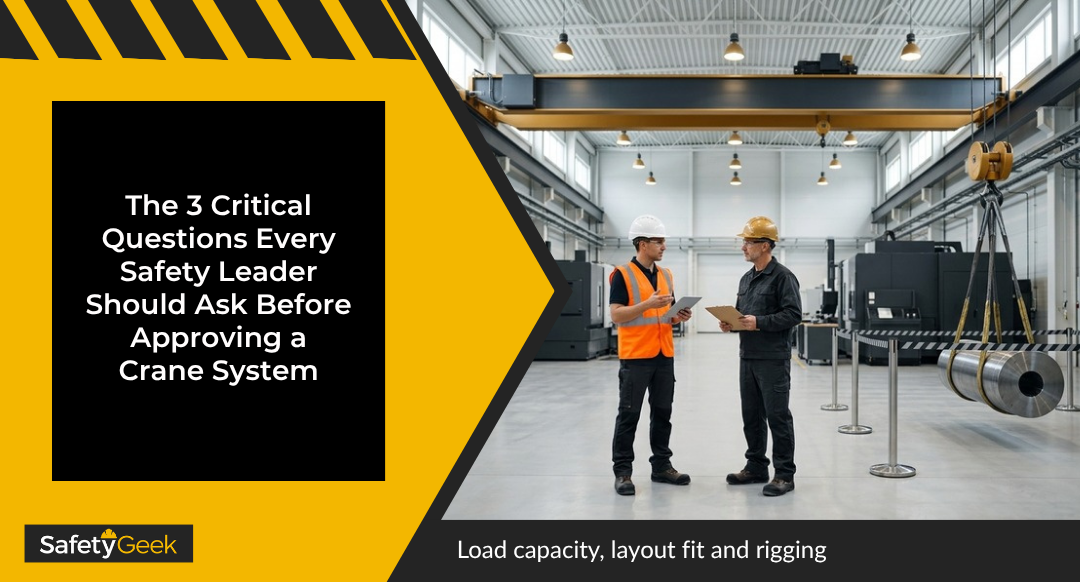
Learning how to find the right crane system for your site starts with clarifying load capacity, layout fit and rigging.
1. Does the Crane Meet Load Capacity Requirements?
Sizing a crane means accounting for the heaviest item you plan to lift plus the weight of the lifting equipment itself. Check a manufacturer’s design-load methodology as closely as the number on the spec sheet.
According to Spanco, a leading manufacturer of material-handling cranes, a capacity rating is based on the crane’s design load “that includes the capacity rating of the crane plus 15% of the capacity for the weight of the hoist and trolley and 25% of the capacity to allow for additional impact.”
Skipping that buffer can leave a crane system vulnerable to premature wear or failure under daily working conditions. Request written documentation of the margin before proceeding.
2. Will the Crane System Fit the Facility’s Layout and Workflow?
A crane system can meet every technical requirement and still pose hazards if it doesn’t suit your facility’s operations. Workflow patterns, traffic routes and workstation positioning all contribute to whether the equipment supports or obstructs daily work. Problems can surface only after installation, when a poorly placed crane forces a recurring safety workaround.
Manufacturers that operate across multiple facilities typically start by examining how production flows through a space. Spanco illustrates manufacturing assembly line layouts as an example, saying that they “enable standardized, linear processes to enable high-volume production.” Machines and workstations then follow the product’s route.
The same reasoning applies to choosing between fixed and mobile cranes. Fixed cranes often operate at advanced construction sites or within industrial plants. Selecting a mobile crane can be more complex, as it moves around the space. Before you approve anything, walk your floor plan and note where loads travel and where people work.
3. Are Your Rigging and Material-Handling Procedures up to Standard?
Even a well-chosen crane system depends on sound rigging. Straps, chains and slings each carry their own limits and must suit the load you’re moving. Routine inspection of that gear warrants the same priority as the choice of crane.
Safety-focused resources point to equipment matching and inspection habits as potential trouble spots. The Safety Geek warns that using equipment beyond its rated capacity “can lead to mechanical failure and severe accidents.” Make rigging a standing item on your approval checklist.
Frequently Asked Questions
Clear answers regarding common crane approval questions can keep your review moving.
Why does facility layout matter when selecting a crane system?
A crane system shares space with aisles, workstations and walkways, so a poor fit can obstruct the movement your team relies on every shift. Catching those conflicts early leaves room to adjust the plan.
What’s the biggest safety risk when approving a new crane system?
The biggest risks usually start when a crane system’s specifications and your site conditions don’t line up. Working through capacity, layout and rigging beforehand may head off many of them. A written record of your answers can also support audit readiness.
Make Your Next Crane Approval a Safer One
Considering load capacity, facility workflow and rigging procedures before approving a crane system can help your facility avoid safety hazards. Ask vendors to document how their system can meet each requirement under both everyday demands and worst-case scenarios.