Estimated Reading Time: 8 minutes
How to build trust with production supervisors as a safety manager: stop showing up as the rule police and start showing up as a partner who makes their job easier. Learn their production pressures, respond to problems with support instead of blame, involve them in the fixes, and close the loop fast. Trust gets built in small, repeated moments on the floor… not in a policy binder.If you want to know how to build trust with production supervisors as a safety manager, here is the short version. You earn it by understanding their world, partnering on solutions, and proving you make their numbers better, not worse. The fastest way to lose it is to walk the floor with a clipboard and a list of everything they did wrong. Do you ever feel like every conversation with production is a tug of war? You ask for a guard, they hear “slow down.” You flag a hazard, they hear “more paperwork.” You are not the bad guy here, and neither are they. The system pits you against each other, and nobody handed you the playbook for fixing that.
Key Takeaways
- The adversarial relationship is structural, not personal. Production is measured on output. You get blamed for incidents. Until you bridge that gap, you will keep colliding.
- Trust is built in micro-moments. How you react the first time a supervisor admits a near miss decides whether they ever tell you again.
- Lead with their problems, not your program. Ask what is getting in the way of running safely AND on time, then go solve that.
- Co-create the fix. Supervisors defend solutions they helped build and fight solutions handed to them.
- Close the loop visibly. Nothing destroys trust faster than a concern that disappears into a black hole.
- You are the coach, not the cop. Your job is to make the supervisor look good, not to catch them failing.
Why Production Supervisors See Safety as the Enemy
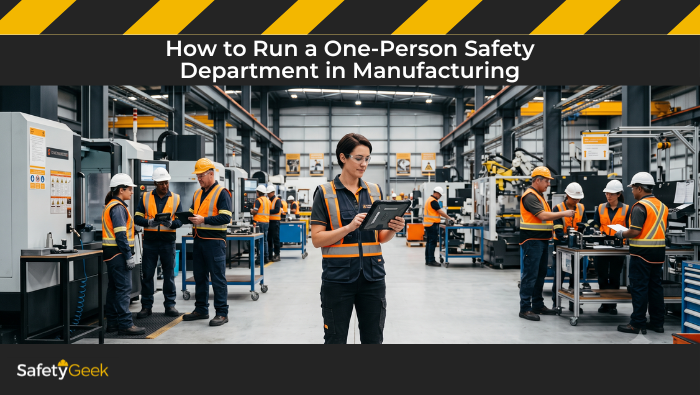
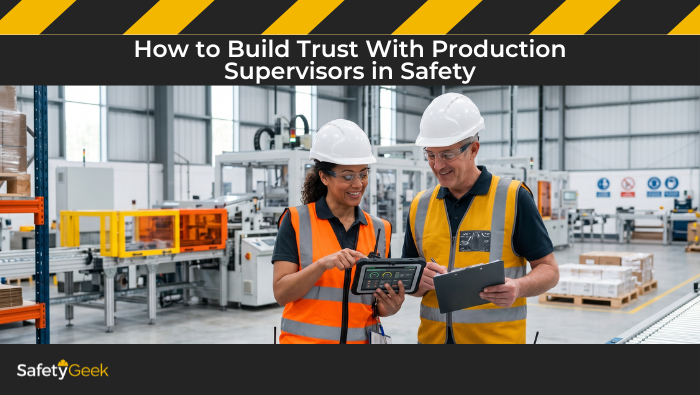
Here is the thing… most production supervisors are not anti-safety. They are pro-survival. Their performance review is built on throughput, uptime, and hitting the number, and they have learned that “safety” usually shows up as something that slows all three down. So when you walk onto the floor, they are not seeing you. They are seeing a delay. That reaction was trained into them by every safety person who ever stopped a line without offering a path forward. The pressure they live under is real. Many supervisors describe their day as “go, go, go, and when something breaks, stop, fix it, go, go, go again.” Safety, to them, has historically meant another stop they did not plan for. This is why the moral argument almost never works on the floor. Telling a supervisor “someone could get hurt” lands as background noise, because in their experience the risk has not happened yet and the production deadline is happening right now. According to OSHA’s business case for safety and health, serious workplace injuries cost U.S. employers around one billion dollars a week in direct workers’ compensation alone. That is the language that reframes safety as protecting their numbers, not threatening them. The mindset shift you need is the same one I teach about safety managers being influencers, not decision makers. You do not own production. You cannot order a supervisor to do anything. Every bit of cooperation you get is earned through influence, and influence runs on trust. [IMAGE: A safety manager and a production supervisor standing together on a clean, bright manufacturing floor reviewing a tablet, both engaged and collaborative. Alt text: safety manager building trust with a production supervisor during a floor walk]The Trust Equation: Know, Like, and Trust on the Floor
Building Know, Like, and Trust is the foundation of every bit of influence you will ever have with production. People do not follow your safety recommendations because you are right. They follow them because they know you, they like you, and they trust that you are looking out for them. Know, Like, and Trust means every positive interaction is a deposit you can draw on later. The supervisor who has had ten good conversations with you will give you the benefit of the doubt on the eleventh, even when you bring bad news. The problem is most safety managers make their first ten interactions withdrawals. Inspection findings. Corrective actions. “You need to fix this.” Then they wonder why the relationship is overdrawn when they finally need a favor.What a Deposit Actually Looks Like
A deposit is small and specific. It is learning a supervisor’s name and what line they run before you ever cite anything. It is asking how the shift went and actually listening to the answer. It is catching their team doing something right and saying so out loud, in front of people. Genuine recognition is one of the most underused trust tools in safety, and I break down why in this piece on building employee relationships through recognition. NIOSH research on safety climate is clear that a supervisor’s safety leadership behaviors are among the strongest predictors of whether a team reports problems and whether injuries go down. When you make the supervisor look like the safety leader, you are not losing credit. You are building the exact climate that keeps people safe. You can see how the agency frames this in its NIOSH safety climate resources.THE ALL-ACCESS PASS RESOURCE PAGE
Get all the FREE templates, safety management resources, PDFs, spreadsheets, and more...
Field-Tested Ways to Build Trust With Production Supervisors
Trust with production is not won in a meeting. It is won in how you show up on the floor, day after day, in small repeatable moves. Here are the ones that have worked for me and for the safety leaders I coach.1. Learn Their Job Before You Critique It
Spend real time on the line. Ask the supervisor to walk you through their process, their bottlenecks, and where the schedule pressure comes from. You are not there to find violations on this walk. You are there to understand their reality so your future recommendations fit how the work actually gets done. OSHA’s recommended practices for safety and health programs stress integrating safety into operations and involving frontline supervisors directly in finding and solving hazards, not bolting safety on from the outside.2. Lead With Their Problem, Not Your Program
Open with a question, not a finding. “What is making it hard to run this line safely and on time?” puts you on the same side of the table instantly. Now you are solving their friction, and safety rides along inside the solution. This is the heart of being a true safety influencer who never has to tell people what to do.3. Respond to Bad News With Support, Not Blame
The first time a supervisor tells you about a near miss or a shortcut their crew is taking, your reaction sets the entire relationship. React with anger and you just taught them to hide things from you forever. React with “thanks for telling me, let’s figure this out together” and you just bought years of honest reporting. The American Society of Safety Professionals makes this exact point in its Professional Safety Journal article on building trust in safety: trust is built or broken in how you first respond.4. Co-Create the Fix
People support what they help build. Instead of arriving with the answer, bring the problem and two or three options, then ask the supervisor which one works on their floor. This is meaningful participation, sometimes called covert collaboration. You guide toward a safe outcome while letting them own the decision, which means they defend it instead of resenting it.5. Close the Loop, Fast and Visibly
When a supervisor raises a concern and hears nothing back, trust collapses. Even a “here is what we did” or “here is why we cannot change that yet” keeps the account in good standing. Speed matters more than perfection. A fast partial answer beats a slow perfect one every time.| The Safety Cop Approach | The Trusted Partner Approach |
|---|---|
| Walks the floor hunting for violations | Walks the floor learning the process |
| Leads with the regulation | Leads with the supervisor’s problem |
| Reacts to bad news with blame | Reacts to bad news with support |
| Hands down the solution | Builds the solution together |
| Concerns disappear into a black hole | Closes the loop fast and visibly |
| Gets compliance for ten minutes | Gets ownership that lasts |
How to Stay an Ally When You Have to Deliver Bad News
Sometimes the work really does have to stop. A guard is off, a procedure is being skipped, someone could get seriously hurt today. Trust does not mean you go soft on the things that matter, it means you have the relationship to handle them well. The supervisor is in the employee’s line of power, and you are not. That is why your job is to bring the problem and the options to the person who can act, not to override the chain of command on the floor. When you respect that structure, supervisors stop seeing you as a threat to their authority. Frame the hard conversation around shared goals. “If this goes wrong, you lose the line for a shift and you are down a person, here is how we avoid both” speaks their language. You are protecting their uptime and their people in the same sentence. This is also why your role has to be the coach, not the doer. When you operate as the coach of the coaches, the supervisor stays the leader of their team and you stay the trusted advisor who makes them better. That structure survives hard conversations because it was never about your authority in the first place. Supervisors also carry real responsibility when something does go wrong, which I cover in the supervisor’s role in accident response. One incident handled with respect can build more trust than a year of friendly small talk. How you act in the hard moment is the real test, and it is where the deposits you made earlier finally pay off. [IMAGE: A safety manager and supervisor having a focused, respectful conversation near a stopped production line, body language showing partnership not confrontation. Alt text: safety manager delivering difficult news to a production supervisor while maintaining trust]Frequently Asked Questions About Building Trust With Production Supervisors
How long does it take to build trust with a production supervisor?
There is no fixed timeline, but most safety leaders see a real shift within two to three months of consistent deposits. Trust accelerates fast once a supervisor experiences you solving one of their actual problems instead of adding to their list.What if the supervisor flat out ignores safety?
Start by getting curious, not combative. Recurring resistance is usually a systems problem, not a bad person. Ask what makes the safe way hard to do on their line, fix that friction, and bring leadership the business case using real injury cost data.How do I rebuild trust after a bad start with production?
Acknowledge it directly and change your pattern visibly. Show up with a problem you solved for them, not a finding. A few consistent deposits in a row will outweigh an old withdrawal faster than you expect.Should I report a supervisor who pushes back on safety?
Going over their head should be a last resort, not a first move. Work through the chain of command and bring leadership options, not complaints. Reserve escalation for genuine life-safety issues that cannot wait, and tell the supervisor you are doing it.How do I get production supervisors to actually report near misses?
Make the first report painless and the response supportive. The instant a supervisor gets blamed for surfacing a problem, reporting stops. Thank them, act on it, and close the loop so the next report feels safe.Now It’s Your Turn
Trust with production supervisors is not built in a binder or a kickoff meeting. It is built in how you show up on the floor, in small repeated moments, with the supervisor’s problems on your radar instead of just your own. Here is what you can do this week:- Pick one supervisor and spend 20 minutes learning their line with zero clipboard in hand.
- Ask the question: “What is making it hard to run this safely and on time?”
- Solve one piece of that friction and close the loop within 48 hours.
- Catch their team doing something right and say it out loud, in front of people.
- The next time they bring you bad news, lead with “thanks for telling me.”
Hi, I'm Brye (rhymes with sky)! I am a self-proclaimed safety geek with two decades of general industry safety experience. Specializing in bringing safety programs to a world-class level and building a safety culture, I have trained and coached many safety managers, just like you, on how to effectively manage workplace safety in the real world. I would love to help you too.