Estimated Reading Time: 8 minutes
Imposter syndrome is the nagging belief that you’re a fraud who will be exposed, even when your results say otherwise. To overcome imposter syndrome as a safety manager, name the feeling, track your real wins, separate healthy humility from self-doubt, lean on a mentor or community, and build confidence through systems mastery instead of forced positivity. The feeling is common, it’s beatable, and it does not mean you’re in the wrong job.
Learning how to overcome imposter syndrome as a safety manager starts with one truth: feeling like a fraud is not proof that you are one. Most of the time it means the opposite. It means you actually care about getting this right.
You walked into a leadership meeting and felt like everyone could tell you were winging it. Maybe you came into safety from operations, the floor, or a completely different career, and a little voice keeps whispering that a “real” safety professional would already know all this. Here’s the conversation nobody’s having… that voice tends to be loudest in the people who turn out to be great at this job.
Key Takeaways
- Imposter syndrome is common, not a warning sign. Research suggests up to 82% of people feel it at some point.
- Safety managers are especially prone to it because the role carries enormous responsibility with very little formal authority.
- Healthy humility moves you forward. Paralyzing self-doubt freezes you. Knowing the difference changes how you act.
- Tracking your real results is the fastest way to quiet the fraud feeling.
- You don’t have to feel ready to be effective. Confidence is built by doing, not by waiting.
- Systems mastery builds genuine confidence far better than affirmations ever will.
What Imposter Syndrome Looks Like in Safety Management
Imposter syndrome is the persistent belief that your success comes from luck, timing, or fooling people, rather than your own competence. It was first described in 1978 by psychologists Pauline Clance and Suzanne Imes, who noticed high achievers who couldn’t internalize their own accomplishments.
In safety, it rarely sounds like “I’m a fraud” out loud. It shows up in your behavior instead. And once you can spot the patterns, you can start to interrupt them.
- Over-preparing. You spend hours building a 30-slide deck for a 10-minute update because you’re terrified of being caught not knowing something.
- Under-speaking. You sit on a strong opinion in a meeting because you assume everyone else knows better.
- Avoiding visibility. You dodge the executive presentation or the high-profile project that would actually advance your career.
- Credential chasing. You keep collecting certifications hoping the next one will finally make you feel qualified.
Here’s what I’ve seen over and over with newer safety leaders. The most diligent, most coachable people are often the ones quietly convinced they don’t belong. They mistake the discomfort of growth for evidence of incompetence.
That’s the trap. The discomfort you feel walking into a room full of executives isn’t a signal that you’re unqualified. It’s the normal feeling of operating at the edge of your experience, which is exactly where growth happens.
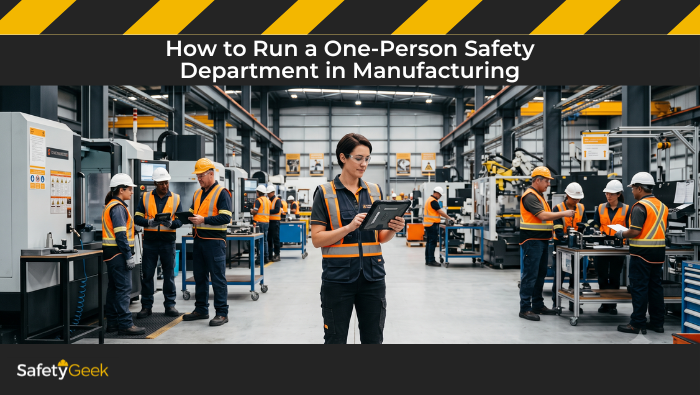
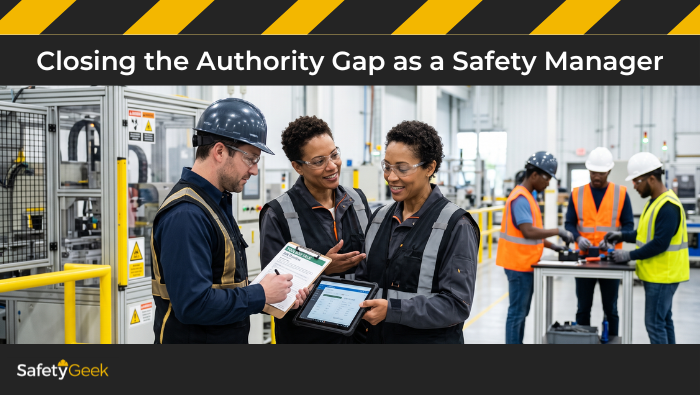
[IMAGE: A safety manager standing slightly apart at the edge of a manufacturing leadership meeting, looking thoughtful while colleagues talk. Alt text: Safety manager experiencing imposter syndrome during a leadership meeting in a manufacturing facility.]
Why Safety Managers Are Especially Prone to Imposter Syndrome
The safety role is practically engineered to trigger self-doubt. You’re handed responsibility for people’s lives, then given almost no formal authority to enforce anything. That gap between accountability and power is fertile ground for feeling like a fraud.
First, consider the stakes. Decisions you make affect whether people go home safe. According to OSHA’s workplace stress data, about 65% of workers call work a significant source of stress, and high-responsibility roles feel that pressure most.
Second, many safety professionals are self-taught or arrived from another field. If you’ve ever felt like a glorified administrator instead of a manager, you know how easy it is to question whether you’ve earned the title. The path into this profession is rarely a straight line, which makes it easy to feel behind.
Here’s the part that should take the pressure off: feeling this way puts you in very good company. Korn Ferry’s research found that 71% of U.S. CEOs have experienced imposter syndrome. A 2024 study of nurse managers, a role a lot like safety management, found 57.9% had high levels of imposter syndrome and nearly 72% reported low confidence in their own decisions.
So if the person running the whole company feels like a fraud sometimes, the feeling clearly isn’t a reliable measure of competence. It’s just a feeling. Understanding what a safety manager actually does often reveals you’re already doing the hard parts well.
Healthy Humility vs. Paralyzing Self-Doubt
Not all self-questioning is bad. A little humility makes you a better safety professional, because it keeps you open to feedback and stops you from signing off on things you haven’t checked. The problem starts when humility tips over into doubt that stops you from acting.
Healthy humility says, “I’m not sure about this reg, let me verify it.” Paralyzing self-doubt says, “I’ll never understand this, I don’t belong here.” One drives you to learn. The other drives you to hide.
The table below shows the same situations playing out both ways. The goal isn’t to eliminate doubt completely. The goal is to keep it in the lane where it actually helps you.
| Situation | Healthy Humility | Paralyzing Self-Doubt |
|---|---|---|
| Reviewing a lockout procedure | “Let me double-check this against the standard before I approve it.” | “If I get this wrong everyone will know I’m a fraud, so I’ll keep stalling.” |
| In a leadership meeting | “I’ll share my data and stay open to pushback.” | “I’ll stay quiet so nobody realizes I don’t belong here.” |
| After a mistake | “What can I learn and fix so this doesn’t repeat?” | “This proves I was never good enough for this job.” |
| Facing a new regulation | “I don’t know this yet, so I’ll go learn it.” | “A real safety professional would already know this.” |
When you catch yourself in the right-hand column, that’s your cue. You’re not getting accurate information about your ability. You’re just hearing fear talk.
THE ALL-ACCESS PASS RESOURCE PAGE
Get all the FREE templates, safety management resources, PDFs, spreadsheets, and more...
5 Evidence-Based Ways to Overcome Imposter Syndrome as a Safety Manager
You don’t beat imposter syndrome by waiting for it to go away. You beat it with deliberate practice, the same way you’d build any other skill. These five strategies are backed by research and built for the realities of a safety role.
- Name it out loud. Secrecy feeds the feeling. The American Psychological Association’s guidance on impostor phenomenon points out that simply learning how common it is, and talking about it with a trusted colleague, takes away a lot of its power.
- Keep a results log. Imposter syndrome has a terrible memory for your wins. Write them down: incident-rate drops, dollars saved, near-misses caught, training that actually stuck. This is also how you prove the value you provide to your company.
- Separate humility from self-doubt. When the doubt shows up, ask one question: is this telling me to go learn something, or just telling me to hide? Act on the first, ignore the second.
- Find a mentor or community. A scoping review of impostor phenomenon interventions found that mentoring, group coaching, and self-compassion practices measurably reduce imposter feelings. You need people who can reflect your reality back to you.
- Redefine “ready.” You will never feel 100% ready for the next level. Nobody does. Taking the meeting, the project, or the promotion before you feel ready is how confidence actually gets built.
Notice that none of these require you to magically start feeling confident. They’re actions. And when you start talking to management with a results log in hand, the confidence tends to follow the evidence.
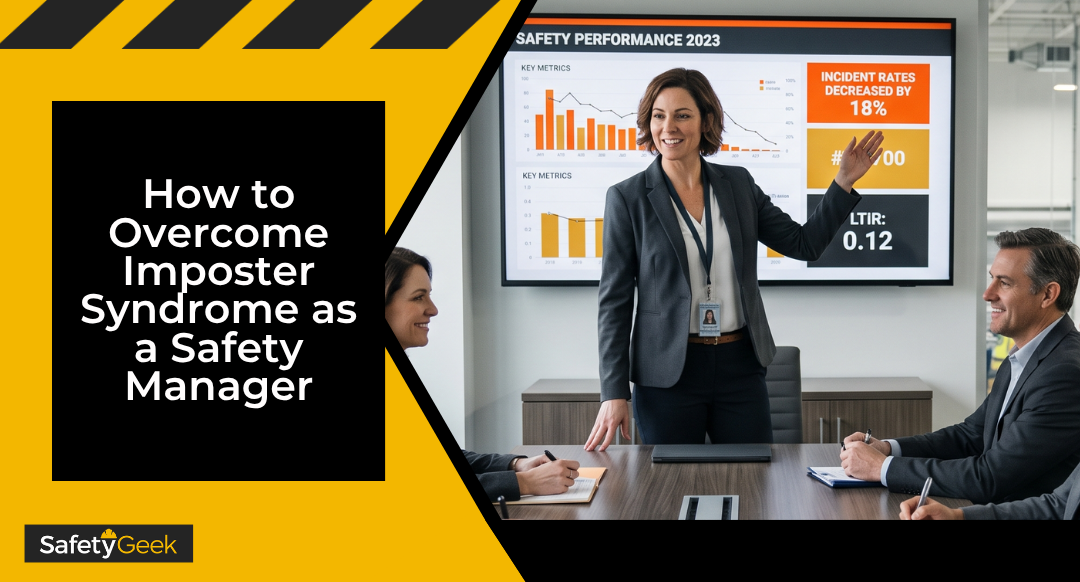
[IMAGE: A safety manager confidently presenting safety metrics on a screen to a group of nodding executives in a bright conference room. Alt text: Safety manager overcoming imposter syndrome by presenting documented results to leadership.]
Build Confidence Through Systems, Not Affirmations
Here’s what I’ve learned coaching safety professionals all over the world: real confidence doesn’t come from telling yourself you’re amazing in the mirror. It comes from mastering a system you can lean on when the doubt creeps in.
When you run your program on the Safety Management Cycle, you stop guessing. You identify hazards, develop controls, implement and train, coach and observe, then analyze the results. Every step gives you proof of what you’re doing and why it works.
That’s the heart of a framework I call Confidence Is the Unlock. I teach confidence, and my medium happens to be safety management. When you know your system cold, you walk into any room knowing you have a process to fall back on, even when you don’t have every answer memorized.
This is also why safety professionals make such strong leaders. You’re forced to use psychology, communication, and influence because you don’t have positional authority to fall back on. Those are exactly the skills that build lasting confidence, and they’re what we develop inside the Safety Leadership Academy.
Frequently Asked Questions About Imposter Syndrome in Safety
Is imposter syndrome a sign I’m not qualified for my safety role?
No. Imposter syndrome usually shows up in people who care deeply about doing the job well. The feeling is about your perception of yourself, not your actual ability. Plenty of highly competent safety leaders feel like frauds, which proves the feeling and your competence are two separate things.
How common is imposter syndrome in leadership roles?
Very common. Research suggests up to 82% of people experience it at some point, and Korn Ferry found 71% of U.S. CEOs have felt it. In high-responsibility roles like safety and management, the rates run even higher because the stakes and visibility are greater.
What’s the difference between imposter syndrome and just being new?
Being new means you genuinely have skills to build, and that’s normal. Imposter syndrome is when you discount the skills you already have and assume you’ll be exposed as a fraud. One is a knowledge gap you can close. The other is a thinking pattern you have to interrupt.
Can imposter syndrome ever be helpful?
A small dose of self-questioning keeps you humble and open to feedback, which makes you safer and more coachable. It becomes a problem only when it stops you from speaking up, taking opportunities, or making decisions. The goal is healthy humility, not paralyzing doubt.
How long does it take to overcome imposter syndrome as a safety manager?
There’s no fixed timeline, and the feeling may resurface at each new level. What changes is your response to it. With a results log, a support system, and a strong process, most safety professionals can quiet the doubt within a few months of consistent practice.
Now It’s Your Turn
Overcoming imposter syndrome as a safety manager isn’t about waiting to feel confident. It’s about gathering proof, leaning on the right people, and trusting a system you’ve mastered. The feeling is normal, and it does not get the final say on your career.
Here’s what to do this week:
- Start a results log today. Write down three wins from the last 90 days, with numbers wherever you can.
- Catch one doubt and sort it. Ask whether it’s telling you to learn or to hide, then act accordingly.
- Say yes to one thing you don’t feel ready for. A meeting, a project, a conversation with leadership.
- Find your people. Connect with other safety professionals who get it.
I’ve watched students walk in convinced they didn’t belong and walk out chasing a Master’s degree and a director title. The shift always starts the same way: with a system and a little proof. If you want the full blueprint for earning a real seat at the table and leading with confidence, watch the free training on the Safety Influencer System.
You belong in this role. You got this, and I got you.
Hi, I'm Brye (rhymes with sky)! I am a self-proclaimed safety geek with two decades of general industry safety experience. Specializing in bringing safety programs to a world-class level and building a safety culture, I have trained and coached many safety managers, just like you, on how to effectively manage workplace safety in the real world. I would love to help you too.