Estimated Reading Time: 8 minutes
TL;DR: A competent person for fall protection is someone who can spot fall hazards on a construction site AND has the authority to fix them on the spot. OSHA’s competent person fall protection requirements in construction come from 29 CFR 1926.32(f) and Subpart M. The role covers hazard identification, equipment and guardrail inspections, safety monitoring, and training oversight… not a certificate hanging on a wall.
A competent person for fall protection is the person on your construction site who can identify fall hazards and has the authority to correct them right away. That’s the whole definition, straight from OSHA. The competent person fall protection requirements in construction don’t come from a class or a wallet card… they come from what that person can actually do in the field.
Here’s where so many safety leads get tripped up. You name someone your competent person, hand them a training certificate, and feel covered… until OSHA shows up and asks, “Who’s your competent person, and what gives them the authority to stop work?”
If you can’t answer the second half of that question, the title on paper means nothing. I’ve watched good safety professionals get blindsided by exactly that gap.
Key Takeaways
- OSHA defines a competent person in 29 CFR 1926.32(f) as someone who can identify fall hazards AND has authority to correct them.
- A competent person handles field decisions. A qualified person handles design and engineering. They’re two different roles.
- OSHA does not require a specific competent person course or certificate. Your employer grants the authority.
- Competent person duties under Subpart M include equipment inspections, guardrail checks, safety monitoring, controlled access zones, and training support.
- 29 CFR 1926.501 has been OSHA’s #1 most-cited standard for years, with thousands of fall protection violations every year.
- The most common mistake is naming a competent person on paper without giving them real authority to stop work.
What OSHA Means by a Competent Person for Fall Protection
A competent person is someone who can identify existing and predictable fall hazards and is authorized to take prompt corrective measures to eliminate them. That definition lives in 29 CFR 1926.32(f), and it applies across every construction standard, including OSHA’s Subpart M fall protection standard.
Read that definition again, because two words carry all the weight… identify and authorized.
The Two Things That Make Someone Competent
First, the person has to recognize fall hazards before they hurt anyone. Not just the obvious open edge, but the predictable hazard… the floor opening that gets uncovered tomorrow, the anchor point that won’t hold.
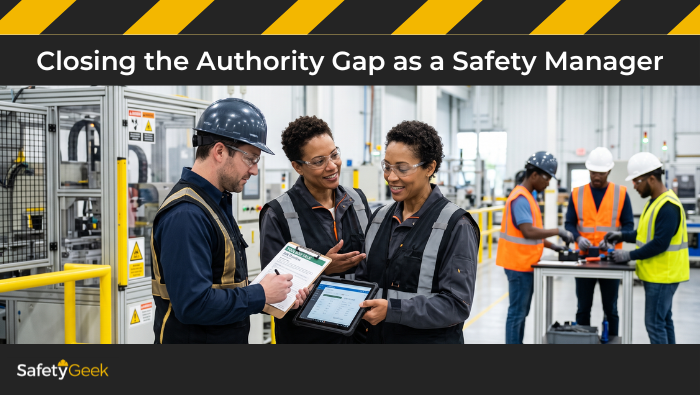
Second, they need the authority to act on what they see. That means real power to stop the work, red-tag the equipment, and order the fix… without chasing down three people for permission first.
Most companies nail the first half and completely skip the second. They pick the person with the most field experience, send them to a class, and never put their authority in writing. OSHA treats that as no competent person at all.
That authority piece is non-negotiable. You can’t hold someone accountable for fall hazards you never gave them the power to correct.
Competent Person vs. Qualified Person: The Difference That Trips People Up
Safety leads mix these two roles up constantly, and OSHA inspectors notice right away. The short version… a competent person makes field decisions, a qualified person solves engineering problems.
A qualified person earns that status through a recognized degree, certificate, or professional standing, or through extensive knowledge and experience that lets them design and resolve technical problems. Think anchorage design, engineered horizontal lifelines, complex rescue systems. A competent person inspects, monitors, and corrects what’s already built.
Here’s the side-by-side:
| Element | Competent Person | Qualified Person |
|---|---|---|
| Core focus | Identifying and correcting fall hazards in the field | Designing and engineering fall protection systems |
| Standard | 29 CFR 1926.32(f) | 29 CFR 1926.32(m) |
| Authority to stop work | Yes… required | Not part of the definition |
| Credentials | None required by OSHA | Degree, certificate, or recognized standing |
| Typical duty | Inspections, monitoring, on-the-spot corrections | Anchorage design, lifeline systems, complex rescue plans |
One person can wear both hats if they meet both definitions. On most mid-size construction teams, they don’t… and that’s fine. The same split shows up in scaffold competent person requirements, where the field authority and the engineering depth usually live in two different people.
Treat them as separate roles unless you genuinely have someone with both the design background and the on-site authority.
THE ALL-ACCESS PASS RESOURCE PAGE
Get all the FREE templates, safety management resources, PDFs, spreadsheets, and more...
The Fall Protection Duties Your Competent Person Owns
OSHA scatters competent person duties across Subpart M instead of putting them in one tidy list. Pull them together and the role gets clear fast.
1. Inspecting fall protection equipment. Under 1926.502, personal fall arrest gear gets inspected before each use for wear and damage, and defective components come out of service. Daily user checks plus a documented periodic inspection by the competent person is the industry standard. The personal fall arrest system equipment criteria are exactly what your competent person has to know cold.
2. Checking guardrails and other systems. Guardrails, safety nets, and hole covers all have to meet specific criteria, and only the competent person has the authority to pull an unsafe system out of service.
3. Running the safety monitoring system. On certain low-slope roofing work, 1926.502(h) allows a safety monitor who watches workers, warns them as they approach an edge, and has nothing else pulling their attention away. That monitor needs competent-person-level hazard recognition to do the job.
4. Setting up controlled access zones. When conventional fall protection isn’t used, the competent person establishes the controlled access zone, makes sure the lines and signage meet OSHA criteria, and adjusts as conditions change.
5. Supporting fall protection training. OSHA’s 1926.503 training requirements say every worker exposed to fall hazards gets trained to recognize and avoid those hazards. In practice, your competent person delivers a lot of that site-specific instruction and triggers retraining when unsafe habits creep in. Strong workplace safety training is where most of this lands.
That’s five job-defining responsibilities, every shift. If your designated person isn’t doing them, nobody is.
This is also where the Safety Management Cycle earns its keep. Your competent person is living inside it… identifying hazards, helping develop controls, implementing them through training, coaching and observing in the field, then analyzing what the inspections reveal.
The Competent Person Mistakes That Show Up on OSHA Citations
Fall protection isn’t a minor compliance corner. OSHA’s fall protection standard at 1926.501 has been the agency’s most-cited violation for years running, with thousands of citations every year. A big chunk of those trace back to the competent person… or the lack of a real one.
Here are the patterns I see over and over.
Treating “competent person” as a title only. Someone gets named on paper but never gets the authority to stop work. That contradicts the definition and falls apart the second an inspector asks who can shut the job down.
No real training behind the role. OSHA doesn’t require a specific course, so some employers skip meaningful training entirely and assume experience covers it. Your competent person still has to know the standards, the systems, and the manufacturer instructions.
Inspections that never get documented. The equipment check happens visually, but nobody writes it down. If it isn’t documented, OSHA treats it as if it never happened.
Confusing competent with qualified. Asking a competent person to design an anchorage or engineer a lifeline system pushes them past their role and into real liability. That’s qualified-person work.
No retraining when things change. When the site, the equipment, or the systems change… or when workers pick up unsafe habits… retraining is required. Most teams don’t trigger it until after a near-miss or a citation.
And this is bigger than your own crew. When you’re influencing contractor safety practices on a multi-employer site, the competent person question lands on everyone… and the general contractor often owns the fallout.
None of these are about bad people. They’re about systems that never made the role real. Fix the system, and most of these citations disappear.
Frequently Asked Questions About Competent Person Fall Protection Requirements
Does OSHA require a competent person certificate for fall protection?
No. OSHA does not require a specific certificate, course, or card. The standard requires two things… the knowledge to identify fall hazards and the authority to correct them. Most teams use a fall protection course as proof of knowledge, then document the authority in a written designation.
What’s the difference between a competent person and a qualified person?
A competent person identifies and corrects fall hazards in the field and has authority to stop work. A qualified person designs and engineers fall protection systems based on a degree, certificate, or extensive technical experience. One inspects and monitors. The other designs. The same person does both only if they meet both definitions.
What are the main duties of a fall protection competent person?
Inspecting personal fall arrest equipment, checking guardrails and other systems, running safety monitoring on low-slope roofs, setting up controlled access zones, and supporting fall protection training. The thread through all of it is authority… the competent person can pull unsafe systems and stop unsafe work on the spot.
Can one person be both the competent and qualified person?
Yes, if they meet both OSHA definitions. The qualified person needs a recognized degree, certificate, or professional standing in fall protection design. The competent person needs on-site authority to correct hazards. Plenty of small teams have one person who qualifies, but most split the roles between an engineer and a field supervisor.
How do I document my fall protection competent person?
Write a short designation letter naming the person, their scope, the effective date, and their explicit authority to stop work and order corrections. Back it with proof of training and a dated, signed inspection record. That paper trail is what turns the role from a title into a defensible program.
Now It’s Your Turn
Your competent person for fall protection is only as real as the authority behind the title. Capability spots the hazard… authority fixes it. Miss the second half and OSHA treats you as if you have neither.
Start with three moves this week:
- Write a designation letter for your fall protection competent person that spells out their authority to stop work.
- Put a dated, signed inspection record on every fall protection system on your site.
- Check that your competent person actually knows the duties in Subpart M… not just how to wear a harness.
That single shift, from a name on paper to a role with teeth, closes one of the most common findings on any construction site.
If you want the step-by-step system for building competent person programs your team actually follows, that’s exactly what we coach inside the Safety Leadership Academy. You’ll learn how to designate, document, train, and coach the people who hold on-site authority… across fall protection and every other field role that demands it.
You’ve got this. And I’ve got you.
Hi, I'm Brye (rhymes with sky)! I am a self-proclaimed safety geek with two decades of general industry safety experience. Specializing in bringing safety programs to a world-class level and building a safety culture, I have trained and coached many safety managers, just like you, on how to effectively manage workplace safety in the real world. I would love to help you too.