Estimated Reading Time: 7 minutes
Understanding the ROI of your Safety Management System (SMS) is crucial in transforming safety from a cost center into a strategic investment. This guide provides insights on how to calculate the ROI of your SMS, demonstrating the financial benefits and making a data-driven case for your next safety budget. By aligning safety initiatives with business goals, you can protect your people and boost profitability.
As operational costs rise and stakeholders demand alignment between spending and results, a robust SMS becomes indispensable. This guide will help you turn safety data into measurable value, showcasing how a strong SMS contributes to decreased accident frequency, reduced incident-related costs, and savings on insurance and downtime.
You will learn how to demonstrate the financial benefits of a strong SMS, justify safety budgets with data, and present ROI to internal stakeholders effectively. By following the steps outlined, you can make a compelling case for investing in safety management systems.
Key Takeaways
- Calculating the ROI of your Safety Management System (SMS) turns safety into a strategic investment.
- A strong SMS reduces accident frequency and incident-related costs.
- Demonstrating financial benefits gains traction with decision-makers.
- High-quality data justifies safety budgets and builds credibility.
- Presenting ROI effectively secures support from internal stakeholders.
Why Safety Management Is a Strategic Investment
A Safety Management System (SMS) is a proactive framework for identifying and controlling risks across your operations. It integrates people, processes, and data to manage hazards and align safety with business goals.
Investing in a well-structured SMS delivers clear financial outcomes:
- Accident frequency decreases: Certified SMS programs can reduce workplace incidents by 22.6% and severity by 29.2%, according to Health and Safety International.
- Incident-related costs shrink: Companies report an average of 18% lower direct injury costs such as medical bills and compensation.
- Insurance and downtime savings: Fewer incidents lead to lower premiums and reduced operational disruption as insurers reward strong safety records. PSICO Smart highlights these as key cost benefits.
Using a risk-to-value mapping approach helps tie safety improvements directly to performance and profit across your organization.
THE ALL-ACCESS PASS RESOURCE PAGE
Get all the FREE templates, safety management resources, PDFs, spreadsheets, and more...
Calculating the ROI of Your Safety Management System
To show the impact of your SMS investment, follow these steps to calculate return on investment:
Step 1: Establish Baseline Costs
Account for historical expenses from incidents, including:
- Medical and legal costs
- Lost productivity
- Equipment damage
- Regulatory fines
- Insurance premiums
Step 2: Calculate SMS Investment
Include all direct costs:
- Software or tools
- Safety training
- Consulting services
- Internal staffing or resourcing
Step 3: Estimate Savings
Project improvements using projected reductions in incidents:
- Multiply the anticipated fewer incidents by average per-incident cost
- Add savings from lower insurance rates and fewer legal claims
(Source: PSICO Smart)
Step 4: Use the ROI Formula
ROI = (Annual Savings – Annual Costs) ÷ Annual Costs × 100
Example:
A company invests $200,000 in SMS and saves $800,000 annually.
ROI = (800,000 – 200,000) ÷ 200,000 × 100 = 300%
This straightforward formula helps frame safety as a measurable return, not just a compliance step.
Demonstrating the Financial Benefits of a Strong SMS
When safety data is expressed in financial terms, it gains traction with decision-makers. Start with these key performance indicators (KPIs):
- TRIR (Total Recordable Incident Rate)
- MTTR (Mean Time to Recovery)
- Near-miss reporting rate
According to the NSC Journey to Safety Excellence, reducing these KPIs correlates directly to fewer costs.
Real-world example: A manufacturer improved its SMS and reduced incidents by over 40%, saving $800,000 in workers’ compensation annually. (PSICO Smart)
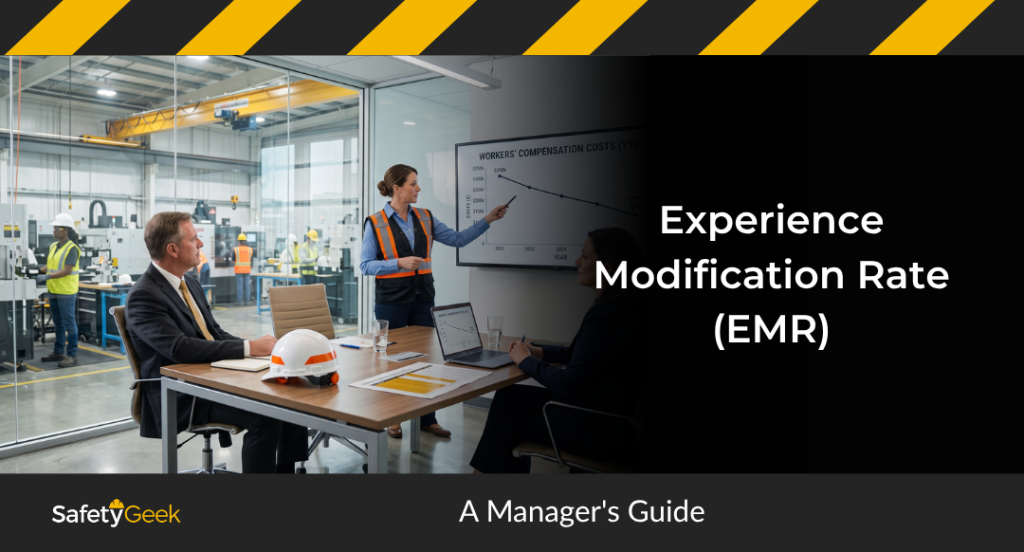
Use dashboards and graphs to visualize this data for leadership. Cost avoidance charts and trendlines make ROI tangible and actionable.
Justifying Safety Budget with Data
High-quality data builds budget credibility. Use reliable audit trails and real-time reporting to support your business case.
Your proposal should include:
- Executive summary with financial highlights
- Cost-benefit breakdown of SMS investment
- Risk mitigation visuals that show potential losses prevented
As the NSC explains, presenting safety as a driver of revenue protection elevates its importance across the organization.
Presenting ROI to Internal Stakeholders
Customize your message to each audience:
- For finance leaders: Emphasize reduced claims and high ROI.
- For operations teams: Focus on fewer disruptions and productivity gains.
- For executives: Highlight strategic advantages and risk mitigation.
Use simple before-and-after comparisons to show changes in performance and cost. Strengthen your pitch with:
- A concise introduction
- Clear key findings and ROI
- Visual data (charts, graphs)
- Final recommendations and next steps
Now It’s Your Turn
Ready to shift safety from expense to investment? Follow these steps to get started:
- Audit your current incident costs and response expenses.
- Implement a structured SMS tailored to your safety goals.
- Track improvements with standardized KPIs.
- Calculate ROI and connect it to financial outcomes.
- Present your findings across departments using data-backed visuals.
Grow your knowledge with these additional resources:
- What is a Safety Manager?
- Surprising Benefits of a World Class Safety Program
- Making a Case for Safety
These tools and insights will help you elevate safety from a compliance necessity to a business-critical function.
Frequently Asked Questions
1. Why is calculating ROI important for a Safety Management System?
Calculating ROI for your SMS demonstrates the tangible financial benefits of safety initiatives. It helps shift the perception of safety from a cost center to a strategic investment, making it easier to gain support from stakeholders and justify budget allocations.
2. What key metrics should I track to measure the effectiveness of my SMS?
Key performance indicators (KPIs) such as Total Recordable Incident Rate (TRIR), Mean Time to Recovery (MTTR), and near-miss reporting rate are essential. Tracking these metrics shows improvements over time and directly correlates to cost savings.
3. How can I present the ROI of my SMS to different stakeholders?
Customize your message for each audience. For finance leaders, highlight reduced claims and high ROI. For operations teams, focus on productivity gains. For executives, emphasize strategic advantages and risk mitigation. Use visual data and clear comparisons to support your case.
4. What are some common challenges in implementing an SMS?
Challenges may include initial costs, resistance to change, and integrating new processes into existing workflows. Overcoming these challenges involves clear communication of benefits, training, and demonstrating quick wins to build momentum.
5. How does a strong SMS impact insurance premiums?
A robust SMS reduces the frequency and severity of incidents, leading to fewer claims. Insurers often reward companies with strong safety records by offering lower premiums, resulting in significant cost savings over time.
Hi, I'm Brye (rhymes with sky)! I am a self-proclaimed safety geek with two decades of general industry safety experience. Specializing in bringing safety programs to a world-class level and building a safety culture, I have trained and coached many safety managers, just like you, on how to effectively manage workplace safety in the real world. I would love to help you too.